How to Support Emotional Wellbeing During Custody Changes
Custody changes can be tough for kids, but the right support helps them feel secure. Here’s what you need to know:
- Routine is key: Children thrive on consistency. Align schedules, rules, and daily habits between homes to reduce stress.
- Age matters: Infants may show fussiness, toddlers might regress, school-aged kids often internalize guilt, and teens may withdraw or act out. Tailor your approach based on their developmental stage.
- Open communication: Use simple, age-appropriate explanations and encourage kids to share their feelings. Visual tools like calendars can help younger kids understand schedules.
- Shield from conflict: Avoid arguing in front of kids and keep interactions with your co-parent respectful. Neutral meeting points can ease transitions.
- Look for signs of distress: Changes in sleep, appetite, or behavior may signal emotional struggles. Seek professional help if needed.
Consistency, clear communication, and emotional support are the foundation for helping kids adjust to custody changes.
How Children React to Custody Changes by Age
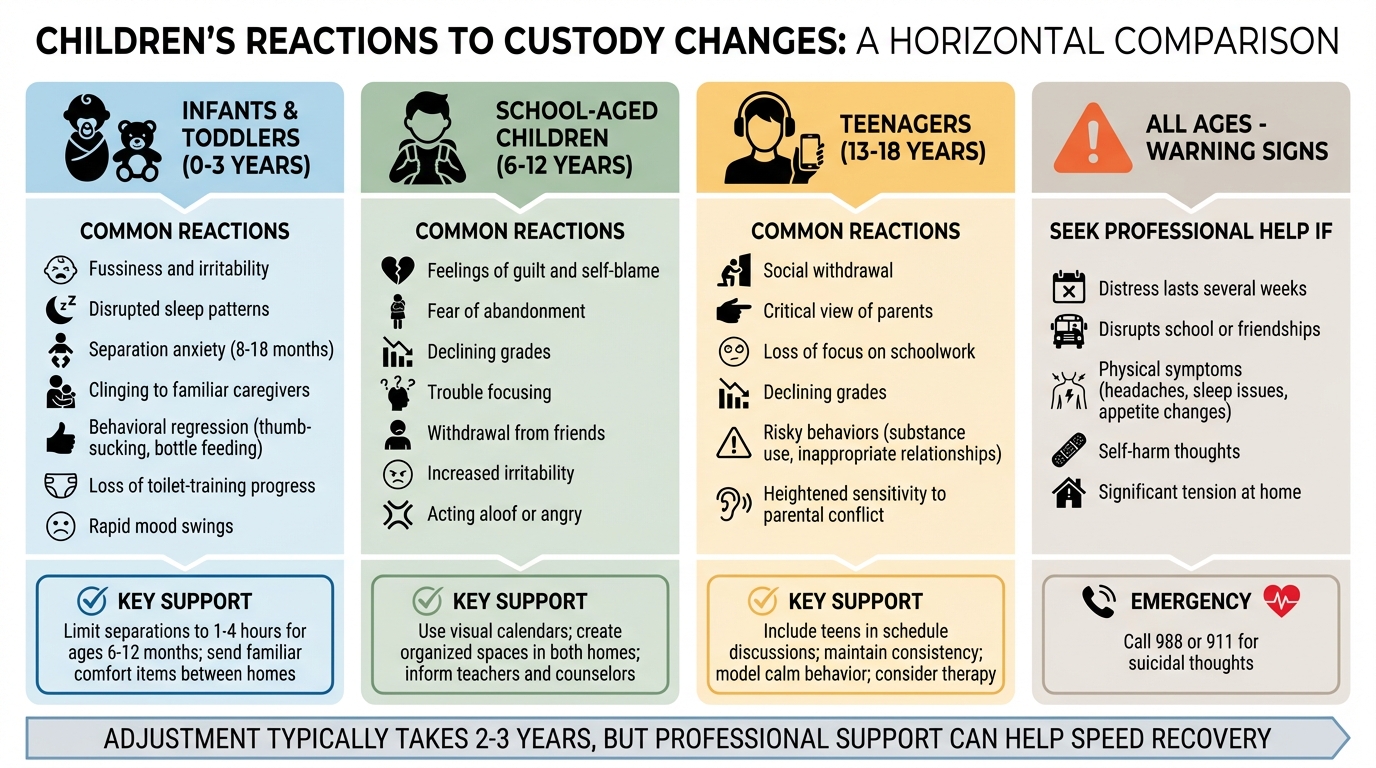
How Children React to Custody Changes by Age Group
Children respond to custody changes in ways that vary with their developmental stage. Understanding these age-specific reactions can help you provide the right kind of support during these transitions.
Infants and Toddlers: Coping with Separation Anxiety and Regression
Infants under 8 months may not grasp the concept of divorce, but they can sense parental stress. This often results in fussiness, irritability, disrupted sleep, or changes in digestion.
From 8 to 18 months, separation anxiety becomes more noticeable. Infants may cling more to familiar caregivers and show discomfort with infrequent contact from the other parent. Experts suggest limiting separations for children aged 6 to 12 months to short durations - no more than one to four hours - to maintain their sense of security.
Toddlers (18 months to 3 years) often regress in their behavior during custody changes. They may revert to thumb-sucking, request bottle feeding, or temporarily lose toilet-training progress. They also experience rapid mood swings and struggle to understand time or the reasons behind the separation. Their concerns are often immediate, like wondering who will tuck them in at night.
"Responding to your child's needs in predictable, sensitive and affectionate ways is the best way to help your child form a secure attachment."
– Jane Hunter, Regional Specialist, Human Development and Family Science
To ease transitions, send familiar items like a favorite blanket or toy to the other parent's home. Gradual handoffs, rather than rushed exchanges, can also help toddlers adjust more comfortably.
As children grow, their reactions shift from attachment-based responses to more complex emotional expressions.
School-Aged Children: Internalizing Worry and Feeling Torn
School-aged children (6 to 12 years old) are more likely to internalize the effects of custody changes. They may feel guilty, believing they caused the separation, or experience abandonment from the parent who moves out. These emotions can show up in declining grades, trouble focusing, withdrawal from friends, or increased irritability. Some children may even act aloof or angry.
"Kids are more prone to blaming themselves when they're younger because they're so egocentric. Even if you think they understand it, that's something you want to make sure that you tell them explicitly: It's not their fault."
– Jamie Howard, PhD, Clinical Psychologist
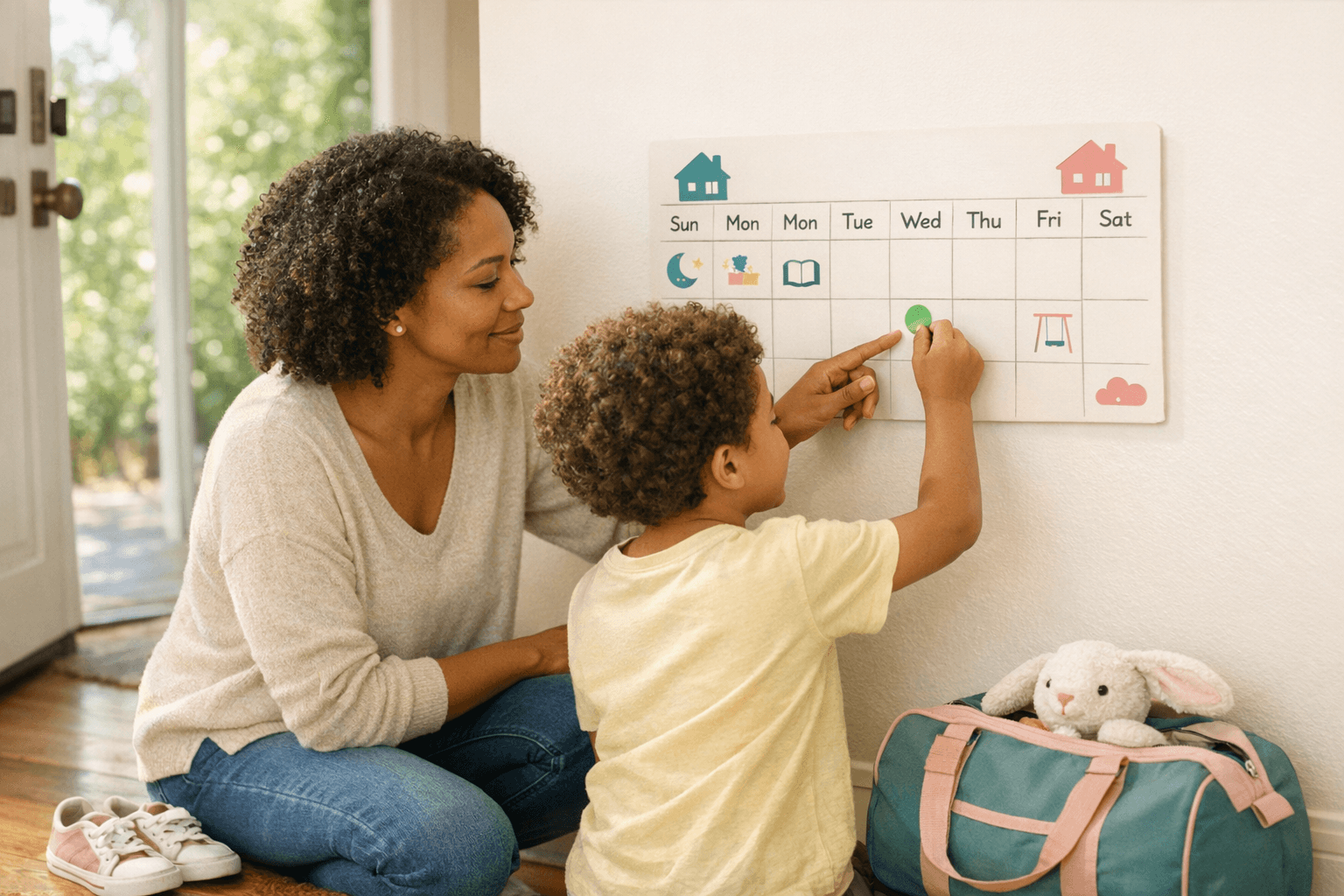
Visual tools, like a calendar showing which days they'll spend at each home, can help reduce confusion. Creating organized spaces with essentials in both homes avoids the stress of constantly packing and unpacking. When your child expresses sadness or anger, acknowledge their feelings instead of offering quick reassurances like "Everything will be fine". Informing teachers and school counselors about the custody change can help them provide additional support. Additionally, arranging handoffs in neutral locations can minimize tension between parents.
Teenagers: Social Withdrawal and Risky Behavior
Teenagers often respond to custody changes with social withdrawal or acting out. They may begin to see their parents more critically, noticing flaws they once overlooked. Age-appropriate holiday custody plans can help, as these significant events often trigger feelings of loss, which may affect their ability to focus on schoolwork or maintain grades. For some teens, risky behaviors like substance use, inappropriate relationships, or suicidal thoughts may emerge - this is especially concerning for junior high boys whose mothers are separated.
"That adjustment period has to happen, so honor it and don't start to send the message 'I just want you to be happy.' You don't want to inadvertently pressure kids to feel like they need to be on board and happy about a divorce."
– Stephanie Samar, PsyD, Child Psychologist
Listening to your teen's input about custody schedules can help them feel more in control, even though final decisions rest with you. Consistency is key - establish homework routines and ensure personal items are available in both homes. Teens are particularly sensitive to parental conflict, so modeling calm and respectful behavior during transitions is critical. If they seem overwhelmed, therapy can be a neutral space for them to process their emotions.
sbb-itb-a09457a
Preparing Your Child Before Custody Changes
When custody changes are on the horizon, it’s important to introduce the topic only after plans are finalized. Let your child know in advance to help ease any potential anxiety they may feel.
Explaining Custody Arrangements in Age-Appropriate Ways
Keep explanations simple and appropriate for your child’s age. For instance, you might say, "We don’t live together anymore, but we both love you very much".
"Children need certainty and explaining exactly how the schedule will work will reassure them. Remember that the more information children have about the changes they will soon encounter, the better they will be able to adapt."
– Kids in the Middle
Visual aids can help make custody schedules more tangible. For younger children, a printed calendar with colorful markers can make the schedule easier to understand. Older kids might prefer an electronic version they can access on their devices. Reassure your child that they can reach out to the other parent whenever they need and consider setting up regular times for video or phone calls during transitions.
It’s also important to address any misplaced guilt. Younger children, in particular, might believe they are to blame for the separation. Be clear that the custody change isn’t their fault. When it feels appropriate, you can also involve your child by asking for their input on exchange times or locations, giving them a sense of control in the process.
Creating Space for Children to Share Their Feelings
Encourage your child to share their thoughts and emotions before, during, and after custody transitions. Let them know it’s safe to be honest about how they feel.
"If your child is asking you about something, it’s because they’re already thinking about it."
– Ariana Hoet, PhD, Clinical Director, Kids Mental Health Foundation
Acknowledge that a range of emotions - anger, sadness, confusion, or even relief - is entirely normal. For younger children who may find it hard to articulate their feelings, play can be a helpful outlet for expression. If your child struggles to open up, you might involve a trusted adult, such as a family member, teacher, or therapist, who can offer additional support.
Finally, maintaining consistent daily routines can provide your child with a sense of stability and security during this period of change.
Keeping Routines and Rules Consistent
When life feels uncertain, predictable routines can be a lifeline for children. Familiar daily patterns create a sense of stability, helping to ease anxiety, especially during transitions between homes.
The goal is to establish similar routines and expectations across both households, so your child feels cared for in a unified way. For instance, if bedtime is 7:30 PM in one home but stretches to 10:00 PM in the other, it can lead to confusion and even behavioral challenges. Kara Reynolds, Founder and Editor-in-Chief of Momish Magazine, highlights this point:
"A schedule of parenting time transitions will help your kids feel confident about what they can predict in their day-to-day."
Let’s dive into how you can align schedules and ensure consistency with essential items across both homes.
Matching Daily Schedules, Rules, and Personal Items Across Homes
Keeping routines like bedtimes, meals, and homework consistent between homes helps regulate your child’s internal clock, reducing stress and irritability. For example, if dinner is typically at 6:00 PM in one home, aim for a similar time in the other.
One practical tip is to follow the "two-of-everything" rule. Stock each home with duplicate items like toothbrushes, pajamas, school supplies, and favorite cups. This small step can make a big difference, as Reynolds explains:
"The simple act of having to pack and unpack can make them feel less like a family member and more like a visitor."
While duplicating essentials is helpful, allow sentimental items - like a beloved stuffed animal or a tablet - to travel with your child. These familiar objects can provide comfort and continuity.
It’s also crucial to align household rules on things like screen time, chores, and discipline. Consistent expectations across homes reduce confusion and help your child adapt more easily. Additionally, schedule custody exchanges during natural transition points, such as before or after school, to make the process smoother.
For a more tailored approach, you might consider tools that can help customize routines to fit your child’s age and needs.
Building Age-Appropriate Schedules With Coflo
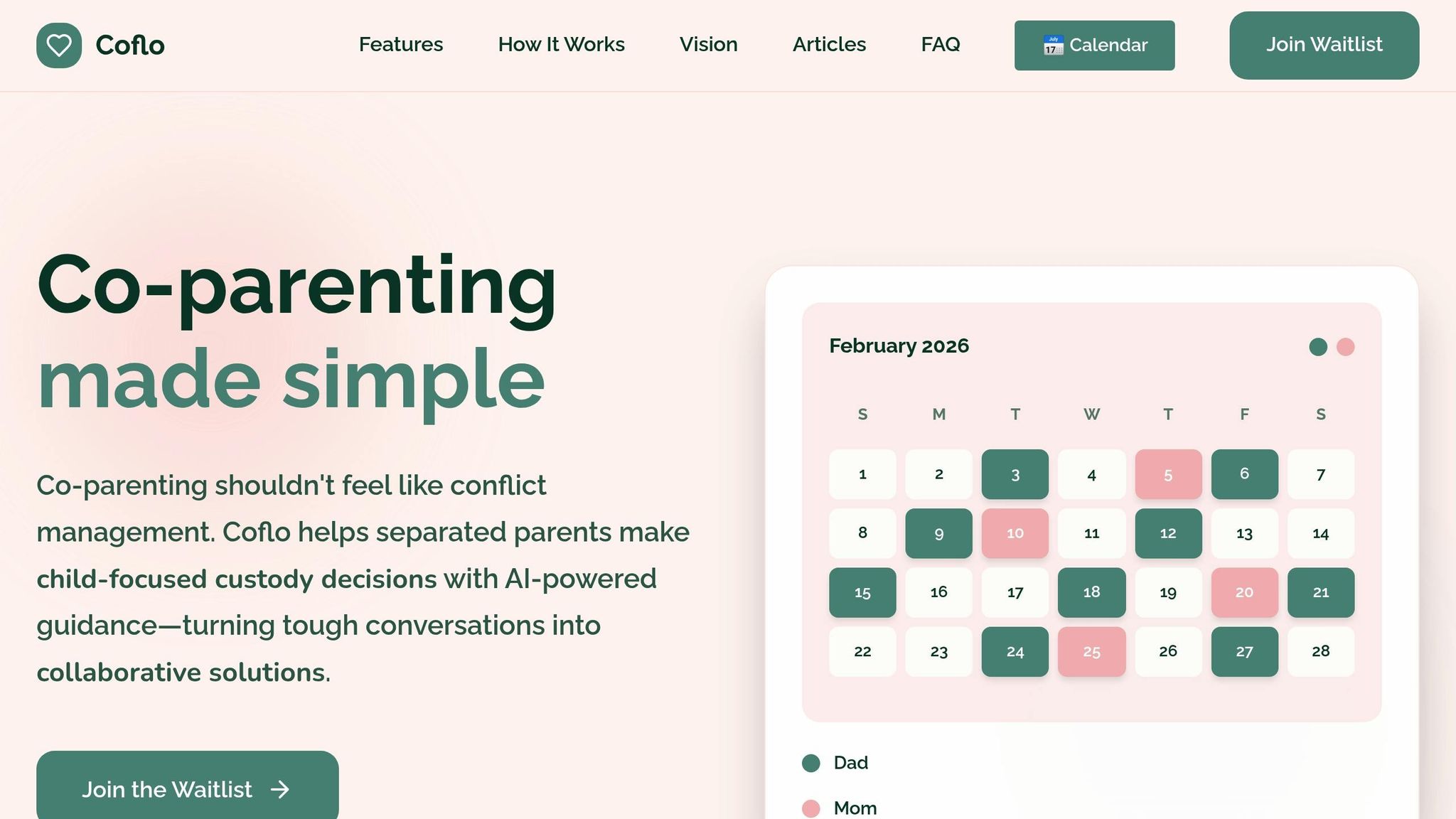
Crafting a custody schedule that suits your child’s developmental stage can make a world of difference. Coflo offers AI-powered tools to create personalized custody plans based on your child’s age and your family’s priorities. By adjusting factors like stability, equal time, and school schedules, you’ll receive recommendations ranked by how well they fit your unique situation.
Each option includes insights from joint custody and cognitive development studies, along with clear benefits, potential challenges, and a step-by-step guide for implementation. This data-driven approach makes it easier to prioritize your child’s emotional well-being while minimizing conflicts between parents.
Shielding Children From Parent Disagreements
Beyond keeping consistent routines, reducing parental conflict plays a big role in safeguarding your child's emotional well-being.
When parents argue, children experience a stress response that releases adrenaline and cortisol, which can linger in their systems for up to 72 hours. Repeated exposure to these stress hormones can lead to serious mental health challenges, including depression, anxiety, ADHD, and even aggressive behavior.
Kids often misinterpret parental conflicts, feeling like they're to blame or being used as "bargaining chips" between two households. In about 20% of divorces categorized as "high conflict", this constant stress can overwhelm children both mentally and physically. But there are practical ways parents can protect their kids from these damaging dynamics.
Making Joint Decisions and Avoiding Criticism of the Other Parent
One of the most important steps in shielding your child is keeping personal feelings about your ex separate from your co-parenting duties. As Jocelyn Block, M.A., and Melinda Smith, M.A., from HelpGuide.org emphasize:
“The key to successful co-parenting is to separate the personal relationship with your ex from the co-parenting relationship.”
During custody exchanges or discussions, focus on reducing tension and keeping conversations centered on your child's needs. Treat your co-parent like a professional colleague - keep interactions short, neutral, and strictly about parenting. Use "I" statements instead of accusatory language to prevent escalating conflicts. For instance, say, "I’m concerned about the pickup time", rather than, "You’re always late". This approach minimizes defensiveness and fosters more productive communication.
Never speak negatively about the other parent in front of your child. Sharing hurtful comments or stories can harm your child's ability to develop stable, trusting relationships in the future. If face-to-face drop-offs tend to cause tension, consider neutral meeting points like a school or a relative’s home. This simple change can ease transitions and reduce conflict. In fact, studies show that avoiding direct verbal confrontations in high-conflict situations can cut tension by up to 75% almost immediately.
By combining these communication strategies with a clear, child-focused custody plan, you can create a more stable environment for your child.
Reducing Conflict With Coflo's Data-Driven Approach
Take the emotion out of decision-making to minimize disagreements. Tools like Coflo help parents shift from heated arguments to collaborative, fact-based planning. Coflo allows parents to adjust priority sliders for factors like stability, equal time, and school consistency, offering personalized custody recommendations based on developmental psychology research.
This process transforms disputes into cooperative decision-making. Each recommendation includes clear benefits, considerations, and a step-by-step plan, ensuring both parents have access to the same objective information. When decisions are guided by data and your child's developmental needs, there’s less room for blame - and more room for teamwork that truly supports your child's well-being.
Watching for Emotional Problems and Getting Professional Help
Even with consistent routines, some children may need additional support to handle the stress that comes with custody changes. Utilizing AI tools for custody planning can help parents create more stable, child-centered schedules that reduce this stress. Spotting the signs of emotional distress early - and knowing when to reach out for professional help - can play a crucial role in helping your child adjust.
Recognizing Warning Signs of Emotional Distress
Children often show signs of emotional distress in ways that vary by age. For younger kids, this might look like regression, such as bedwetting, reverting to baby talk, frequent tantrums, or physical complaints like stomachaches or headaches. They may also develop intense fears of being alone.
Older children and teens, on the other hand, might withdraw from social activities, lose interest in hobbies, or struggle academically. Some teens may turn to risky behaviors like substance use or even self-harm, such as cutting or burning. Alarmingly, the Centers for Disease Control and Prevention reports that suicide is the second-leading cause of death for individuals aged 10 to 34 years old.
Physical symptoms like headaches, trouble sleeping, or changes in appetite can also signal emotional distress. Dr. Ariana Hoet from The Kids Mental Health Foundation emphasizes the importance of a strong support system:
"We know support networks are one of the best things to help children through difficult life changes."
If your child’s distress lasts for several weeks, disrupts their schoolwork or friendships, or creates significant tension at home, it’s time to seek professional help. And if they express thoughts of self-harm or suicide, call 988 or 911 immediately.
Working With Child Therapists or Counselors
Your first step should be consulting your child’s pediatrician, who can help determine whether the behavior is part of normal development or a sign that intervention is needed. Pediatricians can also refer you to mental health professionals who specialize in working with children. Research shows that while many children adjust within two to three years, professional support can speed up the process.
When choosing a therapist, ask about their approach. Do they use evidence-based techniques? Do they involve parents in the process? Do they track progress? Therapy provides children with a neutral, safe space to express emotions they might otherwise suppress.
Child psychologist Dr. Stephanie Samar offers this advice:
"We want to know how you're feeling about this, and you're not going to hurt our feelings if you tell us how you feel."
Don’t overlook school-based resources either. Let your child’s teachers and school counselors know about the changes at home so they can offer additional support. Many schools even run support groups for kids dealing with divorce or separation. And remember, seeking therapy for yourself can better equip you to help your child navigate this challenging period.
Conclusion
Supporting your child through custody changes requires being present, consistent, and flexible. The strategies outlined here work together to provide stability: keeping routines consistent across both homes, protecting kids from conflict, communicating openly in ways they can understand, and recognizing when professional support might be necessary. At the heart of it all, maintaining routines plays a key role in supporting your child's emotional health during uncertain times.
As children grow, their needs evolve. Younger kids may need extra comfort and reassurance, while teenagers might want more say in schedules and decisions. Bryan Driscoll, Divorce Content Specialist & Lawyer at Hello Divorce, emphasizes this point: "The best interests of the child must always be at the forefront of your parenting plan".
To help manage these changes, tools like Coflo can make it easier to create and adjust age-appropriate schedules, reducing confusion and conflict. While tools simplify logistics, effective co-parenting and communication remain critical.
Kara Reynolds, Founder and Editor-in-Chief of Momish Magazine, offers a heartfelt reminder:
"Helping our kids regulate their emotions during rough transitions in their life is part of being a parent... The most important thing is to be there for them".