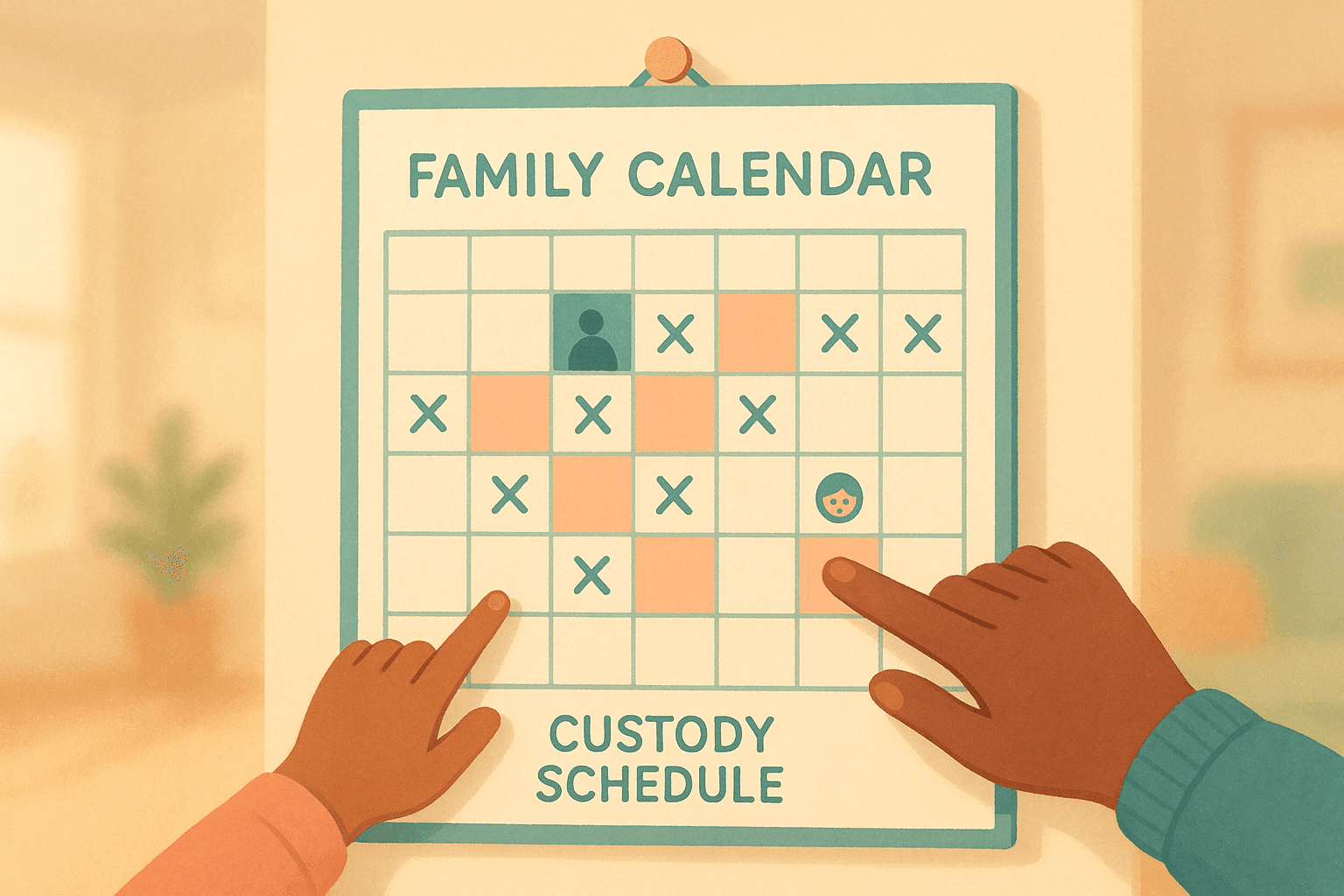
Checklist for Custody Schedule Implementation
Creating a custody schedule can be challenging, but it’s essential for providing stability and clarity for your child. A well-organized plan minimizes conflicts, ensures both parents stay involved, and prioritizes your child’s emotional and developmental needs. Here’s a concise guide to help you get started:
- Gather Documents: Collect court orders, parenting plans, and any agreements to define rights and responsibilities.
- Update Key Information: Share current contact details and emergency contacts. Use tools like shared spreadsheets for easy updates.
- Understand Your Child’s Needs: Consider medical, educational, and extracurricular factors to tailor the schedule.
- Use Digital Tools: Apps like Coflo can streamline communication, scheduling, and documentation.
- Plan Parenting Time: Define weekly routines, holidays, and transitions with clear timing and responsibilities.
- Backup Plans: Set rules for emergencies, illness, or unexpected changes, ensuring minimal disruption.
- Communication Rules: Agree on consistent methods, response times, and boundaries for co-parenting discussions.
- Review Regularly: Schedule periodic check-ins to update the plan as your child grows and circumstances evolve.
The goal is to create a schedule that reduces stress, supports your child’s well-being, and keeps both parents aligned. Start with these steps to build a plan that works for your family.
Pay Attention to Your Child's Behavior | Parenting Plans | Child's Best Interest
Preparation: Collect Required Documents and Information
Getting organized is the first step to creating a clear and compliant custody schedule. By preparing the right paperwork and tools, you'll set the stage for smoother co-parenting. Here's how to get started.
Gather Legal and Custody Documents
Start by pulling together all the official documents related to your custody arrangement. This includes court-issued custody orders, parenting plans, mediation agreements, and any relevant communication with the other parent or legal professionals. These documents form the legal backbone of your custody plan and spell out each parent's rights and responsibilities.
- Court-issued custody orders: These are your go-to documents. They clarify whether custody is joint or sole, outline the parenting time schedule, and specify decision-making authority.
- Mediation agreements and past correspondence: These can help you understand what has worked in the past and serve as a reference for any agreements reached outside of court.
Keep these documents handy - they’ll help ensure compliance with court requirements and provide a solid framework for resolving disputes if they arise.
Update Contact and Emergency Information
Accurate and updated contact information is essential for effective co-parenting. Both parents should exchange current phone numbers, email addresses, and physical addresses. Make it a habit to review and update this information at least twice a year or whenever there’s a significant change.
Your emergency contact list should include key people like relatives, your child's doctor, therapist, and other professionals involved in their care. Having this information readily available can make a big difference in urgent situations where coordination is critical.
Consider creating a shared document - like a Google Sheet - that both parents can access and update. This ensures everyone has the latest information when it matters most.
Document Child-Specific Needs
Every child is different, so it’s important to document their unique medical, educational, and developmental needs. This will help you design a custody schedule that works for them. Focus on these four areas: medical care, education, extracurricular activities, and developmental milestones.
- Medical needs: Keep track of allergies, medications, therapy appointments, and any ongoing health conditions. For example, a child with asthma will need medication available in both homes, and therapy sessions should be factored into the schedule.
- Educational requirements: Include school hours, tutoring sessions, special education services, and any academic support your child receives. For a child participating in after-school sports, you'll want to account for practices and games.
- Developmental considerations: Younger kids may do better with shorter transitions between homes, while teenagers might need more flexibility for social events or part-time jobs. Tailor the schedule to fit their age and emotional needs.
The more detailed you are, the easier it will be to create a plan that supports your child’s well-being.
Set Up Digital Tools for Coordination
Technology can make co-parenting more manageable. Digital tools can simplify communication and help you stay organized.
For example, Coflo provides personalized custody schedule recommendations based on your family’s priorities. You can adjust settings for factors like stability, equal time, and school consistency, and get tailored suggestions backed by developmental psychology insights. Each suggestion includes clear benefits, potential challenges, and a step-by-step guide for implementation.
When choosing a tool, look for features like shared calendars, secure messaging, document storage, and options to track expenses or schedule changes. For families who prefer an offline option, a communication notebook that travels between homes can also work well for tracking health updates, school activities, and emotional needs.
Setting up these tools early can make custody planning smoother and ensure your child’s needs are at the forefront. A little preparation now can go a long way toward building a schedule that supports their growth and stability.
Creating the Custody Schedule Structure
Now that you have your documentation and digital tools ready, it’s time to build a detailed custody schedule. A well-thought-out schedule minimizes confusion and ensures everyone knows what to expect, creating a sense of stability for both parents and children.
Set Parenting Time and Transition Details
Your custody schedule should clearly define when your child will be with each parent. Break it down into regular weekdays, weekends, holidays, school breaks, and special occasions like birthdays. Specificity is key - spelling out exact times and dates can help prevent disagreements down the road.
For example, establish a weekly routine with designated times for transitions, such as "Friday at 6:00 PM." When it comes to holidays and vacations, think ahead. Decide how to handle major holidays like Thanksgiving or Christmas. Some families alternate holidays annually, while others split the days - for example, one parent may have Christmas Eve while the other has Christmas Day. School breaks might be a good opportunity for longer stays with each parent, reducing the number of transitions and allowing for quality time.
Don’t forget to include special occasions like Mother’s Day, Father’s Day, or your child’s birthday. Decide whether these will always be spent with the same parent or alternated. Similarly, consider how to handle school events, such as performances or sports games, to avoid last-minute conflicts.
If you’re using a tool like Coflo to design your schedule, you can tweak settings to prioritize factors like stability, equal parenting time, or school consistency. These tools often provide tailored recommendations based on your child’s age and developmental needs, along with actionable steps to implement the schedule.
Plan Exchange Logistics and Handoff Procedures
The logistics of moving your child between homes are just as important as the schedule itself. Clear procedures for exchanges can reduce stress for everyone, especially your child.
Start by assigning responsibilities for pickups and drop-offs. Choose neutral locations for exchanges, such as a school or a public space, to keep things smooth and drama-free. For long-distance arrangements, outline travel details in advance. In cases where conflicts or safety concerns exist, supervised exchanges may be necessary. Specify who will supervise, where the exchange will take place, and how it will be arranged.
When planning handoffs, focus on your child’s emotional wellbeing. Keep the exchange brief and positive, and have their belongings packed and ready ahead of time. Avoid discussing adult issues during these moments - save those conversations for private discussions between parents.
Create Backup Plans for Schedule Changes
Life doesn’t always stick to the plan, so it’s smart to build flexibility into your custody arrangement. Having clear procedures for unexpected changes can help maintain your child’s routine while avoiding unnecessary conflict.
For instance, establish guidelines for late arrivals and make-up time. Agree on what constitutes sufficient notice for schedule changes - typically 24 to 48 hours unless it’s an emergency - and decide how missed time will be made up. Many families aim to reschedule missed time within a month to ensure the child maintains regular contact with both parents.
Prepare for emergencies like illness, work disruptions, or family crises. If one parent can’t take their scheduled time, consider including a “first right of refusal” clause. This allows the other parent the option to care for the child before turning to babysitters or relatives, though it may not work for every family.
Clarify illness protocols too. Define what happens when a child is too sick to travel, who makes medical decisions during the other parent’s time, and how to handle contagious illnesses. These guidelines can prevent disputes during already stressful situations.
Finally, ensure all schedule changes are communicated clearly using written documentation, such as emails, texts, or co-parenting apps. Include details like the reason for the change, proposed make-up time, and confirmation from both parents. This creates a reliable record and minimizes misunderstandings.
Don’t forget to plan for seasonal adjustments. For instance, your summer schedule might look different from the school-year routine, especially if one parent’s work schedule or your child’s summer activities require changes. By addressing these variations in advance, you can avoid last-minute scrambling.
A well-organized and flexible custody schedule keeps things consistent for your child, even when life throws a curveball. It’s all about creating a structure that supports their needs while accommodating the realities of day-to-day life.
Communication and Decision-Making Rules
Once your schedule is set, having clear communication and decision-making rules ensures everything runs smoothly. Good communication is the foundation of a stable co-parenting arrangement. Setting these rules early can help avoid disagreements and create a calmer environment for your child.
Set Communication Guidelines for Co-Parents
Stick to one or two main communication methods and use them consistently. For example, email works well for detailed discussions about school or medical matters, while texting is better for quick updates, like letting the other parent know you're running late. A co-parenting app like Coflo (https://coflo.app) can help keep communication professional and organized.
Agree on response times: immediate for emergencies, and 24–72 hours for other matters. Safety concerns should always get immediate attention. Routine questions, like scheduling, can wait up to 24 hours, while non-urgent topics - like summer camp plans - might allow for a 72-hour response time.
Keep conversations focused on your child’s needs and schedule. Avoid bringing up past relationship issues, unrelated financial disagreements, or personal attacks.
Set boundaries for non-emergency communication. For instance, limit messages to agreed-upon hours, like 8:00 AM to 8:00 PM on weekdays. This keeps communication predictable and respectful.
Document key updates to keep both parents informed. Share important developments in your child’s life - school progress, medical updates, or upcoming events - through regular updates like weekly check-ins or monthly emails. This ensures both parents stay in the loop.
Create Child Communication Rules
Establish clear times and methods for your child to connect with the other parent. Regular contact with both parents helps children feel secure. For younger kids, set a routine, like a nightly phone call at 7:00 PM or video chats on specific evenings. Older children might prefer more flexibility to reach out as they wish.
Respect your child’s privacy during parent–child conversations. Let them have private time to talk with the other parent. This could mean giving them space in another room during calls or stepping aside during video chats.
Set technology boundaries. Decide if and when your child will have their own device to communicate with the other parent. Younger kids might start with supervised calls, while older children can gradually move toward independent communication.
Plan for travel and long-distance communication. If one parent travels often or lives far away, have backup plans in place. For example, share your child’s schedule ahead of time or arrange for the traveling parent to check in upon arrival.
Once communication rules are in place, it’s essential to define how decisions will be made to keep co-parenting on track.
Define Decision-Making Responsibilities
Clarify who makes decisions on major topics like education, healthcare, and extracurriculars. Your custody agreement should outline whether these decisions are made jointly or if one parent has final authority. Day-to-day decisions - like meals, bedtime, and homework - are typically handled by the parent with physical custody.
Have a plan for resolving disagreements. If you can’t agree on a major decision, a pre-established process can save time and stress. Options might include a cooling-off period, consulting a neutral third party (like a counselor), or using mediation services. Notably, around 29% of custody decisions are resolved outside of court, often through mediation.
Set emergency decision-making rules. In urgent situations, the parent present should handle immediate decisions to ensure the child’s safety. They should inform the other parent as soon as possible about what happened and what actions were taken.
Prepare for future changes in decision-making. As children grow, they may want more say in decisions about their lives, like choosing extracurriculars or holiday plans. Build some flexibility into your process to allow for their input while maintaining appropriate parental guidance.
It’s worth noting that about 30% of custody cases involve allegations of abuse, often fueled by negative communication escalating into accusations. Consistent, respectful communication is crucial. When both parents follow these guidelines and prioritize their child’s needs, the result is less stress and greater stability for everyone involved.
sbb-itb-e357fb0
Matching the Schedule to Your Child's Needs
Creating a custody schedule isn't just about splitting time between parents - it’s about building an arrangement that supports your child’s development, education, and emotional health. A well-thought-out schedule considers your child’s age, temperament, and unique needs, helping them feel secure and thrive in both homes.
Account for Developmental Stages and Age
Younger children (ages 3–6) need frequent, shorter transitions. Long separations from either parent can be tough at this age. A schedule with more frequent exchanges - such as alternating every 2-3 days - helps them maintain strong connections with both parents while avoiding feelings of abandonment.
School-age children (ages 7–12) benefit from routines they can count on. At this stage, kids have a better grasp of time and can handle longer stays with each parent. Schedules like a week-on, week-off arrangement or the 2-2-3 pattern (2 days with one parent, 2 days with the other, followed by 3 days with the first parent) often work well. These kids are also likely to have extracurricular activities, so the schedule should accommodate things like sports practices or music lessons.
Teenagers (13+) need flexibility to fit their growing independence. Adolescents are developing their own social lives and responsibilities, like part-time jobs or school events. A rigid schedule might feel restrictive, so consider allowing more flexibility. For instance, they might stay in one home during busy school weeks and spend more time with the other parent during vacations or breaks.
For tailored guidance, platforms like Coflo (https://coflo.app) offer insights based on developmental psychology, helping parents understand how factors like attachment and social needs can shape custody arrangements.
Remember to consider your child’s personality and individual needs. While age is a helpful guideline, every child is unique. A child prone to anxiety might do better with fewer transitions, while a highly social child may thrive on a schedule that keeps them near friends and activities. Pay attention to how your child responds and be open to adjustments.
Next, let’s look at how to align these considerations with your child’s education.
Maintain Educational Stability
A strong custody plan should support your child’s academic success and ensure consistency in their education.
Keep your child in the same school district whenever possible. If both parents live nearby, this is easier to manage. However, if parents live in different districts, many families designate one home as the "school home" during the week, with the other parent having extended time on weekends, holidays, and summer breaks.
Stay on top of homework and school events. Both parents should be aware of upcoming tests, projects, and assignments. Share information about your child’s learning style, study habits, and any academic challenges. If one parent is skilled at helping with math while the other excels at reading, use these strengths to support your child.
Work together on extracurricular activities. If your child has soccer practice on Wednesdays and games on Saturdays, both parents should support these commitments. This might involve splitting transportation duties or alternating attendance at events. The goal is to ensure your child doesn’t miss out because of scheduling conflicts.
Create study-friendly spaces in both homes. Each home should have a quiet, well-lit area equipped with basic supplies like paper, pencils, and a calculator. This consistency reduces stress and sets your child up for academic success.
Focus on Emotional Wellbeing
A custody schedule should also prioritize your child’s emotional health, helping them feel secure and supported.
Watch for signs of adjustment struggles. Changes in behavior, sleep patterns, appetite, or school performance can be indicators that your child is having difficulty. While some of these reactions are normal during transitions, persistent issues may mean the schedule needs tweaking.
Keep routines consistent across homes. While routines don’t need to match perfectly, having similar rules can help. For example, a slight difference in bedtime - 8:00 PM at one house and 8:30 PM at the other - is manageable. But significant disparities, like unlimited screen time in one home versus strict limits in the other, can create confusion and conflict.
Set clear technology rules. Agree on guidelines for internet use, social media, phones, and gaming. For example, a 10-year-old might have permission to text both parents but not use social media, while a 16-year-old may have more freedom with agreed limits, such as no late-night phone use.
Encourage open communication. Regular check-ins can help you understand how your child feels about the arrangement. Ask open-ended questions like, “How do you feel about the schedule?” or “Is there anything you’d like to change?” Listen without judgment and avoid putting your child in the middle of disagreements.
Plan for changes as your child grows. What works for an 8-year-old may not work for a 12-year-old. Build flexibility into your parenting plan to allow for periodic reviews and adjustments as your child reaches new developmental stages.
Reviewing and Updating the Custody Schedule
Even the most carefully crafted custody schedule needs regular updates to stay relevant. Life changes, kids grow, and their needs evolve - so your schedule should, too. Regular reviews ensure the arrangement continues to work for everyone, keeping the focus on your child's well-being. By building on your digital coordination tools, you can make this process smoother and more effective.
Schedule Regular Reviews
Plan ahead with set review dates in your custody agreement. Many families find it helpful to schedule annual check-ins or align reviews with key milestones, like when a child starts kindergarten, middle school, or high school. This keeps the arrangement responsive to your child's development.
Your parenting plan should include specific provisions for periodic reviews and updates. These updates allow you to address changes in your child's needs or shifts in the parents' circumstances. By tackling issues early, you can avoid unnecessary conflicts and stay focused on what matters most - your child.
Choose a neutral, distraction-free setting for reviews. Whether it’s a quiet coffee shop, a library meeting room, or a video call, pick a space where both parents can concentrate. Keep the discussion centered on your child by asking questions like, "Is this schedule helping with school performance?" or "Are there new activities we should factor in for next year?"
Track what’s working and what’s not. Before each review, take notes on your observations. Has your child seemed stressed during transitions? Are they missing out on activities because of scheduling conflicts? Being prepared with specific examples can make these discussions more productive and less emotionally charged.
Get input from your child when appropriate. While younger children shouldn’t be making custody decisions, older kids and teens can provide helpful feedback. For instance, a 13-year-old might mention feeling rushed between homes, which could signal it’s time to reassess the schedule.
Create a Process for Schedule Changes
Once you’ve established regular reviews, follow a clear process to handle schedule modifications.
Set up clear, written procedures for proposing and documenting changes. Both parents should understand how to request adjustments - whether it’s a short-term tweak for an event like summer camp or a long-term shift due to a new job. A written request should outline the proposed change, the reasoning behind it, and how it benefits your child.
Modern co-parenting tools can simplify this process. Shared calendars and digital forms for schedule changes help ensure all updates are well-documented and easy to track.
Identify specific triggers for immediate reviews. Major life changes - such as a job relocation, a new school, or significant shifts in work hours - should automatically prompt a reevaluation of the custody schedule.
Include a renegotiation clause in your original agreement. This clause provides a framework for how to handle future adjustments if circumstances change, ensuring both parents approach modifications fairly.
Set Up Conflict Resolution Methods
Even with the best intentions, disagreements can happen. Having a plan for resolving conflicts can keep things from escalating.
Start with direct communication, but have backup options ready. Most disagreements can be resolved through calm, child-focused discussions. However, if emotions run high or you hit a roadblock, predefined conflict resolution methods can help keep things on track.
Consider mediation as a next step. If you and your co-parent can’t agree on changes, a professional mediator can help facilitate productive discussions.
Leverage digital tools for collaborative problem-solving. Apps like Coflo (https://coflo.app) allow both parents to input priorities and circumstances, offering research-based recommendations tailored to your child's needs.
Establish rules for urgent changes. Emergencies - like a sudden illness or an unexpected need for your child - can’t always wait for a formal review. Set clear guidelines for how quickly the other parent should respond and what qualifies as an urgent situation.
Document all changes and resolutions in writing. Keep a record of decisions, how they were made, and the factors considered. This documentation can be invaluable if conflicts arise later or if court involvement becomes necessary.
Conclusion: Building a Long-Term Custody Plan
Creating a custody schedule is more than just drafting a document - it's a commitment to prioritizing your child's well-being as they grow and life evolves. While this checklist offers a starting point, the true success lies in staying adaptable and keeping your child's needs front and center as circumstances shift over time.
Your plan should strike a balance: detailed enough to set clear expectations, yet flexible enough to adapt to changes in your child's needs or your situation. This balance ensures the schedule remains practical and effective as life unfolds.
Beyond the schedule itself, maintaining clear communication and effective conflict resolution is essential. Tools like shared calendars or co-parenting apps can make managing schedules easier and help reduce misunderstandings. However, no tool can replace the importance of your dedication to your child's happiness. By setting clear guidelines for communication and resolving disagreements constructively, you can safeguard the stability of your plan for the long haul.
Every family is unique, and what works for one child may not work for another, even within the same household. An 8-year-old's needs will naturally differ from those of a teenager, and your own circumstances - like work schedules or living arrangements - may change too. Regular check-ins and open dialogue are essential to ensure the plan continues to align with your child's best interests as they grow.
If the process feels overwhelming, digital co-parenting tools can lighten the load. These tools allow you to customize your plan based on your family's specific needs and provide recommendations backed by research. This takes much of the guesswork out of custody planning, helping you make confident decisions without unnecessary conflict.
Thoughtful planning today can provide your child with the stability and predictability they need to thrive. When both parents work together, it creates a sense of security that fosters their happiness and success. With the right mindset, preparation, and tools, you can build a custody arrangement that supports your family for years to come.