
Reducing Conflict with AI-Generated Custody Schedules
Navigating custody schedules can be stressful, especially for parents struggling to communicate after separation. AI-powered tools like Coflo simplify this process by offering objective, child-focused recommendations tailored to each family. Here's how AI helps:
- Removes emotional bias: AI evaluates work schedules, school calendars, and developmental needs to create fair, data-driven custody plans.
- Supports child well-being: Recommendations consider age-specific priorities, like stability for younger kids or flexibility for teens.
- Saves time and money: Instant schedule suggestions reduce legal fees and lengthy negotiations.
- Improves cooperation: Interactive tools help parents balance priorities without escalating disputes.
What Is High-Conflict Co-Parenting
Defining High-Conflict Co-Parenting
High-conflict co-parenting happens when disagreements and poor communication persist long after a separation. Personal grievances often overshadow the focus on the child’s well-being, making cooperative decision-making nearly impossible.
In these situations, even basic discussions can become contentious. Parents may struggle to separate their personal differences from parenting responsibilities, leading to constant friction. Communication often becomes so strained that they rely on intermediaries - like lawyers or family members - to pass along messages. Something as simple as adjusting a custody schedule can ignite a major disagreement, creating an environment where conflict feels inevitable.
Recognizing these patterns highlights why reducing tension is crucial for managing custody arrangements effectively.
Effects on Children and Families
Children caught in high-conflict co-parenting situations often experience emotional and behavioral challenges, such as anxiety, depression, or acting out. These environments can create loyalty conflicts for kids, making it harder for them to thrive academically or socially. Meanwhile, prolonged disputes drain family resources, with escalating legal fees adding financial stress to an already difficult situation.
These impacts underline the importance of addressing the root causes of custody conflicts.
Common Causes of Custody Disputes
Custody disputes often arise from unclear agreements, differing interpretations of visitation rights, or disagreements over decision-making responsibilities. Children’s needs naturally change over time, which can lead to further conflicts. On top of that, clashing communication styles, opposing parenting approaches, and financial disagreements frequently add fuel to the fire, making resolution even harder.
How AI Changes Custody Scheduling
AI Creates Objective Decisions
Artificial intelligence is transforming custody scheduling by taking emotions out of the equation and focusing solely on the facts. It evaluates objective data like work schedules, school calendars, extracurricular activities, and children’s developmental needs to create recommendations. This is especially helpful for co-parents who struggle to agree on even the basics. Instead of heated debates over what’s "fair", AI tools like Coflo analyze multiple factors simultaneously and rank custody schedules based on clear, data-driven criteria. These systems weigh elements like stability, equal time, school consistency, and flexibility to deliver balanced options.
This neutrality is a game-changer. When parents realize the recommendations come from impartial data analysis rather than human bias, they’re more likely to engage in productive, balanced discussions. Shifting the focus from emotional arguments to objective solutions fosters better communication and cooperation.
AI also taps into developmental psychology to tailor schedules based on a child’s age. For younger kids, the recommendations may prioritize attachment and routine, while for older children, they might focus on maintaining friendships and academic consistency. This age-specific guidance helps improve co-parenting dynamics in ways that directly benefit the child.
Measurable Benefits of AI Tools
AI-powered custody scheduling doesn’t just save time - it improves the entire co-parenting experience. One of its standout benefits is eliminating decision paralysis. Instead of spending weeks debating, parents can receive ranked recommendations in minutes.
Beyond efficiency, these tools are cost-effective. They provide professional-grade guidance at a fraction of what traditional attorneys or mediators charge. Plus, since both parents work from the same set of data, misunderstandings are minimized, and conversations become more constructive.
Another major perk is how these tools simplify plan implementation. Each recommended schedule includes actionable steps for transitioning from current arrangements, success markers to track progress, and advice for handling potential roadblocks. This clarity reduces confusion, prevents missed exchanges, and avoids scheduling conflicts. By cutting down on manual research and guesswork, parents save valuable time. Real-life examples show how these tools lower conflict, making co-parenting smoother and more effective.
Real Examples of AI Reducing Conflict
AI-driven custody schedules have the power to turn tense, high-conflict situations into opportunities for collaboration - all while prioritizing the child’s needs. For instance, when parents disagree over how often transitions should happen or how to handle school conflicts, AI tools analyze both viewpoints alongside the child’s developmental needs. The result? Recommendations that balance everyone’s constraints while maintaining consistency for the child.
Coflo’s priority weighting system is particularly helpful in finding middle ground. If one parent prioritizes equal time and the other values stability, the AI can propose a schedule that accommodates both perspectives without forcing a one-sided decision. And as circumstances change - like a new job or shifting family needs - the system can quickly generate updated recommendations that preserve the core benefits of the original plan.
Transparency is another conflict-reducing feature. AI tools document all agreed-upon arrangements and the reasoning behind them. This clear record helps avoid future disputes over what was originally decided. These practical features make it easier for parents to create custom schedules using interactive tools, ultimately reducing friction and fostering cooperation.
Creating Custom Schedules with Coflo
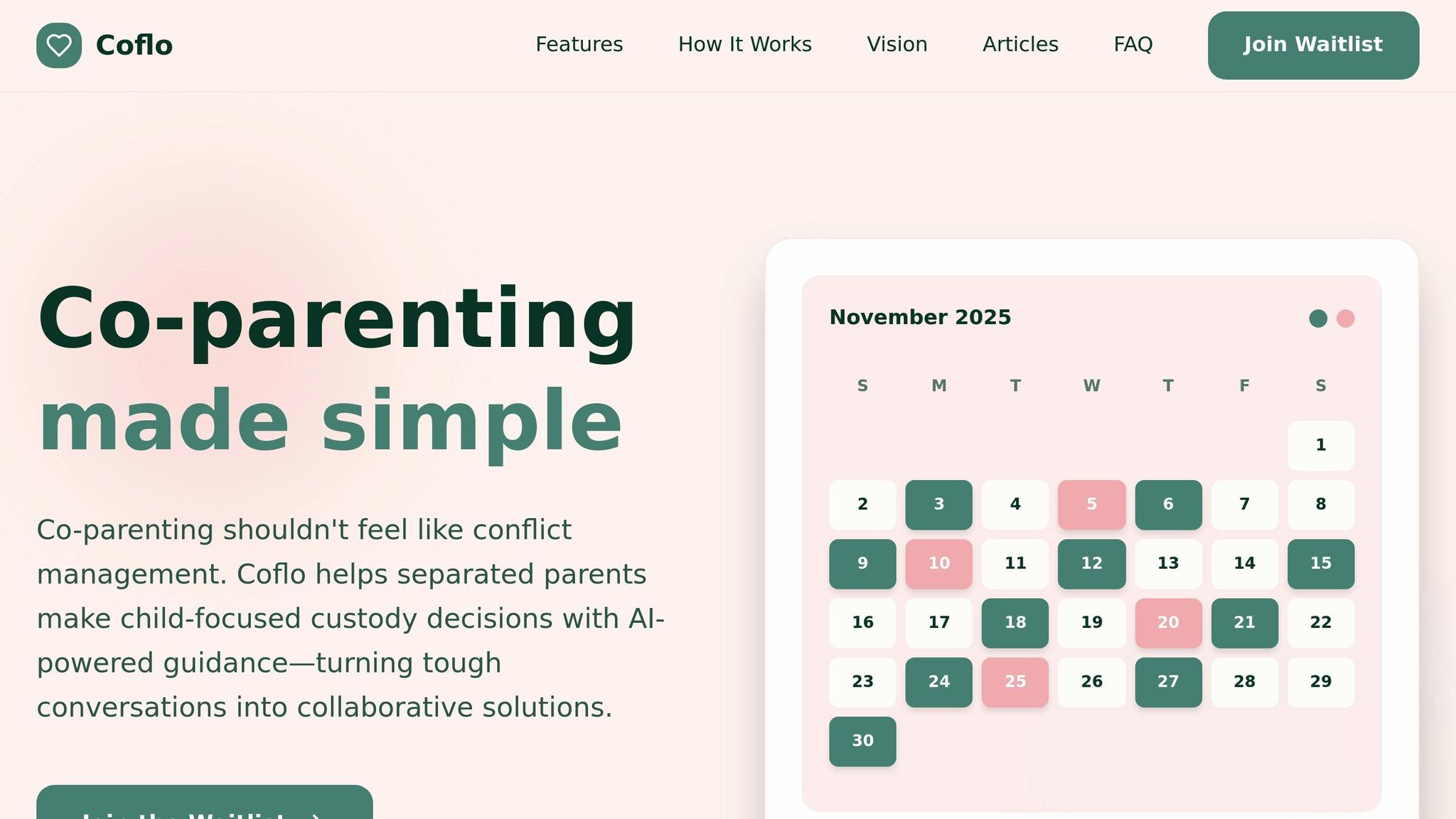
Coflo takes the stress out of setting up child custody schedules by offering personalized solutions that fit your family's unique dynamics. Instead of using generic templates, Coflo allows parents to input their specific priorities, creating schedules designed to minimize conflict and meet everyone's needs. It turns complicated decisions into manageable, step-by-step actions.
Setting Priorities with Interactive Tools
Coflo's interactive tools make it easy to set and adjust priorities. As you define what's important, the system transparently shows how your choices influence the schedule it recommends. This helps both parents explore options that aim to balance their individual concerns, fostering collaboration.
Guidance Based on Age and Development
Effective custody planning isn’t just about the present - it’s about anticipating the future. Coflo offers age-specific developmental guidelines, helping parents adapt custody arrangements as their children grow. These insights ensure that schedules evolve in a way that supports each stage of a child’s development.
Practical Transition Support
Switching to a new custody arrangement can feel overwhelming, but Coflo provides clear, actionable steps to ease the process. Its structured guidance reduces uncertainty, making transitions smoother for both parents and children.
sbb-itb-e357fb0
Key Features That Reduce Conflict
Coflo takes a thoughtful approach to reducing conflict by focusing on what matters most: the child’s well-being. By grounding its recommendations in developmental psychology and research on child welfare, the platform encourages co-parents to move beyond personal preferences and prioritize decisions that support their child’s needs. This focus on evidence-backed principles shapes every suggestion Coflo provides.
Child-Centered Schedule Recommendations
Coflo designs custody schedules tailored to a child’s developmental stage. With age-specific guidance, it offers plans that emphasize stability, emotional security, and overall well-being. These recommendations aim to support a child’s emotional, academic, and social development as they grow. Each plan includes milestones to help parents track progress and make adjustments as their child’s needs evolve.
How to Implement AI-Generated Custody Schedules
Coflo makes it easier to move from conflict to collaboration with a structured, child-centered process.
Enter Your Priorities and Constraints
Creating a successful custody schedule starts with clearly identifying what matters most to your family. Coflo translates your priorities - like maintaining stability or allowing flexibility - into actionable settings.
Begin by listing your non-negotiables. These could include work hours, school pickup times, or your child’s extracurricular commitments. Input these foundational constraints first to guide the platform’s recommendations. Coflo analyzes over 10 proven custody patterns, so setting clear boundaries helps narrow down the most practical options.
Then, use the platform’s priority sliders to balance factors like equal time, school routine consistency, minimal transitions, and alternate weekends. As you adjust these sliders, Coflo recalculates recommendations in real time, giving you instant feedback on how different priorities affect potential schedules. This visual tool helps you weigh trade-offs before making any decisions.
Both parents need to complete this process independently before comparing results. This ensures that each parent’s needs are fully considered, rather than one parent compromising just to avoid conflict. With both sets of priorities clearly defined, the AI can generate schedules that strive to balance both perspectives, rather than favoring one over the other.
After setting your priorities, review the ranked recommendations provided by Coflo.
Review and Agree on Recommendations
Once both parents have entered their preferences, Coflo generates ranked custody schedules tailored to your child’s age and developmental stage. Each recommendation comes with insights explaining why certain arrangements are beneficial for your child’s growth.
Approach this step as collaborative problem-solving, focusing on what’s best for your child rather than viewing it as a negotiation. For example, if your child is between 6 and 9 years old, Coflo might prioritize schedules that support school routines while ensuring meaningful time with both parents. The emphasis is on meeting the child’s needs over personal preferences.
Pay close attention to the benefits and considerations section for each schedule. Coflo doesn’t just suggest a plan - it highlights potential challenges and provides success markers to guide you. This transparency helps set realistic expectations and flags early signs that adjustments might be needed.
Each recommendation comes with an implementation roadmap broken into five clear steps. This structured approach avoids the common pitfall of diving into a new schedule without proper preparation, which can lead to confusion or renewed disagreements. By following these steps, you can ensure a smoother transition with your child’s well-being as the central focus.
Once you’ve agreed on a schedule, the next step is monitoring and refining it over time.
Monitor and Adjust Over Time
As children grow, their needs - and by extension, custody schedules - change. Coflo’s monitoring tools focus on measurable indicators, helping parents make informed adjustments rather than reactive decisions.
Track the success metrics outlined in the roadmap. These could include how well your child adapts to transitions, maintains academic performance, or engages in social activities. If the data shows the schedule isn’t working as intended, revisit your priorities and update the recommendations accordingly.
Building on the initial setup, you can refine the schedule to reflect your child’s changing needs. For instance, during summer, you might prioritize flexibility, while consistency becomes more important during the school year.
This structured approach to ongoing adjustments helps prevent minor issues from snowballing into major conflicts. By addressing changes proactively, Coflo supports the collaborative mindset that made the initial setup a success.
Regular check-ins every three to six months are a good rule of thumb for most families. This interval allows enough time to gather meaningful insights on how the current schedule is working, while also addressing any issues before they become entrenched. Remember, requesting changes doesn’t mean the original plan failed - it’s simply a way to ensure your child’s evolving needs remain the top priority.
Conclusion: Better Custody Planning with AI
AI-powered custody scheduling shifts the focus from heated disputes to collaborative, child-centered planning. By providing data-driven insights rooted in developmental research, these tools help families prioritize their child's well-being without the need for costly legal battles or prolonged arguments.
This approach offers a neutral, research-backed framework that minimizes bias. Instead of dwelling on past conflicts, parents can focus on practical solutions tailored to their child’s specific needs and age. When both parents are presented with the same recommendations, discussions naturally revolve around what’s best for their child.
Platforms like Coflo take this a step further with features like interactive priority sliders and developmental guidance. These tools remove the guesswork, making expert-level insights accessible at a fraction of the cost of traditional consultations. Real-time recommendations ensure that custody schedules align with a child’s growth and developmental milestones, while also fostering healthier co-parenting dynamics.
For families dealing with high conflict, AI provides the neutral ground needed to move beyond cycles of disagreement. By keeping children’s needs at the heart of every decision, AI-driven scheduling creates plans that are grounded in research and designed to maintain strong, meaningful relationships with both parents.