
How Routine Reduces Stress in Dual-Household Kids
Living in two homes can be tough on kids, especially after their parents separate. They often face emotional stress, anxiety, and behavioral changes due to different rules and routines in each household. Consistent routines across both homes can help reduce this stress by providing stability and predictability. Shared schedules for mealtimes, bedtimes, and homework are key to helping children feel secure, no matter where they are.
Key Takeaways:
- Why Routine Matters: Predictable routines improve emotional stability, sleep, and focus.
- Challenges: Different rules, custody schedules, and transitions between homes often disrupt routines.
- Solutions: Aligning rules across homes, using tools like shared calendars, and creating routines tailored to a child's age can make a big difference.
Tools like Coflo can simplify custody planning by suggesting schedules that prioritize routine consistency based on your child’s needs. Consistency is the foundation for helping kids thrive in dual-household arrangements.
Research on How Routines Help Children
How Routines Help Children Manage Emotions
Research shows that routines provide children with a sense of stability, which can ease stress and help them manage their emotions - especially in situations like living between two homes. When kids know what to expect throughout the day, they tend to feel more secure, which can lead to a calmer response when unexpected situations arise.
Routines work by engaging the brain's natural ability to anticipate. This predictable structure not only makes day-to-day life smoother but also supports healthy emotional and developmental growth.
In addition, routines play a big role in helping children develop self-regulation. They learn how to handle transitions, meet expectations, and focus better. This is particularly helpful for kids who deal with different sets of rules or emotional challenges in dual-home arrangements, as it strengthens their ability to manage emotions effectively.
Studies on Routines and Child Development
Research consistently points to the benefits of routines for children. Regular schedules around sleep, meals, and morning activities have been linked to better sleep quality, improved focus, positive behavior, and even stronger academic performance.
For children who split their time between two households, maintaining similar routines across both homes can have a profound impact. Studies show that these consistent schedules can reduce behavioral issues and create a stronger sense of security. They may also help regulate stress hormones, reducing the physical toll of stress on a child's developing body.
Why Parent Consistency Matters
The effectiveness of routines often hinges on how consistent parents are. When parents align their routines across two households, it creates a stable environment that makes transitions easier for children.
Starting consistent patterns early after a family change can make long-term adjustments smoother. Kids are also more likely to adopt regular habits when they see their parents sticking to them. A balanced approach - where the core elements of routines remain steady but allow for flexibility based on each household's needs - can help children feel both secure and understood in their unique situations.
Daily Routine Hacks for Kids and Families | Make Mornings & Bedtime Smooth
Problems with Keeping Routines in Two-Home Families
Research highlights how consistent routines benefit children, but for families with two households, maintaining these routines can be a real challenge. Even when co-parents have the best intentions, the logistics of dual households often disrupt the stability children need. Let’s break down some of the common hurdles that make consistency so difficult.
Moving Between Homes Disrupts Routines
Switching between two homes can throw off a child’s rhythm. Each environment is different, and what works in one may not exist in the other. For instance, a child might have a bedtime ritual at Mom’s house that includes reading in a special nook, but that same comfort might not be available at Dad’s apartment.
Transitions themselves can be tricky. Pickup times might clash with dinner or homework schedules. Weekend handoffs can disrupt sleep patterns or morning routines, leaving kids feeling off-balance. Even simple habits that feel second nature in one home might feel awkward or unfamiliar in the other, at least initially.
Different Rules in Each Home
One of the toughest obstacles is inconsistent rules and expectations between households. For example, one parent might enforce an 8:00 PM bedtime, while the other is more lenient, allowing the child to stay up until 9:30 PM. These shifts can leave kids unsure about what’s expected of them.
The differences don’t stop there. Screen time rules often vary - one home might limit devices to an hour a day, while the other offers unrestricted access. This inconsistency can make it hard for kids to develop balanced habits.
Even day-to-day responsibilities can differ. One parent might require chores like making the bed or tidying up before any screen time, while the other takes a more relaxed approach. Mealtime routines can also vary widely: one household might prioritize family dinners at the table, while the other allows eating in front of the TV or on different schedules.
These differences aren’t about one approach being better or worse - they simply create a lack of predictability. And without consistent expectations, kids miss out on the stability routines are meant to provide.
How Custody Schedules Affect Daily Routines
Custody schedules can also throw a wrench into routine-building. Alternating weekend arrangements are particularly disruptive. Kids might just settle into a pattern in one home, only to have it upended every two weeks - something especially challenging for younger children who thrive on consistency.
Week-on, week-off schedules bring their own issues. While they allow for longer stretches in each home, the transitions can still feel abrupt. Just as a child gets comfortable with one household’s rhythm, it’s time to switch again. This can complicate academic routines, like homework, morning prep, and after-school activities, which might need adjusting every week.
Split-week schedules - where children spend part of the week in one home and the rest in the other - are even more disruptive. With only a few consecutive days in each home, kids struggle to establish any lasting patterns. The constant back-and-forth can leave them feeling unsettled.
The timing of transitions matters too. School-night exchanges are particularly tricky, often interfering with bedtime routines and morning readiness. Kids might accidentally leave important items - like school supplies, uniforms, or completed homework - at the other parent’s house, adding unnecessary stress.
And then there are holiday and vacation schedules, which bring even more complexity. These breaks often require families to pause their usual routines for extended periods. Once the holidays are over, kids may struggle to readjust to their regular patterns, especially if they’ve just gotten used to a temporary setup.
sbb-itb-e357fb0
How to Build Consistent Routines Across Two Homes
Co-parenting can feel like a juggling act, but with clear communication and teamwork, creating stable routines across two homes is absolutely possible. By focusing on shared goals and practical strategies, parents can help their children feel secure and supported, no matter where they are.
Creating the Same Routine in Both Homes
The key to making dual-household routines work lies in shared expectations. Both parents need to agree on the basics and stick to them as closely as possible.
Take bedtime routines, for example. Agreeing on a consistent bedtime and wind-down activities - like a bath, brushing teeth, reading a story, and lights out - can make the transition between homes smoother. While small differences are fine, keeping the overall structure and timing the same is what matters most.
Morning routines might take a bit more planning but are just as important. When both homes follow the same morning schedule, kids feel more prepared and less rushed as they start their day.
Policies around homework and screen time often require the most discussion. Agreeing on simple rules, like "homework comes before screen time" or "one hour of screen time on school nights", provides consistency. Even if one parent uses a timer and the other relies on verbal reminders, the underlying rules should remain the same.
Regular communication is a must. Many co-parents find monthly check-ins helpful for discussing what's working and what might need tweaking. These conversations should always focus on the child's needs instead of personal preferences.
Tools for Managing Routines
Once the routines are set, having the right tools can make sticking to them much easier.
- Visual schedules are great for younger kids. Simple charts with pictures or icons can help children know what to expect, no matter which home they’re in. Creating these charts together can also help kids feel more involved.
- Shared digital calendars are lifesavers for keeping track of activities, appointments, and any changes. Tools like Google Calendar or Apple’s Family Sharing allow both parents to stay updated and avoid mix-ups, like double-booking events.
- Co-parenting apps can make communication easier. These apps let parents share updates about routines, challenges, or adjustments without unnecessary back-and-forth.
- Some families also use transition bags - small backpacks filled with comfort items, favorite books, or a special stuffed animal. These bags travel with the child, providing a sense of familiarity and stability in both homes.
Adjusting Routines for Different Ages
Children’s needs evolve as they grow, so routines should adapt to match their stage of development.
For young children (ages 3-6), structure is everything. Simple, predictable routines - like set meal times, naps, and bedtime rituals - help them feel secure. Even small changes can feel overwhelming at this age, so it’s important to align the timing and sequence of activities between both homes. Comfort items, like a favorite blanket or stuffed animal, can also ease transitions.
School-age kids (ages 7-11) can handle a little more flexibility but still thrive on structure. Focus on key routines like homework time, bedtime, and morning prep. Giving them some say in the routine - like choosing whether homework happens before or after dinner - can make them more invested in sticking to it. Encouraging them to pack their own transition bags or maintain checklists helps build independence.
Teenagers (ages 12 and up) need routines that balance consistency with their growing independence. Instead of rigid schedules, focus on setting clear expectations around curfews, check-ins, and academic responsibilities. Teens often prefer using their own tools, like phone apps, to manage their tasks. Involving them in creating these systems ensures they feel respected while maintaining the necessary boundaries.
No matter the age, gradual changes work best. When introducing or adjusting routines, both parents should implement them at the same time and give kids a couple of weeks to adapt. Consistency and patience during this period are crucial.
The most effective routines are those that grow with the child while maintaining a sense of predictability and security. Regular family discussions - whether with one parent or both - can help fine-tune routines as kids’ needs and circumstances evolve.
Using Coflo for Custody Planning and Routine Building
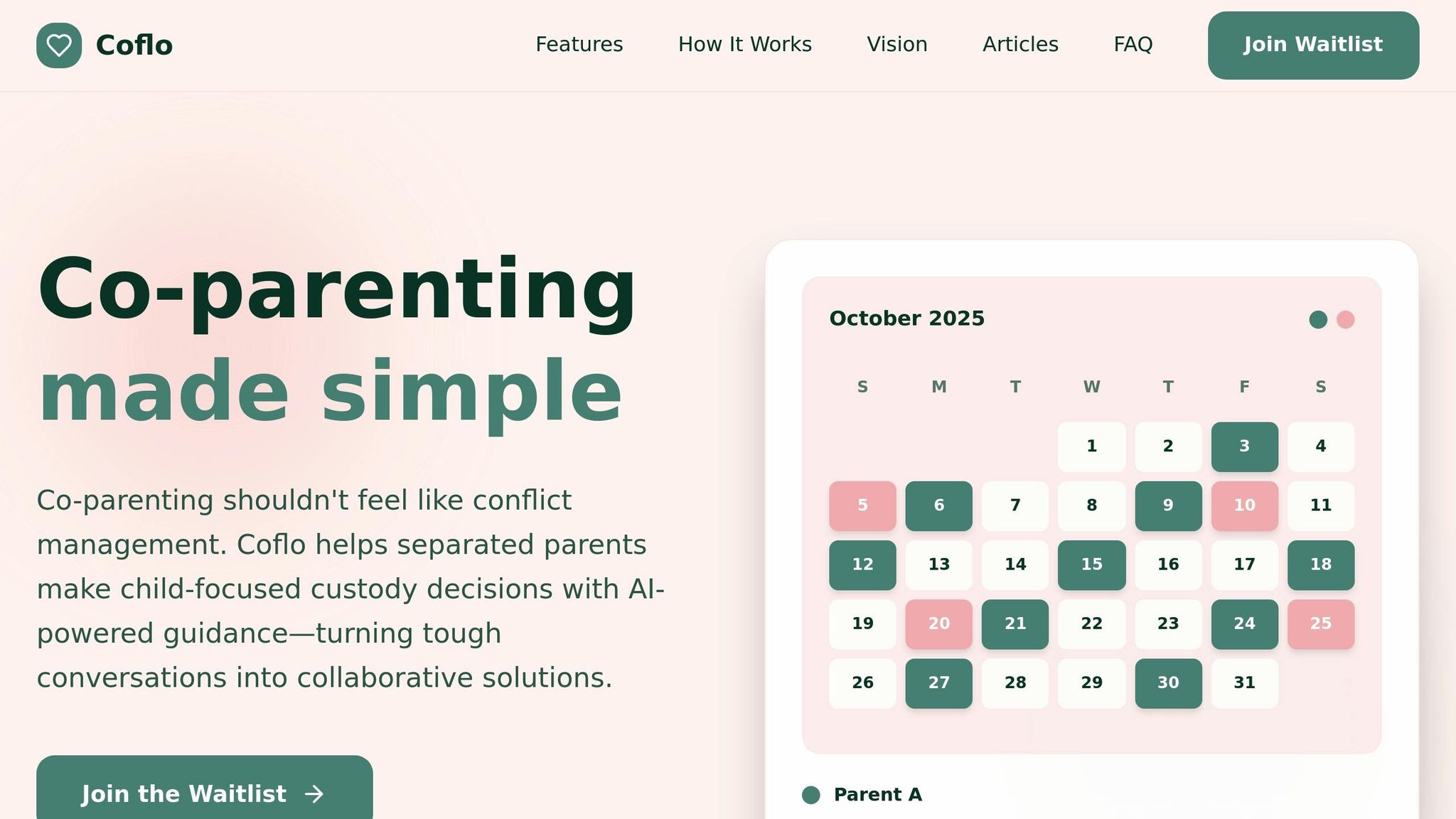
Coflo simplifies the often overwhelming task of custody scheduling by focusing on your child's well-being and creating consistent routines across both homes. Instead of relying on guesswork, the platform provides personalized recommendations rooted in developmental psychology research.
How Coflo Matches Your Parenting Priorities
Coflo stands out with its customizable priority tool, which goes beyond generic templates. You can adjust sliders to reflect what matters most to your family's unique needs.
For example, if routine and stability are your top priorities, you can emphasize factors like school consistency and stability in the tool. Based on these inputs, the AI evaluates different custody arrangements and suggests schedules that promote a stable environment while ensuring quality time with both parents.
If equal time is a key goal, Coflo recalculates recommendations in real-time as you tweak the sliders. You might find that a 2-2-3 schedule strikes the right balance, or that alternating weeks better suit your child's age and personality. This approach eliminates endless debates and focuses on what research shows is most beneficial for your child's emotional health. Plus, the recommendations are tailored to align with each child's developmental stage.
Child Development Guidance by Age
One of Coflo's most valuable features is its ability to adapt recommendations based on your child’s age and developmental needs. It recognizes that a custody plan for a preschooler won’t work for a preteen, and adjusts accordingly.
- For younger children (ages 3-5): The focus is on creating a secure attachment and predictable routines. Recommendations include shorter transitions and frequent contact with both parents to foster emotional stability.
- For school-age children (ages 6-9): Suggestions take into account homework routines, extracurricular activities, and maintaining strong peer relationships.
- For teenagers (ages 10-12 and up): The emphasis shifts toward fostering independence and flexibility while still maintaining structure where needed.
Each recommendation is backed by developmental psychology insights, helping parents understand not just what works, but why it works for their child’s stage of growth. Armed with this knowledge, families can confidently implement custody schedules that align with their child's needs.
Step-by-Step Plans for New Custody Schedules
Transitioning to a new custody arrangement can be tricky, but Coflo offers detailed implementation roadmaps to ensure routines stay intact. Each recommended schedule comes with a 5-step plan to make the process smoother.
These guides cover practical aspects like when to make the transition, how to prepare your child for changes, and what to monitor during the adjustment period. Instead of diving in unprepared, families receive success indicators to help them assess whether the new schedule is working.
Coflo also provides a breakdown of the benefits and potential challenges for each schedule, along with strategies to address any hurdles. This proactive approach helps families avoid common mistakes that can disrupt even the best-laid plans.
Additionally, the platform explains how each recommendation supports routine building and reduces stress. This clarity helps parents stay committed, even when the initial adjustment period is tough. Guidance on communication between homes ensures that both parents can coordinate effectively, keeping routines consistent and manageable.
Conclusion: Making Routine a Priority in Two-Home Families
Maintaining consistent routines across two households is crucial for a child's emotional health. Predictable schedules provide a sense of stability, helping children feel grounded during transitions between homes.
When bedtimes, mealtimes, and daily activities align, children experience less anxiety and develop stronger coping skills. This consistency reassures them, no matter which home they are in.
Using data-driven custody schedules can help create these routines by considering your child's age, developmental stage, and family dynamics. Tools like Coflo are designed to simplify this process, offering personalized and research-based custody plans that prioritize routine consistency.
Coflo not only supports routine-building but also adjusts as your child grows. From structured preschool schedules to the more adaptable needs of teenagers, it ensures that routines evolve seamlessly, easing stress for both parents and children.