
Age-Specific Custody Schedules: A Complete Guide
Custody schedules should match a child’s developmental stage, as their needs evolve with age. Infants need frequent, short visits to maintain stability, while teenagers require flexible schedules to accommodate their independence and social lives. Research shows that well-structured custody arrangements, tailored to a child's age, support emotional, cognitive, and social development. Here's a quick breakdown:
- Babies (0-1 years): Short, frequent visits; avoid long separations.
- Toddlers (1-3 years): Consistent routines with manageable transitions (e.g., 2-2-3 schedule).
- Preschoolers (3-5 years): Slightly longer stays; fewer transitions (e.g., 3-4-4-3 schedule).
- School-age children (6-12 years): Stability for school routines; options like week-on/week-off.
- Teenagers (13-18 years): Flexible plans that respect their autonomy and busy schedules.
Tools like Coflo use child development research to craft personalized custody schedules, helping parents prioritize their child's well-being while managing logistics effectively.
Custody Schedules by Child Age
Children's needs change as they grow, and custody schedules should reflect those shifts. Each stage of development comes with unique requirements that should guide your parenting plan. Below, you'll find practical suggestions for crafting age-appropriate custody schedules.
Babies (0-1 Years)
Infants benefit most from short, frequent visits rather than extended overnight stays. During their first year, they are forming essential attachment bonds and establishing feeding and sleep routines that shouldn't be disrupted.
For example, consider daily visits lasting 2–4 hours or alternate days with 4–6-hour sessions. As the baby approaches 6–9 months, you can gradually introduce overnight stays while keeping routines steady. These consistent patterns help ensure the baby feels secure.
A common setup involves the non-primary parent visiting daily, perhaps from 10:00 AM to 2:00 PM. This allows time for feeding, play, and a nap without interfering with the baby's routine.
Toddlers (1-3 Years)
Toddlers thrive with schedules that balance frequent transitions and consistent routines, such as a 2-2-3 pattern. This approach helps support their growing language skills and emotional regulation while accommodating their developing memory.
Overnight stays become more feasible during this stage, and both parents should take an active role in daily care. Visual aids, like calendars with photos of each parent, can help toddlers understand where they’ll be each day.
For example, you might use a simple calendar with pictures to show which parent they’ll be with, easing any anxiety around transitions.
Preschoolers (3-5 Years)
Preschool-aged children do well with schedules like 2-2-3 or 3-4-4-3, which reduce the number of transitions while fitting around preschool schedules and social activities. Their growing independence and improved communication skills make longer separations easier to manage.
Involve preschoolers in preparing for transitions between homes, which can help them feel more secure. Both parents should attend important events like school performances and maintain consistent discipline and expectations across households.
School-Age Children (6-12 Years)
For school-age kids, schedules like week-on/week-off or 2-2-5-5 work well, provided both homes coordinate on school pickups, homework, and extracurricular activities. These arrangements support the need for stability in school and activities while accommodating their growing interests.
It's crucial for children to attend the same school regardless of which parent they're staying with. Homework should be completed no matter the household, and both parents should have access to school communications and events.
Many families prefer Sunday evening transitions, giving children time to settle in before the school week starts. As kids near adolescence, their increasing independence may require more flexibility in the custody plan.
Teenagers (13-18 Years)
Teenagers need flexible arrangements, such as week-on/week-off schedules, that can adapt to their school events, jobs, and social lives. Regular family meetings can ensure their input is considered, fostering a sense of respect and autonomy.
Some families adopt a "home base" approach, where the teen primarily lives with one parent but spends flexible, regular time with the other. Avoid rigid schedules, as they can lead to unnecessary tension and pushback.
Respect their need for privacy and give plenty of notice for any schedule changes. Open communication is key during this stage, as teens value independence but still need parental support.
Coflo's age-specific guidelines take these developmental considerations into account, offering tailored strategies to meet the unique needs of each age group while aligning with your family’s priorities and circumstances.
Child Development and Custody Decisions
Understanding how children grow and develop is key to creating custody arrangements that genuinely support their well-being. Research on child development lays the groundwork for parenting plans tailored to different ages, ensuring children’s emotional, cognitive, and social needs are met.
Emotional Needs and Parent Bonds
Attachment theory plays a vital role in shaping custody plans, especially for younger children. Secure attachment is built through consistent and responsive caregiving by primary caregivers. This doesn’t mean one parent is more important than the other, but it highlights how disruptions to routines can impact a child’s sense of security.
As children grow older, they can handle longer separations from their parents. For example, older children are better equipped to understand and adapt to scheduled separations compared to infants. Their cognitive development allows for greater flexibility in custody arrangements as they mature.
Emotional regulation also improves with age. Younger children may find transitions between homes challenging, while older kids, particularly those in school, often adapt more easily when schedules are clear and they feel involved in the process. Routine, in particular, is crucial for supporting both emotional stability and brain development.
Brain Development and Routine
Children’s brains thrive on predictability and routine, especially during the first five years when development is most rapid. A consistent schedule helps build a sense of security and supports healthy brain growth.
Coordinating sleep schedules, meal times, and academic routines across both homes is essential. These shared routines not only promote neural development but also reduce behavioral stress. Parents who work together on maintaining predictable daily patterns create an environment where their children can flourish.
Skills like planning, organization, and time management - known as executive functions - develop gradually over childhood. Custody arrangements can encourage this growth by involving children in planning discussions that are appropriate for their age. Maintaining consistent expectations across both households also helps reinforce these skills.
Social Growth and Independence
In addition to emotional and cognitive needs, consistent custody schedules also play a role in fostering social skills and independence. As children grow, their friendships and social activities become increasingly important. Elementary school-aged children begin forming meaningful peer relationships that are essential for their social development. Custody schedules that are too rigid, preventing participation in events like birthday parties or team sports, can interfere with this growth.
Teenagers, on the other hand, face unique challenges as they navigate their journey toward adulthood. Their need for autonomy often clashes with traditional custody arrangements. Successful plans for teens often involve them in the decision-making process and allow flexibility to fit their social and academic priorities.
Peer relationships take center stage during adolescence. For example, a custody schedule that forces a 16-year-old to miss important social events or extracurricular activities can lead to frustration and pushback. As children mature, they should have more say in their schedules. A 10-year-old might express a preference about which parent attends their soccer game, while a 15-year-old may need flexibility to balance a part-time job or college prep activities.
Coflo's developmental psychology tools help parents navigate these evolving needs. By offering age-specific recommendations, the platform ensures custody decisions align with each child’s developmental stage while maintaining the stability and consistency essential for their growth.
How to Start New Custody Schedules
Changing custody arrangements requires careful planning, always keeping your child's well-being front and center. Whether you're setting up your first formal schedule or tweaking an existing one to better suit your child's current needs, the process involves thoughtful planning, clear communication, and a willingness to adapt over time.
Steps for Changing to Age-Appropriate Schedules
Start by evaluating your current schedule. What’s working well? What’s causing stress? Look out for signs like difficulty with transitions, changes in behavior after moving between homes, or struggles in school that could stem from scheduling conflicts.
Keep track of these observations over a few weeks. Sometimes initial adjustment issues resolve on their own, but if problems like frequent meltdowns, declining grades, or ongoing stress persist, it might be time to reassess the schedule.
Take into account factors like your child’s personality, school and extracurricular commitments, and the distance between homes. A schedule that worked for a preschooler may not meet the needs of an older child who needs more stability for school and friendships.
When making changes, introduce them gradually with a clear transition plan. For example, if you’re shifting from short visits to longer stays, start by extending visits by a few hours before moving to overnight stays. This gradual approach helps kids adjust without feeling overwhelmed.
Working Together as Co-Parents
Effective co-parenting is key to making any changes work. Both parents need to focus on what’s best for the child, approaching discussions as problem-solving sessions rather than debates. Frame the conversation around your child’s needs: instead of saying, “Your schedule isn’t working for me,” try, “Emma seems stressed by the frequent transitions.”
Set up regular communication channels specifically for co-parenting. Many parents find monthly check-ins helpful for reviewing how things are going and addressing concerns early. These meetings should focus on the big picture, separate from day-to-day logistics like drop-off times.
Flexibility and compromise are crucial. Your perfect schedule might not match your co-parent’s, but finding middle ground often leads to better outcomes for everyone. Consider trial periods for new arrangements to see how they work before committing long-term.
Document any agreements to avoid confusion. Include details like pickup and drop-off times, holiday plans, and how to handle requests for changes. Keep discussions focused on how the schedule affects your child’s routine and well-being, rather than abstract ideas like "fairness."
Adjusting Schedules as Children Grow
Children’s needs change as they grow, so it’s important to review custody schedules regularly. Plan for periodic reviews, such as every 12-18 months, or whenever major life changes occur. This proactive approach ensures the arrangement continues to meet your child’s evolving needs.
For example, moving from elementary to middle school often brings new academic and social pressures that may require adjustments. A 12-year-old might need more consistency during the school week compared to when they were 8, even if it means rebalancing time between homes.
Involve your child in discussions about schedule changes in an age-appropriate way. Young children can share what feels easy or hard, while teens might have specific requests related to their school, work, or social lives. However, avoid putting the responsibility of major decisions on your child or making them feel like they have to choose between parents.
Be open to temporary changes becoming permanent. A high schooler’s part-time job or demanding academic program might start as a short-term challenge but could signal a need for longer-term adjustments as they gain independence.
Pay attention to how changes affect your child’s overall well-being, not just their immediate reactions. Some kids adapt quickly, while others need more time to settle into a new routine. Look for patterns in their sleep, appetite, schoolwork, and social interactions to determine if the changes are beneficial.
Coflo’s age-specific guidance can support parents in understanding when schedule changes align with a child’s natural development and when they might be premature. By updating your child’s age in the platform, you’ll receive tailored recommendations that help keep your custody arrangement in tune with their needs as they grow.
sbb-itb-e357fb0
Custody Schedule Comparison Charts
When deciding on a custody schedule, it’s important to consider your child’s developmental needs alongside practical factors like distance, work obligations, and your co-parenting dynamic. Below, we break down common custody schedules by age, highlighting their benefits, drawbacks, and which situations they work best for.
Schedule Comparison Tables by Age
Babies (0-1 Years)
| Schedule Type | Benefits | Drawbacks | Best For |
|---|---|---|---|
| Frequent Short Visits (2-3 hours, 3-4x/week) | Encourages bonding with both parents; respects feeding routines; avoids major disruptions | Requires detailed coordination; limited overnight bonding | Breastfeeding mothers; parents living nearby |
| 2-2-3 Schedule (shorter blocks) | Predictable routine; allows for longer bonding periods | Can disrupt feeding schedules; tough for working parents | Bottle-fed babies; parents ready for overnights |
| Primary Home with Visits | Offers stability and consistent care; easier for routines | Less time with non-primary parent; bonding challenges | High-conflict situations; long-distance co-parents |
Toddlers (1-3 Years)
| Schedule Type | Benefits | Drawbacks | Best For |
|---|---|---|---|
| 2-2-3 Schedule | Frequent parent contact; short, manageable time blocks | Requires multiple transitions weekly; needs strict routines | Parents living close by; similar parenting styles |
| 3-4-4-3 Schedule | Reduces transitions; provides weekend time with both parents | Complex pattern; demands strong communication | Parents seeking fewer transitions; organized co-parents |
| Week On/Week Off | Promotes bonding through extended time; fewer transitions | Long separations may cause anxiety; can clash with work schedules | Older toddlers; flexible work arrangements |
Preschoolers (3-5 Years)
| Schedule Type | Benefits | Drawbacks | Best For |
|---|---|---|---|
| 2-2-5-5 Schedule | Combines stability with frequent contact; predictable routine | Requires coordination; multiple transitions | Children adapting well to change; parents prioritizing consistency |
| Week On/Week Off | Encourages deep bonding; fewer transitions | Separation anxiety may arise; potential school routine challenges | Kids comfortable with longer separations; close school districts |
| 5-2-2-5 Schedule | Longer weekends; steady school-week structure | Uneven time split; scheduling can be tricky | Families focused on school stability; parents with weekend flexibility |
School-Age Children (6-12 Years)
| Schedule Type | Benefits | Drawbacks | Best For |
|---|---|---|---|
| Week On/Week Off | Supports school routines; fosters strong parent-child bonds | Extended time away from one parent; difficult for extracurricular activities | Kids thriving on structure; parents in the same district |
| 2-2-5-5 Schedule | Maintains frequent contact; avoids long separations | More transitions; requires cooperation | Families valuing regular contact; collaborative co-parents |
| Primary Home + Weekends | Provides school stability; strengthens friendships | Limits time with non-primary parent; risk of drifting apart | High-conflict families; children struggling with changes |
Teenagers (13-18 Years)
| Schedule Type | Benefits | Drawbacks | Best For |
|---|---|---|---|
| Flexible/Teen Choice | Honors growing independence; fits extracurriculars | Requires a mature teen; potential for favoritism | Responsible teens; low-conflict co-parenting |
| Week On/Week Off | Easy for planning; maintains strong parent bonds | May interfere with social life; rigid structure | Teens who enjoy routine; parents supporting activities |
| Primary Home + Flexible Visits | Stability for academics and activities; adaptable | Risk of reduced connection with one parent | Teens with busy schedules; college prep focus |
These tables summarize options, but every family’s situation is unique. Practical factors like distance and work schedules often play a big role in deciding what works best.
For instance, long-distance co-parents might prefer schedules that limit travel, such as extended summer stays or alternating school breaks. Meanwhile, parents with traditional Monday-Friday jobs often find weekend-focused plans easier, while those with flexible or shift work may be able to accommodate more varied arrangements.
The goal is to choose a schedule that aligns with your child’s developmental stage while balancing logistical considerations. Tools like Coflo’s AI-powered guidance can help you evaluate options based on your family’s specific needs.
Ultimately, these charts are starting points for discussion. The best custody schedule supports your child’s growth, promotes strong relationships with both parents, and works within your family’s unique circumstances.
Next, we’ll explore the legal rules designed to protect your child’s well-being.
Legal Rules and Child Wellbeing
Understanding how custody decisions are shaped by legal standards can help parents make choices that prioritize their children's needs. In the U.S., custody laws are designed to reflect developmental insights, ensuring that decisions support a child’s growth and overall wellbeing.
Legal Rules for Custody Planning
The foundation of custody decisions in American family courts is the "best interests of the child" standard. This principle requires judges to weigh several factors, including the child’s physical and emotional needs, the ability of each parent to provide care, and the stability of the proposed living arrangements.
Courts increasingly support shared parenting arrangements, which aim to maintain meaningful relationships with both parents whenever possible. This approach aligns with research showing that children generally thrive when they have safe and healthy connections with both parents.
In many cases, joint legal custody is favored. This arrangement allows both parents to have a say in major decisions about their child’s education, healthcare, and overall welfare. However, physical custody arrangements can vary widely, depending on the specific needs of the child and the family’s circumstances.
Flexibility and cooperation between co-parents are also highly valued. Judges often look favorably on parents who show a willingness to work together and adapt custody schedules as their children’s needs evolve. This collaborative mindset helps reduce conflict and provides children with a more stable and supportive environment.
Custody orders can be modified if significant changes occur. For example, adjustments might be needed due to job changes, relocation, or shifts in a child’s developmental needs. Courts typically require evidence that such modifications serve the child’s best interests.
Putting Child Wellbeing First
Ensuring a child’s wellbeing involves more than just meeting their basic physical needs. Experts and courts alike recognize the importance of addressing a child’s emotional, psychological, and social development.
Stability, routine, and age-appropriate adjustments are critical for fostering healthy development. While custody schedules don’t have to be overly rigid, any changes should be intentional and clearly communicated to the child to minimize confusion or stress.
Reducing children’s exposure to parental conflict is another key factor. Research shows that ongoing conflict between parents can be more damaging to children than divorce itself. Effective custody arrangements often include strategies for resolving disagreements privately and maintaining respectful communication between co-parents.
Regular monitoring and adjustments to custody arrangements ensure they continue to meet a child’s changing needs. For instance, what works for a toddler may not be suitable for a teenager. Periodic check-ins and a willingness to make changes show a strong commitment to prioritizing a child’s wellbeing.
How Coflo Keeps Family Information Private
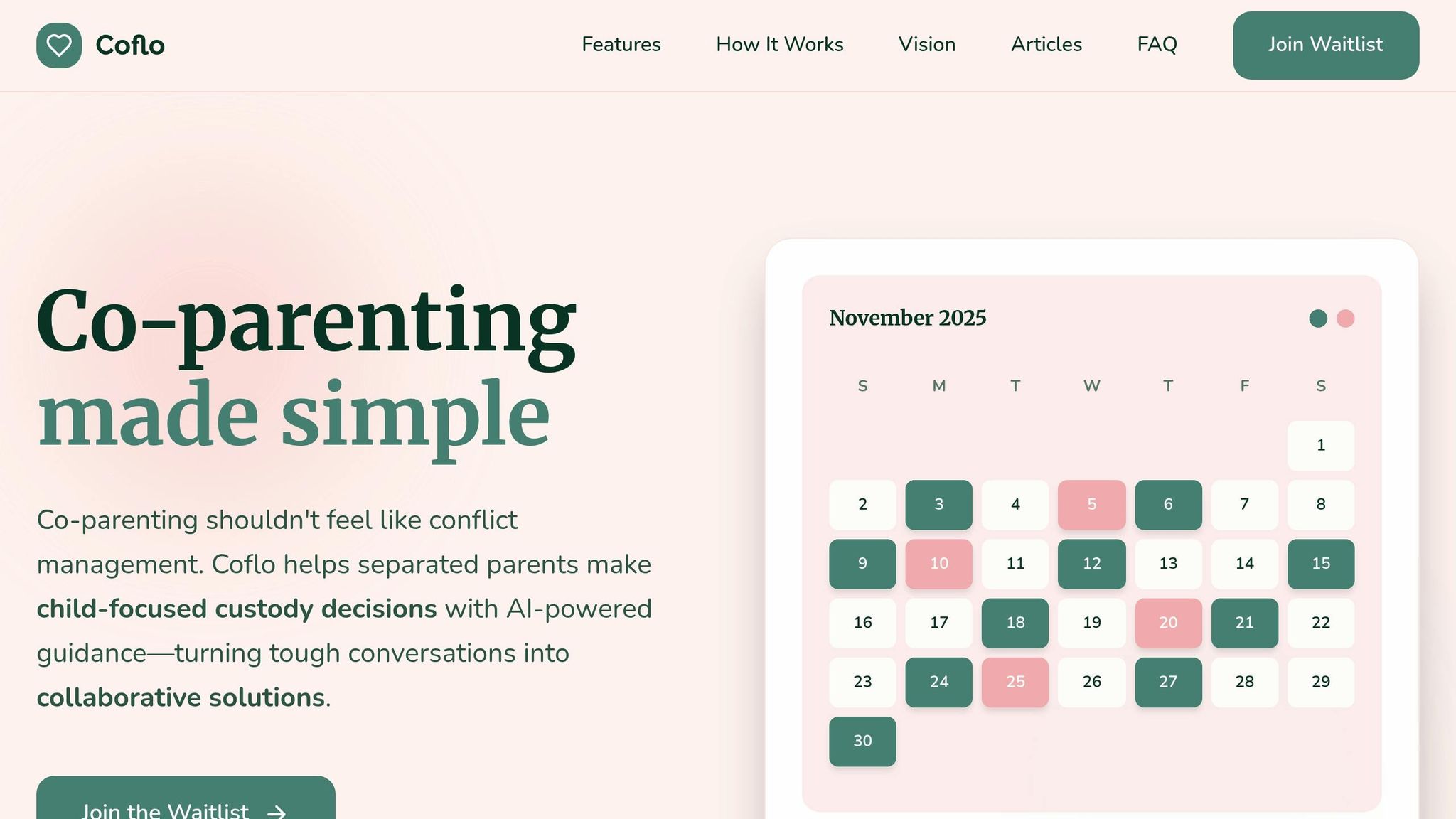
When it comes to custody planning, protecting sensitive family information is essential. Coflo takes a comprehensive approach to privacy to ensure families can explore custody options securely.
- Advanced encryption: Coflo uses industry-standard SSL encryption for data in transit and layered encryption for data at rest, safeguarding all user information.
- Minimal data collection: Only the necessary details are gathered to provide personalized custody recommendations. Coflo avoids storing unnecessary personal information.
- User control: Parents have full control over their data, including the ability to delete accounts and associated information at any time.
- No third-party sharing: Family information is never sold or shared with external companies. Coflo’s focus is on offering custody planning tools, not monetizing user data.
- Secure access: Multi-factor authentication and strict login procedures ensure that only authorized users can access sensitive information.
- Privacy compliance: Coflo adheres to all relevant data protection laws and continually updates its security measures to counter emerging threats.
These measures create a secure environment where parents can explore custody arrangements with confidence. By protecting sensitive information, Coflo allows families to focus on making informed decisions that support effective co-parenting and prioritize their children’s needs.
Conclusion: Child-Focused Custody Planning
Custody schedules should always center on a child’s developmental needs. For example, infants benefit from frequent interactions with both parents to form secure bonds, while teenagers need arrangements that honor their growing independence and social lives. Each stage of development comes with specific emotional, psychological, and social requirements that should guide how custody plans are structured.
The best custody arrangements strike a balance between providing stability and allowing flexibility to adapt as children grow. They aim to reduce conflict between co-parents and are informed by research on child development. By focusing on these principles, parents can create supportive environments where children can thrive, even when navigating life between two households.
To complement these strategies, technology plays a key role in simplifying custody planning. Traditional methods can feel overwhelming and often lack personalization. Tools like Coflo address this by blending AI-driven recommendations with insights from developmental psychology. This empowers parents to make thoughtful, informed decisions tailored to their child’s specific age and needs.
AI tools provide clear, research-based guidance that helps co-parents avoid the stress of decision-making while ensuring plans are rooted in what’s best for the child - not just convenience or emotion. This transforms custody planning into a forward-thinking, child-focused process.
Custody plans should grow with your child. As highlighted earlier, schedules need to evolve over time. A preschooler who thrives on frequent, shorter visits might benefit from longer stays during elementary school. Similarly, a middle schooler who relies on consistent weekday routines may need more flexibility as they transition into teenage years with busier social lives. By continuously adapting to these changes, parents ensure their custody arrangements remain supportive and relevant at every stage of their child’s development.