
Joint Custody and Cognitive Development: What Studies Show
Does joint custody help children thrive intellectually? Research says yes - when done right. Children in joint custody often perform better in areas like problem-solving and emotional regulation compared to sole custody arrangements. The key? A stable, low-conflict environment and schedules tailored to the child’s age.
Here’s what you need to know:
- Joint custody promotes cognitive flexibility by exposing kids to diverse parenting styles.
- Sole custody offers consistency but may limit varied learning experiences.
- Age matters: Younger kids need frequent, shorter visits; school-age kids benefit from stable routines; teens require flexibility and autonomy.
- Tools like AI-powered platforms now help parents design custody plans that align with developmental milestones, ensuring children’s intellectual and emotional needs are met.
The bottom line: The quality of the custody arrangement - more than the type - determines its impact on a child’s growth.
The Pros and Cons of Joint Custody of Parents and Children
Cognitive Outcomes by Custody Type
Studies examining custody arrangements reveal that academic performance, executive functioning, and overall adjustment are influenced by elements like family dynamics, parenting quality, and the level of conflict between parents.
Joint Physical Custody Research Findings
Research suggests that joint physical custody (JPC) can offer cognitive advantages for children. Maintaining strong relationships with both parents provides a richer mix of learning experiences and emotional support. With two actively involved parents, children benefit from diverse approaches to homework, problem-solving, and everyday decision-making, which can enhance cognitive flexibility. However, these benefits heavily depend on how well the arrangement is managed. Effective communication and minimal conflict between parents are crucial for fostering a positive environment. Next, let’s explore how sole custody impacts cognitive development.
Sole Custody Research Findings
In sole custody arrangements, a child often experiences stability through a consistent environment with one primary caregiver. This stability can help establish predictable routines, which are beneficial for emotional and cognitive growth. However, the absence of regular interaction with a second parent may reduce exposure to different perspectives or problem-solving styles. In these cases, outcomes like academic success and executive functioning hinge on the custodial parent’s ability to provide time, resources, and active involvement in the child’s education and extracurricular activities. These observations lead to a comparison of the cognitive effects of joint and sole custody.
Joint vs. Sole Custody: Cognitive Impact Comparison
Research highlights that joint custody offers children access to varied learning experiences, while sole custody can provide a stable and consistent environment. Regardless of the custody type, the key factors for positive cognitive development are consistency and a low-conflict atmosphere. When these conditions are met, children are more likely to thrive cognitively in either arrangement.
How Age Affects Custody Schedule Outcomes
The way custody schedules are structured can have a profound impact on a child's cognitive and emotional growth, which shifts as they move through different stages of development. From early childhood to adolescence, tailoring custody arrangements to a child's age can help meet their evolving needs and support their overall well-being. Research shows that age-appropriate custody plans can play a key role in fostering healthy development, complementing broader insights into custody's effects.
Ages 2–5: Attachment and Frequent Contact
During early childhood, the brain is rapidly developing, and forming secure attachments is a top priority. Frequent, shorter visits with both parents can help young children build strong emotional bonds while maintaining consistent routines. These regular interactions also support early language skills and emotional regulation, which are crucial at this stage.
Ages 6–12: Stability and Academic Focus
As children enter their school years, they start to develop essential executive skills like planning and organization. Custody arrangements that prioritize stability - such as consistent academic environments and regular involvement from both parents - can help children thrive. Additionally, exposure to each parent's unique strengths can encourage cognitive flexibility, which is vital for problem-solving and adapting to new challenges.
Ages 13–18: Flexibility and Growing Independence
Adolescence brings a push for greater independence and more complex thinking. Flexible custody schedules that allow teenagers to have a say in the arrangement can help foster their sense of autonomy while still providing parental guidance. Maintaining strong relationships with both parents during this time is linked to better academic performance and readiness for adult responsibilities.
Age-Based Custody Schedule Comparison
| Age Group | Suggested Schedule Approach | Potential Cognitive and Emotional Benefits | Key Considerations |
|---|---|---|---|
| 2–5 years | Frequent transitions with shorter stays | Supports early language development and emotional regulation | Keep routines stable and predictable |
| 6–12 years | Moderately extended visitation periods | Encourages executive skills and academic focus | Balance school stability with parental time |
| 13–18 years | Flexible schedules with teen input | Promotes independence and complex thinking | Involve teens in schedule decisions |
sbb-itb-e357fb0
Using Developmental Psychology in Custody Planning
Understanding how children grow and develop at different stages can transform custody planning into a process that prioritizes the well-being of the child. By applying insights from developmental psychology, parents can create custody arrangements that promote cognitive growth, emotional stability, and healthy relationships with both parents.
Attachment Theory and Cognitive Development
Developmental psychology highlights the importance of secure attachments for a child's mental and emotional growth. According to attachment theory, children who form strong emotional bonds with their caregivers often develop better cognitive abilities and stronger executive functioning skills. These include essential mental processes like working memory, flexible thinking, and self-control.
When children feel secure and connected to both parents, their minds are free to focus on learning, problem-solving, and critical thinking instead of dealing with stress or uncertainty. These skills are crucial for academic success and emotional well-being, not just during childhood but well into adulthood.
For custody planning, the takeaway is clear: maintaining strong bonds with both parents is about more than preserving family relationships - it directly impacts brain development. To nurture these bonds, children need consistent and predictable time with each parent. A well-thought-out schedule that allows for regular, meaningful interactions with both parents can help foster secure attachments and support healthy cognitive growth.
Matching Custody Schedules to Developmental Milestones
Taking attachment theory a step further, tailoring custody arrangements to a child’s developmental stage can enhance their growth even more. Each stage of development comes with unique needs, and custody schedules should reflect this.
- Toddlers and preschoolers thrive on frequent transitions between parents, which ensure they benefit from the different parenting styles, language interactions, and problem-solving approaches each parent offers. These varied experiences are essential for their developing brains.
- School-age children often need schedules that balance consistency in their academic lives with strong parental involvement. Regular engagement from both parents - whether it’s helping with homework, attending school events, or participating in daily routines - supports their growing executive function skills.
- Teenagers require a different approach. They benefit from arrangements that encourage independence while still providing balanced guidance. Flexible schedules that allow teens to have some say in custody decisions can help build their decision-making skills and autonomy, all while maintaining strong parental support.
These principles align with research showing the importance of stable and developmentally appropriate custody arrangements. Tools like Coflo's AI-powered platform take these insights and put them into action. By analyzing a child's age and developmental stage, the platform suggests custody schedules tailored to their specific needs. For younger children, it prioritizes attachment security; for school-age kids, it emphasizes academic stability; and for teens, it focuses on fostering independence - all while ensuring cognitive and emotional growth.
This research-backed approach helps parents shift their focus from personal preferences to what truly benefits their child. By integrating developmental psychology into custody planning, families can create arrangements that genuinely support their child’s growth and well-being.
Applying Research to Real Custody Decisions
Studies consistently show that joint custody can support a child’s cognitive development. Yet, many families struggle to turn these findings into practical custody arrangements. Traditional custody planning often leans on one-size-fits-all templates, which can overlook the specific developmental needs of a child. This gap underscores the importance of a more systematic, research-informed approach to custody planning.
By combining technology with developmental psychology, families can bridge this gap. Tools that translate complex psychological insights into actionable strategies ensure custody decisions are centered on the child’s needs, rather than being driven solely by convenience or cost.
How Coflo Integrates Developmental Psychology
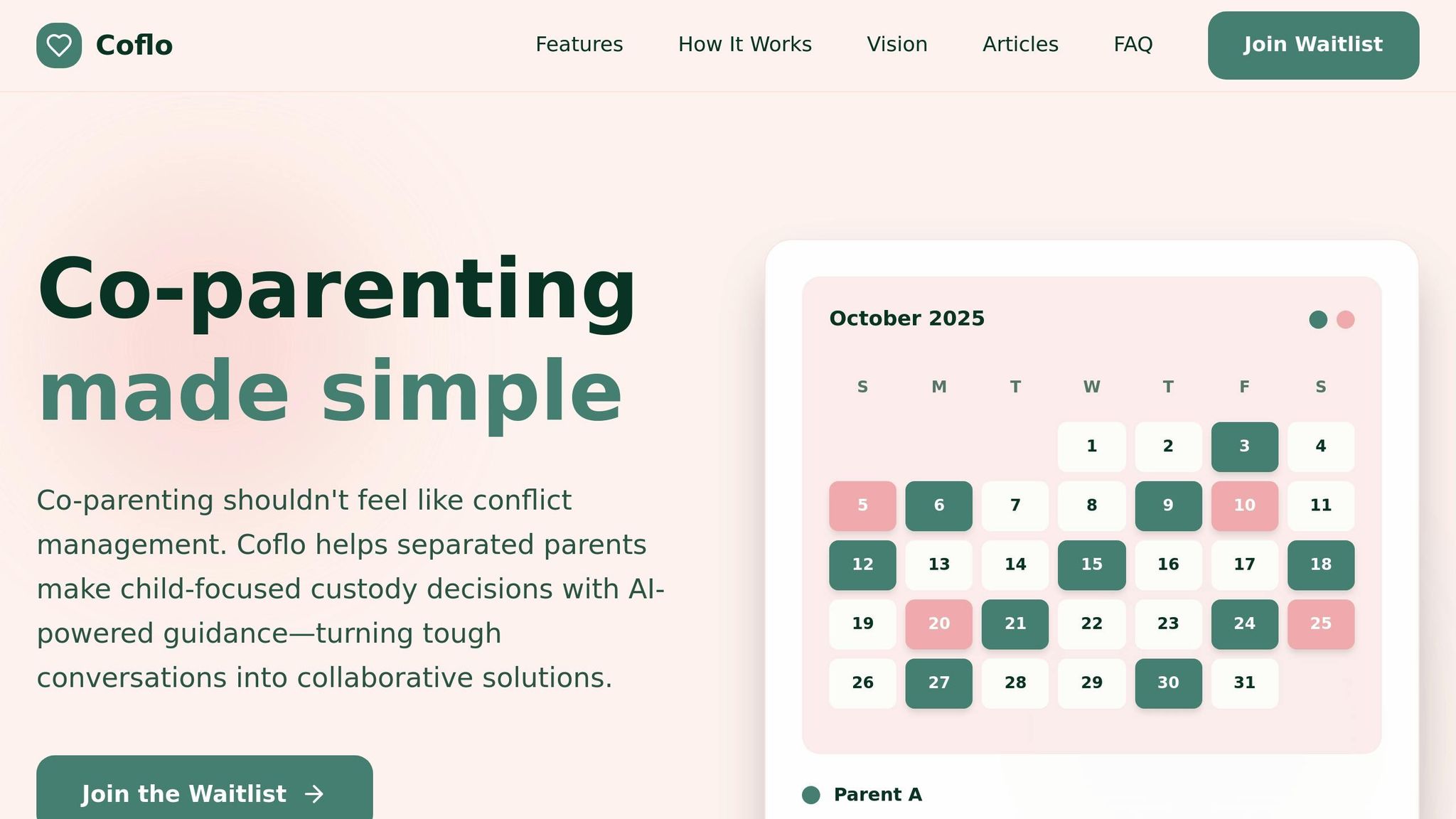
Coflo’s AI-powered platform takes developmental psychology out of the academic world and brings it into real-life custody planning. By analyzing established patterns and aligning them with family priorities, Coflo creates custody schedules tailored to a child’s age and developmental stage.
The platform’s interactive system allows parents to weigh priorities, such as stability, equal time, or school consistency, in real time. This ensures that custody plans not only suit the child’s current needs but can also adapt as they grow, making the arrangements dynamic and forward-thinking.
Benefits of Data-Driven Custody Planning
Coflo’s personalized recommendations offer families several meaningful advantages. First, it eliminates the guesswork by providing clear, research-backed options. Instead of overwhelming parents with countless possibilities, the platform delivers ranked suggestions tailored to their family’s unique situation. This clarity helps reduce decision fatigue and allows parents to focus on making informed choices.
Each recommendation comes with a clear explanation and measurable success metrics, so parents understand the reasoning behind a proposed schedule and how it supports their child’s emotional and cognitive development. This transparency fosters more collaborative discussions, shifting the focus from personal preferences to the child’s well-being.
Additionally, Coflo’s flexibility ensures plans can be updated as circumstances change, keeping them aligned with a child’s evolving needs. The detailed documentation of each recommendation’s rationale is particularly helpful during mediation or legal proceedings, offering objective support for custody decisions. Ultimately, this data-driven approach not only simplifies the planning process but also prioritizes the child’s growth and happiness at every stage.
Key Takeaways on Joint Custody and Cognitive Development
Research indicates that well-planned joint custody arrangements can boost problem-solving skills, emotional regulation, and academic success when compared to high-conflict sole custody setups.
The standout finding across numerous studies is that the quality of the custody plan matters more than the type of arrangement itself. Joint custody is most effective when it offers stability, reduces frequent transitions for younger kids, and adapts as children mature. For example, younger children benefit from predictable schedules, school-age children thrive with consistent routines, and teenagers need more flexible arrangements. Tailoring custody plans to match a child’s developmental stage is key to supporting cognitive growth.
A common thread in these studies is the importance of age-appropriate planning. What works for a toddler may not suit a teenager, and vice versa. This is why one-size-fits-all custody templates often fail to meet the developmental needs of children. Customizing plans based on age and stage of development is critical for fostering positive outcomes.
Another important takeaway is that parents who rely on research-backed strategies for custody planning tend to create more successful arrangements. Using data-driven approaches improves both cognitive and emotional outcomes for children.
Modern tools, like Coflo, make applying psychological research to custody arrangements more accessible. These tools help families design plans that consider factors like stability, school schedules, and developmental milestones, ensuring custody agreements evolve alongside the child. By aligning custody arrangements with a child’s natural growth, families can create environments that support both cognitive and emotional well-being.
Ultimately, custody plans that adapt to a child’s developmental stage provide a strong foundation for cognitive growth. The challenge lies in crafting arrangements that reflect the latest insights into child development while prioritizing the child’s needs at every stage.