
Parent-Teacher Communication Tips for Co-Parents
Helping your child succeed in school as co-parents requires clear communication and teamwork. Whether you're navigating a shared custody arrangement or coordinating from separate households, these strategies can simplify communication with teachers and ensure academic progress stays on track:
- Agree on a Communication Plan: Choose a primary contact method, divide responsibilities, and maintain a professional tone in all teacher interactions.
- Use Shared Tools: Digital apps like Google Calendar or OurFamilyWizard keep both parents informed about school events and deadlines.
- Prepare for Teacher Meetings: Review academic data, prioritize questions, and divide discussion topics to make meetings focused and productive.
- Attend Conferences Together: Show a united front by attending parent-teacher meetings as a team, or explore virtual options if in-person attendance isn't possible.
- Express Gratitude: Send specific appreciation messages to teachers regularly to build a positive relationship.
- Stay Consistent: Align homework routines and behavioral expectations across households to provide stability for your child.
- Share Updates Quickly: Relay teacher feedback to your co-parent promptly to avoid miscommunication.
- Coordinate Custody Schedules Around School: Use tools like Coflo to prioritize school stability in custody arrangements.
- Listen Actively: Pay close attention to teacher feedback during meetings and focus on actionable solutions.
- Follow Up Together: Divide tasks after meetings and ensure both parents contribute to supporting the child's education.
These steps help co-parents maintain a unified approach to their child’s education, reducing stress and promoting success. Start small - pick one or two tips to implement this week and build from there.
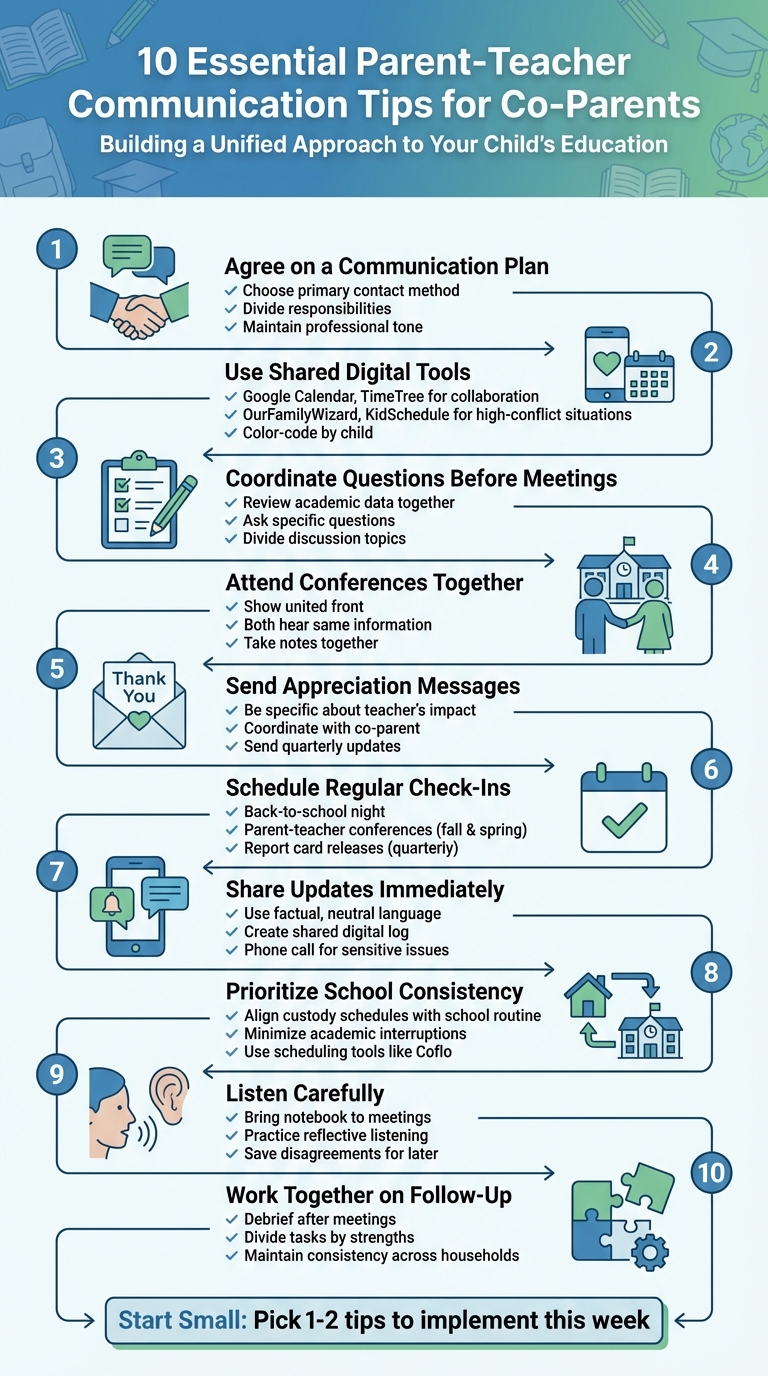
10 Essential Parent-Teacher Communication Tips for Co-Parents
1. Agree on a Communication Plan with Your Co-Parent
Sit down with your co-parent to establish clear communication protocols. This avoids sending mixed signals to teachers or placing them in the middle of disagreements. Since teachers have limited time, a streamlined approach ensures smoother interactions. A united front helps keep communication with teachers consistent and effective.
Decide on a primary method of contact - like email for routine updates and phone calls for urgent matters - to keep things organized. You can also divide responsibilities, such as one parent handling academics and the other focusing on behavior or extracurricular activities.
"Treat your communication as if it were a professional relationship. Before sending any message, ask yourself: Does it provide all the necessary information? Is the tone respectful?" - Atty Bruggemann, Esq.
Set clear expectations for responses: aim to reply to non-urgent messages within 24 hours and check messages at specific times to avoid feeling overwhelmed. If non-school topics come up, redirect the conversation with neutral phrases like, "Let's discuss that later; for now, let’s focus on academic progress". This keeps the attention where it belongs - on supporting your child’s education.
sbb-itb-a09457a
2. Use Shared Digital Tools to Track School Information
Keeping both parents in the loop doesn’t have to pile extra work onto teachers. Teachers already dedicate about 54% of their working hours to administrative tasks, including communicating with parents. A shared digital system can streamline this process, ensuring everyone has access to the same details about school events, assignments, and deadlines.
For co-parents who collaborate well, general tools like Google Calendar or TimeTree are simple and effective for syncing schedules. On the other hand, for co-parents navigating more challenging dynamics, specialized apps like KidSchedule or OurFamilyWizard offer advanced features. These include unalterable messaging logs and AI-driven tools that can convert photos of school flyers into calendar events automatically. Some of these apps even integrate directly with thousands of school district calendars, making it easy to import holidays, early dismissals, and parent-teacher conference dates.
The result? A smoother, more transparent scheduling system that reduces misunderstandings and lays the groundwork for productive teacher interactions later on.
"A shared calendar creates an objective record, transforming potential arguments into simple logistical checks. It's no longer about who is right, but about what the agreed-upon plan says." - Kidtime
To make things even clearer, try color-coding activities by child to keep schedules distinct. Set up daily or weekly notifications so both parents receive updates at the same time. When communicating with teachers, share only the "Kids' Calendar" and always CC your co-parent in emails to ensure full transparency.
Next, focus on coordinating your questions and concerns to get the most out of teacher meetings.
3. Coordinate Questions Before Meeting with Teachers
When preparing for a parent-teacher conference, having a clear plan can make all the difference. Walking into a meeting unprepared wastes valuable time and risks missing important topics. Coordinating your questions ahead of time ensures a focused and productive discussion.
Start by reviewing academic data together - things like report cards, progress reports, or teacher emails. Look for patterns in your child's performance or behavior. Instead of asking broad questions like "How is my child doing?", try more specific ones such as, "How does my child respond to challenges?" or "What type of feedback works best for them?" These targeted questions help teachers provide meaningful insights and keep the conversation on track.
It can also help to divide responsibilities. For instance, one parent might focus on academic progress while the other addresses social or behavioral concerns. Sharing a prioritized list of topics at the beginning of the meeting - for example, "We’d like to discuss reading progress and emotional regulation. Is there anything else you’d recommend covering?" - can streamline the conversation and ensure nothing important gets overlooked.
"The goal isn't to win an argument but to ensure your child gets the support they need." - Delaware Psychological Services
If you and your partner disagree on priorities, use the meeting as an opportunity to gather information rather than solve problems on the spot. Take note of concerns and discuss them privately later. In cases where conflict is likely, consulting with a parenting coordinator or mediator beforehand can help align your goals and maintain a united front.
After the conference, consider scheduling a quick call to review key takeaways. This ensures both parents are on the same page and ready to follow up appropriately. By planning together before, during, and after the meeting, you can strengthen your collaborative approach and make the most of your interactions with teachers.
4. Attend Parent-Teacher Conferences Together
Showing up together for parent-teacher conferences sends a strong message: your child’s education matters to both of you. When kids see both parents actively involved, it boosts their confidence and motivation to succeed.
Attending as a team also ensures you both hear the same updates directly from the teacher, avoiding any miscommunication or differing interpretations. Plus, you can ask questions and take notes together, making it easier to stay on the same page. Teachers appreciate this united approach because it allows them to focus on your child’s needs without repeating details.
"When co-parents work together on educational matters, children experience increased academic success and improved emotional well-being." - Burrows Law Group
It's important to keep the conversation centered on your child’s progress. If personal issues or custody topics come up, gently redirect with something like, “Let’s save that for another time and focus on [child’s name]’s academics right now”. Maintaining neutral language and respectful body language helps reinforce a sense of teamwork.
In situations involving high conflict or domestic violence, separate or virtual meetings might be a better option. But when possible, attending together creates a consistent support system for your child across both households. This stability is a key part of how consistent routines reduce stress for children navigating two homes.
Up next: tips for keeping the discussion on track when personal matters threaten to derail it.
5. Send Appreciation Messages to Teachers
A heartfelt thank-you note can go a long way in building goodwill with teachers. When teachers feel valued, they’re often more open to future conversations and even more invested in their students' progress.
Be specific in your message. Highlight a particular lesson your child enjoyed or a moment when they overcame a challenge. For example, you might say, "We’ve noticed Emma is much more enthusiastic about math since you started the new multiplication unit" [31, 32]. Teachers appreciate concrete examples that show how their hard work is making a difference.
Before sending a message, coordinate with your co-parent to ensure you’re both aligned in the positive developments you want to mention. When possible, include both names in the message to present a unified front. Aim to establish a pattern of regular, positive communication - perhaps once per quarter - rather than only reaching out when issues arise [31, 11]. Sending an appreciation note early in the school year can also set a constructive tone for future interactions.
If your child demonstrates a skill at home that they learned in class, share that with the teacher. These moments show how their efforts extend beyond the classroom [11, 7]. A quick text or email acknowledging their impact can be incredibly meaningful [32, 33].
"A simple thank-you note or kind word can go a long way to show your appreciation for everything teachers do for your child." - Alison Kotch, Author
Always use the teacher’s preferred communication method - whether that’s email, a classroom app, or a handwritten note. Consistently expressing gratitude not only shows that your family values education but also helps nurture a strong, collaborative relationship with the teacher. This consistency can make future interactions smoother and more productive.
6. Schedule Regular Check-Ins Around School Events
Back-to-school night offers the perfect chance to get everyone on the same page. Typically held in late summer or early fall, this event allows both co-parents to meet the teacher and set the tone for communication throughout the year. Use this opportunity to share your preferred contact methods and give a brief overview of your co-parenting arrangement. Laying this groundwork early helps ensure smoother communication during future school events.
Parent-teacher conferences are another key touchpoint, usually held twice a year - in early fall and spring. These meetings provide a clear picture of your child's academic and social progress. For example, in 2025, Wendy Young, a 5th-grade teacher in Fayette, Kentucky, achieved full attendance at her conferences by using digital tools and offering flexible scheduling options. If possible, request a few extra minutes during these meetings to ensure both parents have a chance to voice their thoughts and concerns.
"Parent-teacher conferences typically happen in the early fall, a few weeks into the new school year. This gives you and your coparent time to get a feel for how your child is adjusting." - Coparent Academy
After conferences, report card releases - typically issued quarterly or at the end of each term - provide another opportunity for collaboration. Review these reports together before meeting with the teacher so you can approach the discussion with shared questions and concerns. To make the most of these meetings, ask for a summary of key data - such as grades, attendance, and growth metrics - at least 48 hours in advance. This preparation helps keep discussions focused and productive.
For children who need additional support, IEP (Individualized Education Program) or MTSS (Multi-Tiered System of Supports) meetings require even closer cooperation. Both parents should attend these sessions to ensure a unified approach to supporting the child across both households. Additionally, scheduling monthly check-ins with the teacher between major events can help address minor issues before they become significant problems. These consistent updates not only prevent surprises but also help maintain alignment between both households when it comes to your child's needs.
7. Share Teacher Updates with Your Co-Parent Immediately
When a teacher reaches out about a missed assignment or raises a concern during pickup, it’s crucial to pass that information along to your co-parent right away. Consistent communication between parents helps avoid confusion and ensures your child receives the same message from both homes. When one parent is left out of the loop, it can create unnecessary stress for your child, especially during transitions. Promptly sharing updates strengthens your co-parenting strategy and keeps everyone on the same page.
To make this process smoother, stick to factual, neutral language when relaying updates. For example, if a teacher says the reading level is improving, simply share that: “The teacher mentioned the reading level is improving.” Avoid adding personal commentary like, “I told you reading at my house was better.” This keeps the focus on the teacher’s feedback and avoids unnecessary tension between co-parents. It’s a straightforward way to prioritize your child’s needs while minimizing conflict.
"Facts reduce the risk of heated interpretation." - BestInterest
For day-to-day updates, consider using a shared digital log to track teacher feedback. A simple format with columns for the date, topic, a brief summary, and any agreed-upon next steps can work wonders. However, for more sensitive or complex issues, opt for a phone call rather than email. Hearing each other’s tone can prevent misunderstandings and maintain a conversational approach. If an update feels emotionally charged, take a few hours to process it before sharing. This allows time to calm down and present the information in a more constructive way.
Keeping both parents informed not only reduces redundant communication with teachers but also shows a united front that ultimately supports your child’s success.
8. Use Coflo to Prioritize School Consistency in Custody Schedules

When designing or revising a custody schedule, keeping your child's school routine consistent should take center stage. Coflo's AI-powered platform takes into account factors like school schedules, extracurricular activities, travel time, and age-specific developmental needs to suggest plans that reduce academic interruptions. This approach aligns with earlier strategies aimed at fostering a unified educational focus.
Coflo allows you to adjust priority sliders for elements such as stability, equal parenting time, and school consistency. The platform then recalculates custody arrangements to fit your family's specific needs. It also explains how each option supports your child's school schedule while helping to minimize conflicts between co-parents. For school-age children, the AI focuses on maintaining homework routines, consistent morning start times, and participation in after-school activities. This data-driven process strengthens the collaborative, education-centered communication strategies previously discussed.
"Custody schedules aren't just about dividing days on a calendar. They're about balancing school routines, extracurriculars, work commitments, and travel time - all while trying to give your children stability." - Coflo
Coflo also lets you visualize proposed schedules to evaluate how transitions might affect your child before making any changes. This provides a solid, research-backed foundation for discussions between co-parents. Additionally, shared parenting calendars with automatic syncing ensure that both parents are immediately updated on school events and schedule changes. When collaborating with teachers, the AI-generated rationale can serve as documentation of your commitment to maintaining a stable, school-focused custody plan. This clarity not only supports your child's educational routine but also improves communication and coordination with educators.
9. Listen Carefully During Teacher Conversations
When it comes to co-parenting, building a strong partnership with your child's teacher starts with really listening. During meetings, giving your full attention to what the teacher has to say helps foster trust and encourages them to share valuable insights about your child. Teachers are more likely to open up about your child's social skills, academic progress, and even small achievements that might not make it onto report cards when they feel heard and respected. Plus, this united front shows your child that both parents are equally invested in their success.
A simple but effective tip? Bring a notebook to every meeting. Writing down key points ensures that both parents stay on the same page and don’t miss important details.
"Active listening involves focusing on the teacher's insights without interrupting or becoming defensive." - Burrows Law Group
Another way to show you're engaged is by practicing reflective listening. For example, if the teacher mentions a challenge, you might respond with something like, "So you're noticing that independent reading time is a struggle?" This not only clarifies their observations but also shows you're paying attention. If any disagreements arise, save those conversations for later - away from the teacher.
10. Work Together on Follow-Up Tasks
Once you've actively listened during your conversation with the teacher, the next step is to work together on follow-up tasks. Right after the meeting, take a moment to debrief with your co-parent using your preferred method of communication. This ensures you're both on the same page about what was discussed and can align on the next steps to support your child. A quick post-meeting discussion minimizes misunderstandings and helps you focus on your child's strengths and areas for growth.
"Your collaborative effort continues after the meeting ends." - Coparent Academy
Divide follow-up tasks based on each parent's strengths. For instance, if one of you is a math whiz and the other enjoys reading, assign academic support accordingly. For daily tasks - like practicing spelling or updating reading logs - coordinate responsibilities around your custody schedule. This way, each parent can contribute during their time with the child, ensuring nothing falls through the cracks.
Consistency is key to your child's success. Whether it's a homework routine or a behavior strategy, make sure both households follow the same plan. Your child shouldn't have to adapt to completely different expectations when they switch homes. Once you've agreed on a strategy, consider sending a short, joint update to the teacher. This not only shows you're united but also keeps the teacher in the loop.
"Consistency is extremely important for a child's success." - Coparent Academy
If emotions run high, take a pause before diving into task discussions. Approach these conversations as if you're part of a professional team, united by the shared goal of your child's success. Stick to the facts, avoid personal opinions, and use digital tools to track tasks and deadlines. This collaborative follow-up ensures your child gets the steady educational support they need, reinforcing the teamwork discussed throughout these tips.
Conclusion
When parents and teachers join forces, children flourish in every way - academically, socially, and emotionally. Research from the Harvard Graduate School of Education highlights that strong teacher-family communication leads to better homework completion, improved classroom behavior, and increased class participation. Similarly, the National PTA notes that students with involved families achieve higher grades and have better attendance.
"When school and parent partnerships flourish, student achievement soars across academic, social, and emotional domains." - Parallel Learning
These outcomes emphasize the importance of the strategies we've outlined. Simple actions like preparing questions for meetings, sharing updates promptly, and working together on follow-ups show that your child's education is a shared commitment.
If all of this feels like a lot, start small. Choose one or two tips to try this week - maybe setting up a clear communication plan or using a shared digital tool. Over time, these steps will become second nature, shifting your role from a bystander to an active participant in your child's education. This collaboration helps teachers maintain consistency and ensures your child feels supported.