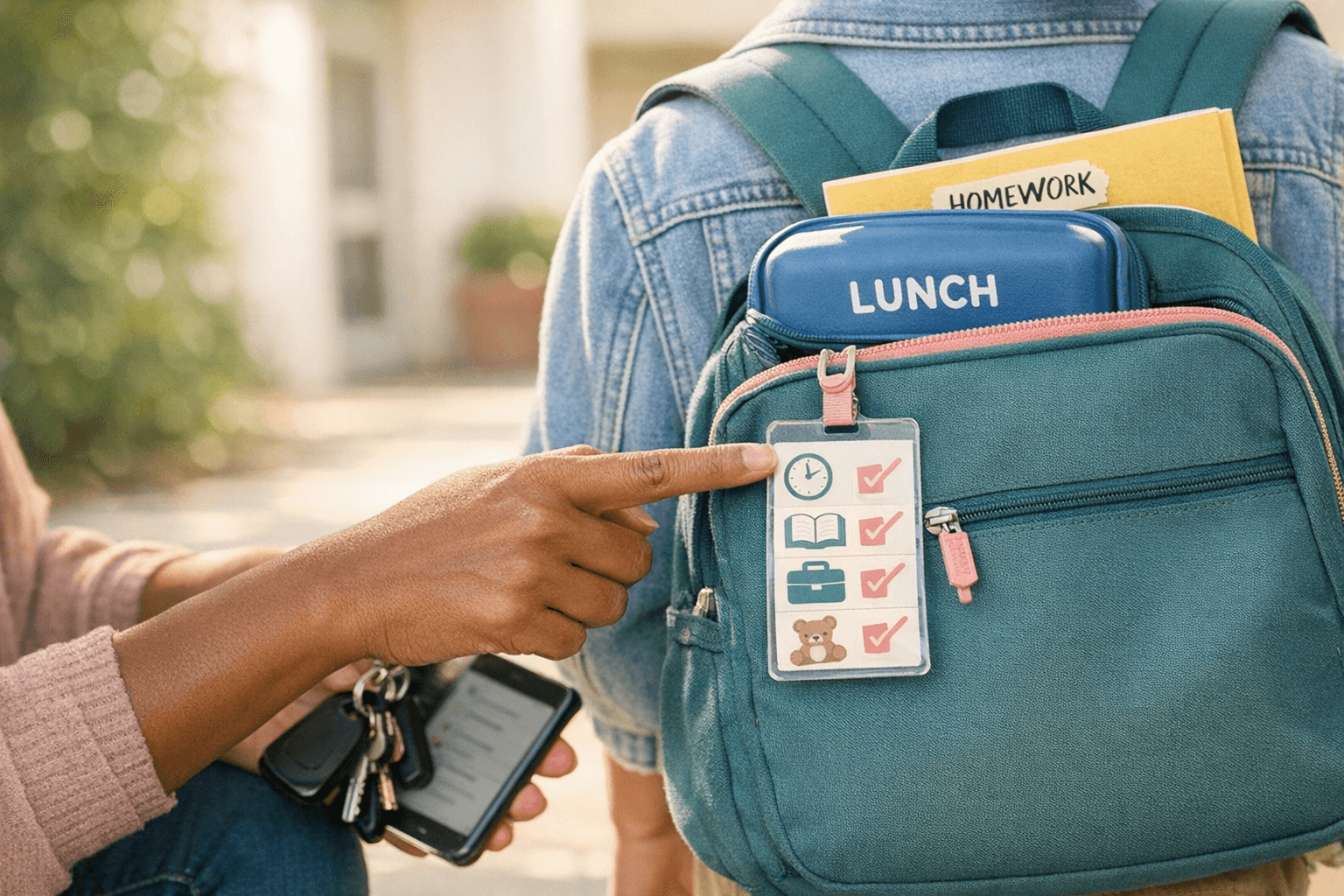
Checklist for Smooth Custody Transitions on School Days
Managing custody transitions on school days can feel overwhelming, but a clear plan can make all the difference. Kids thrive on predictability, and when parents work together to create consistent routines, it reduces stress for everyone. Here's how to make school-day transitions smoother:
- Plan Ahead: Sync age-specific custody schedules with the school calendar and confirm responsibilities (drop-offs, pick-ups, etc.) early.
- Use Shared Tools: Digital calendars like Google Calendar or Cozi help streamline communication.
- Pack Smart: Keep duplicate supplies at both homes and prepare backpacks the night before.
- Simplify Handoffs: Use the school as a neutral transition point to avoid unnecessary conflicts.
- Support Emotional Needs: Talk to your child about the plan, maintain consistent routines, and check in on how they're feeling.
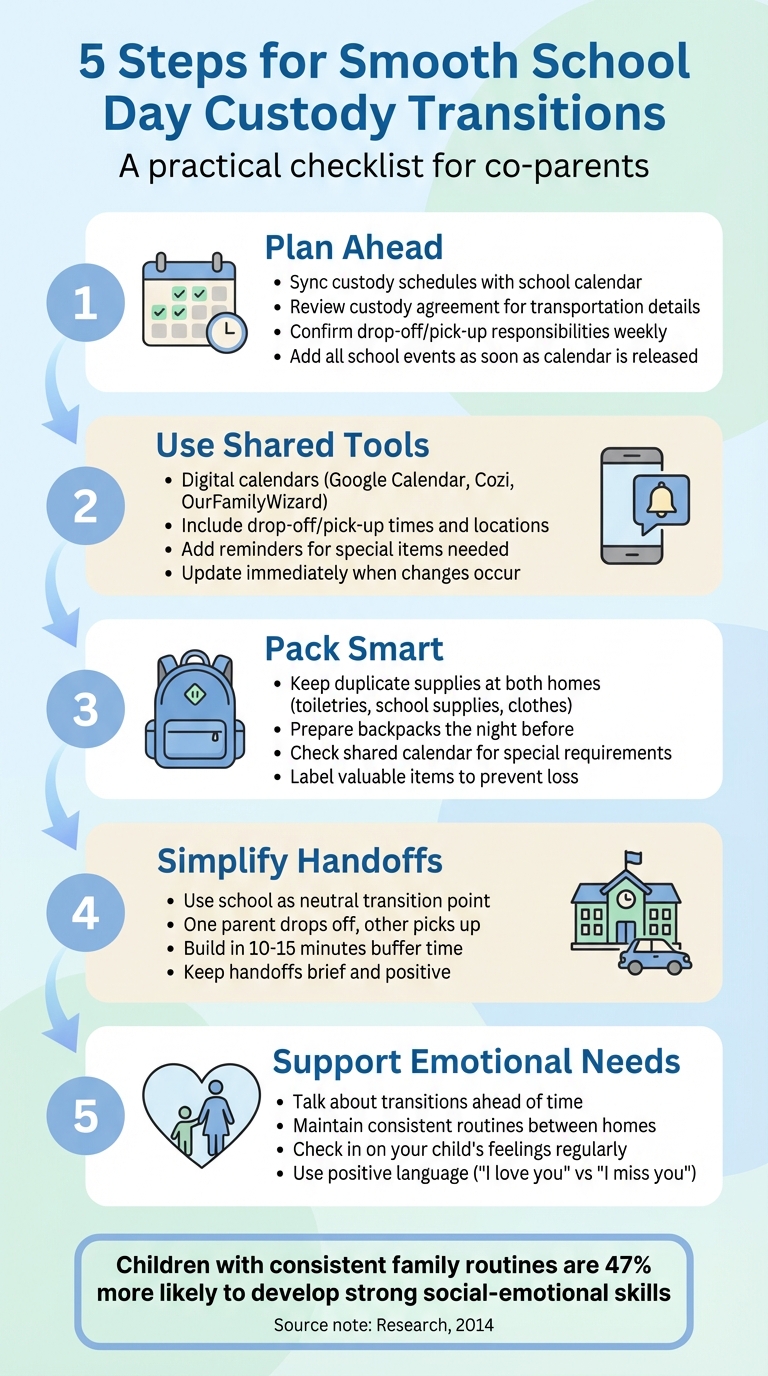
5-Step Checklist for Smooth School Day Custody Transitions
Planning Ahead for School Day Transitions
Getting organized in advance can save a lot of stress on school transition days. When both parents are on the same page and have access to the same information, it reduces confusion and last-minute chaos.
Review Your Custody Agreement and School Calendar
Start by revisiting your custody agreement. Look for specifics about transportation, transition days, and handling extracurricular activities. If these details aren’t clearly outlined, you might need to revise the agreement. Kate Harrison, a family law attorney from Ohio, explains:
If your parenting plan doesn't include shared communication about school-related logistics and there is a lot of conflict with the other parent, consider whether an update to your parenting plan is needed.
Once you've reviewed the custody plan, sync it with the school calendar. As soon as the academic calendar is released - usually late summer - add every early dismissal, holiday, school break, and teacher conference to your shared plan. Harrison emphasizes:
School calendars fill up fast. With early dismissals, conference days, picture day, sports practice, fall plays, it's easy for things to fall through the cracks.
To stay ahead, go over the upcoming week together and confirm who’s responsible for what. Then, create a unified schedule using a shared calendar.
Create a Shared Calendar
A shared digital calendar can be a lifesaver for tracking transition times, school events, and after-school activities. Tools like Google Calendar, OurFamilyWizard, Cozi, or TalkingParents allow both parents to access the same information, cutting down on miscommunication and unnecessary back-and-forth.
Add dates and details as soon as you receive them - don’t wait until the night before to realize there’s a half-day or a field trip. Make sure to include drop-off and pick-up times, locations, and which parent is responsible. For example, if your child has soccer practice on Tuesdays or needs their band instrument on Thursdays, include reminders so the right items are packed.
Agree on Transportation Responsibilities
Few things are more stressful than showing up at school only to find out the other parent thought they were handling pick-up. Avoid this by clearly defining who handles drop-offs and pick-ups each day. For instance, one parent might take the morning drop-offs Tuesday through Friday, while the other manages pick-ups Monday through Thursday and alternating Fridays.
Using the school as a handoff location often works best. One parent drops off in the morning, and the other picks up in the afternoon - this eliminates the need for direct contact. Gabrielle Hartley, a divorce mediator, notes:
Having as many drop-offs and pick-ups at school is best... to minimize the potential for conflicts and ensure that the focus remains on the child's well-being.
If school isn’t an option for transitions, choose a neutral public spot, such as a library or a restaurant parking lot. By agreeing on transportation roles ahead of time, you can ensure smoother transitions for everyone.
Update School Contact Information
Lastly, make sure the school has accurate contact details for both parents. Both parents should be listed on the authorized pick-up list and emergency contact forms. This ensures that each parent receives report cards, attendance updates, and event notifications directly, without needing to rely on the other to share the information.
If your custody order includes any restrictions, provide the school with a copy. As Harrison advises:
Schools can only follow the information they have. If your custody order has restrictions regarding one parent, be sure the school has a copy of that order.
Handling these updates early helps avoid confusion for school staff and ensures your child’s safety.
sbb-itb-a09457a
What to Pack for Transition Days
Forgetting important items on transition days can add unnecessary stress. To make these transitions smoother, ensure your child has everything they need at both homes. The idea is to lighten their load while still covering all the essentials for school, activities, and daily routines.
Keep Duplicate Supplies at Each Home
Make life easier by stocking both homes with essential items. Keep a full set of toiletries - like a toothbrush, shampoo, and deodorant - at each place, along with basics like underwear, socks, and pajamas. School supplies such as pencils, notebooks, calculators, and art materials should also be available at both homes. This way, your child won’t have to worry about forgetting something or carrying too much back and forth.
For bigger items, like laptops or sports gear, work together with the other parent to decide who will purchase what, or share the costs with clear receipts. It’s also wise to keep backups of commonly misplaced things, like an extra inhaler or a duplicate textbook, at both homes.
Prepare the Backpack the Night Before
Mornings can be chaotic, especially on transition days. Packing the night before can save time and reduce stress. Make sure to include homework, projects, textbooks, lunch, snacks, and any required forms. Lay out your child’s uniform or outfit ahead of time to keep the morning running smoothly. Sarah Nicole Landry, creator of The Birds Papaya, puts it perfectly:
I don't know what the rest of their day looks like, that's out of my control, but what I can control is what it looks like in the morning.
Take a moment to check your shared calendar the night before for any special requirements - like library books, field trip gear, or materials for a presentation. Using the same backpack for every transition can also create a consistent routine. Finally, double-check that everything needed for after-school activities is packed and ready to go.
Include Items for Activities and Special Requirements
Don’t overlook the extras your child might need for their day. If they have extracurricular activities or special events, make sure to pack all the essentials. This could include sports uniforms, equipment, musical instruments, or specific clothing. Label these items - especially valuable electronics and chargers - to prevent them from getting lost during handoffs.
Health-related items are also important. Pack prescription medications, vitamins, inhalers, or anything else they may need. Comfort items, like a favorite stuffed animal, cozy blanket, or small keepsake, can help ease the emotional side of transitions. Once your child arrives at the other home, encourage them to place their backpack and belongings in a designated spot to avoid misplacing anything. A little organization can go a long way in keeping transition days stress-free.
Establishing Drop-Off and Pick-Up Routines
Having consistent drop-off and pick-up routines helps your child feel secure and makes transitions smoother. When your child knows who will handle these responsibilities and when, they can focus on their day without worrying about logistics. Aurisha Smolarski, LMFT, explains:
When your child knows what to expect and can count on routines around transitions, they feel more confident, can relax, and will develop trust in you and within themselves.
While setting up these routines requires some planning, the payoff is worth it - fewer last-minute surprises and a calmer start and end to each day.
Confirm Who Handles Each Drop-Off and Pick-Up
Once you've worked out the logistics, make sure to confirm who is responsible for drop-off and pick-up each day. Double-check transportation arrangements before each transition day. Even if your parenting plan outlines these responsibilities, it's helpful to review the upcoming week's schedule together, ideally on Sunday evenings. Look out for any changes, like early dismissals or after-school activities, that might affect the routine.
Attorney Kate Harrison emphasizes: "A consistent, clearly-defined routine avoids last-minute confusion." When both parents are clear on their roles ahead of time, you minimize the risk of miscommunication or missed pickups. If changes to the schedule occur, update your shared calendar immediately to keep everyone on the same page.
Use School as the Handoff Location
School is a natural transition point for drop-offs and pick-ups. One parent can drop the child off in the morning, while the other picks them up in the afternoon. This arrangement avoids the need for direct parent-to-parent interaction, which can be especially beneficial in high-conflict situations. As Batson Nolan PLC explains, "You can avoid your ex altogether by having one parent drop the child off in the morning and having the other parent pick them up in the afternoon."
Using the school as a neutral handoff location makes transitions feel routine for your child. They won't feel caught in the middle or have to witness interactions between parents. To ensure everything runs smoothly, provide the school with updated contact information for both parents and a copy of your custody order so staff know who is authorized for pickups. A predictable school-based handoff reduces stress for everyone involved.
Build in Extra Time for Delays
Life happens - plan for it. Whether it's traffic or a meeting running late, giving yourself an extra 10–15 minutes can make a big difference in staying on schedule. This buffer reduces stress and helps ensure you're on time, even when things don't go as planned. If you're running late, notify the other parent and the school as soon as possible.
When handoffs do happen, keep them brief and positive. Jane McWilliams from Aurit Mediation advises: "The hand-off is a transfer of care, it's not the time for an emotional exchange between parents." Save discussions about logistics or other matters for another time. Keep the goodbye upbeat and focused on your child, then move forward with your day.
Helping Your Child Adjust to Transition Days
Even with a solid plan in place, your child's feelings during transitions are just as important as the logistics. Transition days can be tough for kids, especially when they're already managing the demands of school. A few thoughtful strategies can help ease the process and build their confidence. These approaches align with earlier logistical tips, ensuring emotional well-being stays front and center.
Talk to Your Child About Upcoming Transitions
While a good schedule provides structure, open communication about changes brings emotional comfort. Talking about the next day's transition ahead of time helps reduce anxiety and gives your child a sense of control. When kids know what to expect, they feel more prepared and less caught off guard. For younger children, using simple phrases like "three more sleeps until Dad's house" can make the timeline easier to grasp.
Older kids benefit from clear, direct conversations about plans - like who’s handling drop-offs and pick-ups. Research from 2014 showed that kids with consistent family routines were 47% more likely to develop strong social-emotional skills. Visual tools can also make a big difference. For younger children, a calendar on the fridge with stickers for transition days works well. Teenagers might prefer having their custody schedules saved on their phones.
Keep Routines Consistent Between Homes
Consistency with key routines - like mealtimes, bedtimes, and rules - creates a sense of stability, no matter which home your child is in. While every little detail doesn’t need to match, having consistent "anchor" routines, such as a bedtime around 8:00 PM on school nights or doing homework right after school, can prevent feelings of instability.
Kara Reynolds, Founder and Editor-in-Chief of Momish Magazine, shares:
A schedule of parenting time transitions will help your kids feel confident about what they can predict in their day-to-day.
You might also create a special tradition for transition days, like making pancakes on Sunday mornings or stopping for a favorite snack after school. These small rituals not only give kids something to look forward to but also act as a comforting bridge between homes. Pay attention to how your child responds to these routines - they can be a helpful indicator of when to check in more deeply about their feelings.
Check In on Your Child's Emotional State
Be alert to signs that your child might be finding transitions difficult. Stress can show up in different ways - some kids might whine, cling, or resist handoffs, while others might withdraw or lose interest in activities they usually enjoy. For younger children, especially preschoolers, tantrums may be their way of expressing confusion or fear since they might not yet have the words to explain their emotions.
After school, create space for your child to talk openly. Let them share stories about their time at the other parent's house without fear of judgment - this helps them feel they don’t need to "hide" parts of their lives. Use positive phrases like "I love you" or "I'll be thinking of you" instead of "I miss you", which might unintentionally make them feel guilty for leaving. If transitions remain a challenge, consider reaching out to a counselor or therapist for additional support.
Using Coflo to Plan School Day Custody Schedules

Once you've settled into effective daily routines, Coflo can help fine-tune your custody schedule. With its AI-powered tools, Coflo creates schedules that focus on maintaining academic stability. Instead of relying on generic templates or starting from scratch, it offers personalized recommendations tailored to your family's unique needs.
Prioritize School Consistency with Coflo's Sliders
Coflo's priority sliders allow you to focus on what matters most - such as school consistency and minimizing transitions between homes. By adjusting the "school consistency" slider, you can generate schedules designed to keep homework and extracurricular routines steady. If reducing handoffs is a priority, increasing the "fewer transitions" setting will favor options like Week On/Week Off or 2-2-5-5 schedules, which limit mid-week moves.
This feature addresses a common challenge for school-age children: staying focused on academics while managing frequent transitions. According to the Coflo Team, "School-age children: Need consistency in their routine and minimal disruption to school activities". By prioritizing these elements, you can ease the stress of packing and frequent handoffs while aligning custody transitions with your child's natural school-day rhythm.
Get Guidance Based on Your Child's Age
Coflo’s recommendations are backed by developmental psychology and tailored to your child’s age group. For kids aged 6–12, the platform focuses on routines that enhance academic performance and reduce disruptions. For teenagers, it considers their need for social flexibility and their desire to have more say in their schedules. Each recommendation is designed to support your child’s developmental needs.
With every proposed schedule, Coflo provides clear benefits, important considerations, and a step-by-step guide for implementation. This transparency helps you understand how the schedule promotes your child’s well-being and prepares you for potential challenges. It also takes the guesswork out of custody planning, ensuring your decisions are grounded in research. As your child’s school commitments evolve, you’ll have the tools to adapt smoothly.
Adjust Schedules as School Activities Change
School schedules are rarely static - new activities, sports, and other commitments pop up throughout the year. Coflo’s real-time recalculations make it easy to adapt your custody schedule as these changes occur. If your child joins a soccer team or starts taking music lessons, you can tweak the priority sliders to see how different arrangements accommodate the new activity. The platform then updates the implementation roadmap, showing you exactly how to transition from your current schedule to the new one.
This adaptability becomes even more important as children grow. With Coflo, you can make quick, informed adjustments while considering the school calendar, ensuring transitions don’t interfere with exams, field trips, or other key events. It’s a practical way to keep your custody plan aligned with your child’s evolving needs.
Conclusion
Ensuring smooth custody transitions takes thoughtful planning, open communication, and a focus on your child's well-being. By aligning your custody agreement with the school calendar, keeping duplicate supplies at both homes, and setting up predictable drop-off and pick-up routines, you can provide the consistency children need to succeed both emotionally and academically. As Jane McWilliams from Aurit Mediation wisely puts it, "A unified and consistent approach is one of the most powerful gifts co-parents can give their children".
These strategies are most effective when parents stay centered on the ultimate goal: helping your child feel secure and ready, no matter which home they’re in. Small, consistent actions - like sharing a calendar or sending a quick text to confirm plans - can make a big difference in easing your child’s transitions. When children see their parents working together, they feel less burdened by the changes around them.
For even greater support, Coflo offers tailored custody scheduling solutions based on research and your family’s specific needs. Unlike generic templates, Coflo creates schedules that prioritize school stability, your child’s age, and your family's unique circumstances. As school activities and commitments shift throughout the year, you can make quick adjustments without disrupting your child’s routine.
With nearly 50% of children in the United States experiencing divorce, a well-thought-out routine can transform transition days from stressful to manageable moments. By preparing ahead and keeping your child’s needs at the forefront, you can make these transitions a natural and seamless part of your family’s life.