How To Spot Stress In Children After Divorce
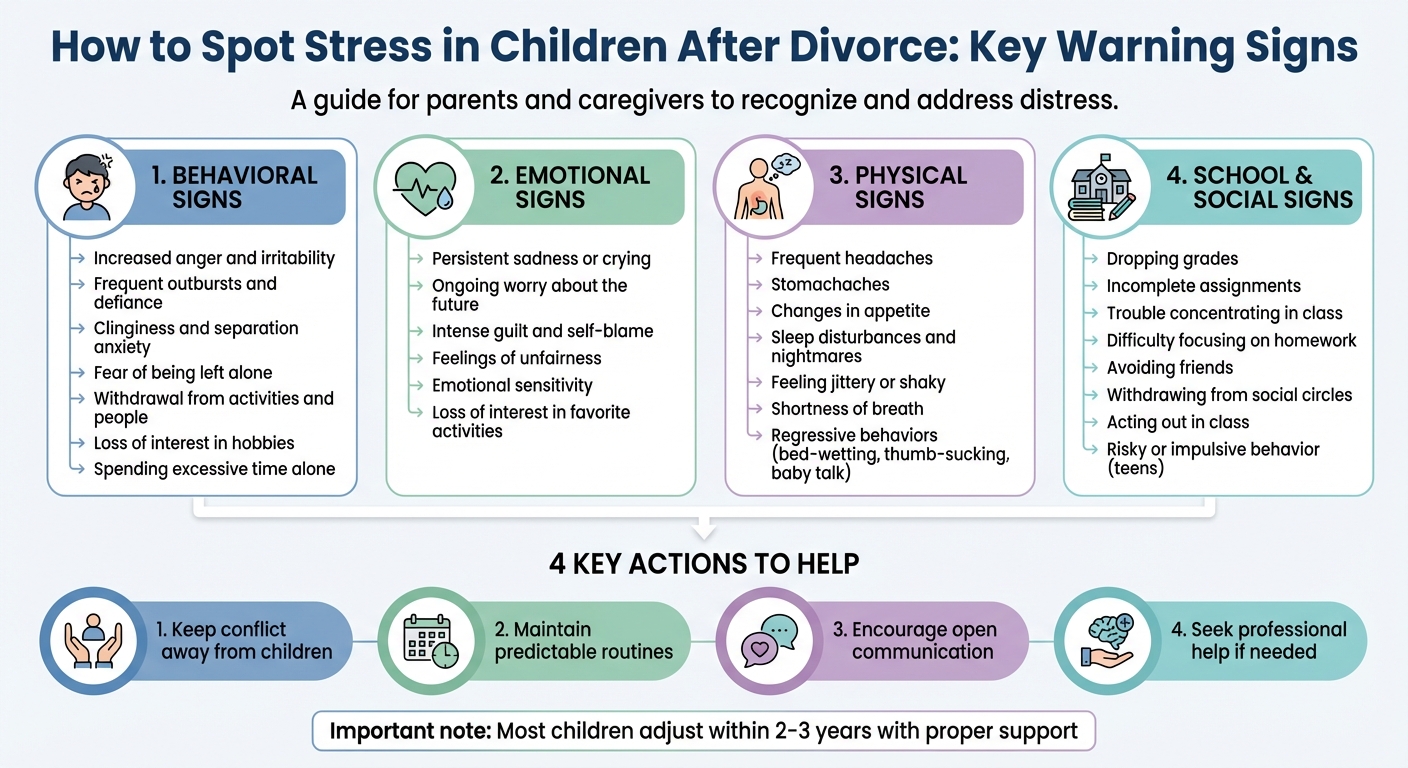
Divorce can be tough on children, often leading to emotional, behavioral, and physical signs of stress. Kids may feel fear, confusion, or guilt, which sometimes shows up as anger, clinginess, or withdrawal from activities and friends. Physical symptoms like headaches, stomachaches, or sleep problems are also common. Academic struggles and social withdrawal may further indicate distress.
To help, focus on:
- Reducing conflict away from children: Avoid arguments in their presence.
- Maintaining routines: Consistent schedules provide stability. Using AI tools for custody planning can help create these predictable routines.
- Encouraging open communication: Let them express feelings without fear.
- Seeking professional help: If stress persists, consult a therapist or pediatrician.
With support, most children can adjust over time.
Warning Signs of Stress in Children After Divorce: Behavioral, Emotional, Physical and Academic Indicators
Behavioral Signs of Stress
When children face the challenges of processing a divorce, their struggles often show up in how they behave. These behavioral changes can serve as early warning signs, especially since younger children may not have the words to express their feelings.
It's important to look for patterns rather than isolated incidents. A single tantrum or a moment of clinginess might not mean much, but when these behaviors persist for weeks or months - especially during transitions between homes - they could signal deeper stress. The key is to assess whether the behavior is disrupting daily life, like interfering with school, friendships, or family routines. This context helps lay the groundwork for recognizing the emotional and physical signs discussed in later sections.
Increased Anger and Irritability
Children often react to feelings of helplessness with anger, which can show up as frequent outbursts, defiance, or even aggression. They might argue over small things, reject previously accepted rules, or lash out at siblings or parents. This anger isn’t always directly tied to the divorce itself; sometimes, it mirrors parental conflicts or stems from a misplaced sense of guilt.
"Children often think their bad behaviors are responsible for their parents' separation." – Jane Hunter, Regional Specialist, University of Missouri
School-aged kids may also pick up on a parent's sadness or feel pressured to "choose sides", which can deepen their irritability and frustration. If your child becomes unusually argumentative or seems unable to relax, it might be a sign that they’re wrestling with complex emotions.
Clinginess and Separation Anxiety
A strong attachment to one parent or a fear of being left alone can suggest that a child is grappling with feelings of abandonment. For example, toddlers and preschoolers might worry that if one parent has already moved out, the other might leave as well. This could lead to behaviors like refusing to attend daycare, avoiding sleeping alone, or becoming upset during handoffs to the other parent.
Even older children can display clingy tendencies, such as frequently checking on your whereabouts or asking repeatedly when you’ll be back. These behaviors often arise from a lack of control over their family dynamics. Tools like visual calendars for custody schedules can help reduce their anxiety by providing a sense of predictability.
Withdrawal from Activities and People
If a child who once loved certain activities suddenly loses interest, or if they start spending an unusual amount of time alone, it could be a red flag. Stress can sap a child’s energy and enthusiasm, leading them to pull away from friends, family, and hobbies they previously enjoyed.
"If your child is spending more time alone, try talking to them about their loss of interest. Avoid bringing up your divorce and instead hear their concerns and reassure them that everything will be okay." – Melissa D. Cianci, Managing Partner, Cianci Law, PC
Social withdrawal often comes with a noticeable change in demeanor. If this pattern continues for several weeks with no signs of improvement, it’s worth having open, gentle conversations and considering professional support to help them navigate their feelings.
sbb-itb-a09457a
Emotional and Physical Signs of Stress
Divorce-related stress doesn’t just show up in how a child behaves - it can also take a toll on their emotions and physical health. These signs are often harder to recognize because kids might not connect their feelings to the divorce or know how to explain what they’re going through. These emotional and physical signals add to the behavioral changes already discussed, though consistent routines across households can help mitigate these effects.
Persistent Sadness or Worry
If a child seems persistently sad, it’s more than just a rough day. You might notice frequent crying, a lack of interest in favorite activities, or ongoing worry about the future. Many children also wrestle with intense guilt, blaming themselves for the situation. This self-blame is particularly common in kids under six but can occur at any age.
"If your child is asking you about something, it's because they're already thinking about it. Answer their questions at their developmental level but honestly." – Ariana Hoet, PhD, Kids Mental Health Foundation
School-aged children and tweens often experience anger and a sense of unfairness, which can lead to emotional sensitivity and occasional outbursts. While most kids adjust within two to three years after a separation, feelings of loss can linger, especially during significant moments like holidays or birthdays.
Physical Complaints and Sleep Problems
Physical symptoms are another way stress can manifest. Frequent headaches, stomachaches, or noticeable changes in appetite are common red flags. Sleep disturbances, such as trouble falling asleep, recurring nightmares, or new fears, are also linked to emotional stress.
Some children might feel physically jittery, shaky, or even short of breath. It’s important to consult a pediatrician to rule out any medical issues when these symptoms appear.
Return to Earlier Childhood Behaviors
When overwhelmed, children sometimes regress to earlier developmental behaviors as a coping mechanism. This regression often signals that they’re struggling to process their emotions.
"These behaviors are not just tantrums or phases; they are cries for help from a child trying to cope with a situation they find hard to comprehend." – Valerie Fenchel, Fenchel Family Law PC
Examples of regressive behaviors include bed-wetting after being potty trained, thumb-sucking, using baby talk, or clinging to comfort items like a bottle. Toddlers might even lose recently acquired skills, such as proper toileting or language abilities. If these behaviors continue for several months or significantly disrupt daily life, seeking professional help may be necessary.
School and Social Warning Signs
Divorce-related stress often shows up in a child’s school and social life. Emotional turmoil at home can make it tough for kids to focus on their schoolwork. Licensed Clinical Psychologist Lene Larsen describes this challenge:
"They have trouble paying attention in class, because they are distracted by what is going on at home. At home, they can't concentrate on homework, so they fall behind academically".
These struggles in academics often reflect broader emotional and social challenges. Together, they highlight the stress children experience during such transitions.
Dropping Grades and Concentration Issues
A noticeable drop in grades can be one of the first red flags. Kids who usually excel might start turning in incomplete assignments, forgetting homework, or zoning out during tests. Some children may try to hide their distress, while others internalize feelings of guilt, which only adds to their stress. Beyond slipping grades, you might also see behavioral changes - arguing with teachers or acting out in class. These behaviors often stem from difficulty coping with the divorce. Letting teachers know about the situation can help them offer your child extra support and understanding.
Avoiding Friends and Risky Behavior
A shift in social interactions can also point to deeper emotional struggles. A child who once loved hanging out with friends might start avoiding them, lose interest in activities, or withdraw from their social circles. For some, this could be a sign of depression or anxiety tied to the divorce. Older children and teens may respond differently, pushing boundaries through risky or impulsive behavior. Clinical Psychologist Jamie Howard from the Child Mind Institute notes that without structure, these behaviors can escalate. Considering that suicide is the second-leading cause of death for those aged 10 to 34, it’s critical to take signs like social withdrawal and feelings of worthlessness seriously.
How to Help Your Child Manage Stress
Helping your child cope with stress is crucial. Many children adjust well when they receive the right support. Your role is to create a space where they feel safe, heard, and supported as they navigate changes in their life.
By recognizing early signs of stress and taking thoughtful steps, you can make their transition smoother.
Keep Conflict Away from Children
Protect your child from being exposed to parental disagreements. Witnessing arguments can increase anxiety and leave children feeling stuck in the middle. Focus on maintaining a respectful relationship with your co-parent, and handle disputes privately - through text, email, or phone. Avoid discussing conflicts during drop-offs or pickups. If you’re finding it hard to manage your own emotions, seeking counseling can be a helpful step. Barbara Nordhaus, MSW, from the Yale Medicine Child Study Center, emphasizes:
"One parent is all a child really needs to feel supported, cared for and safe".
By staying emotionally balanced, you can provide the calm and security your child needs. The next step is to create stability through routines.
Stick to Predictable Routines
Routines provide a sense of stability during uncertain times. Children adjust more easily when their daily schedules - like mealtimes, homework, and bedtime - stay consistent across both homes. Use a wall calendar to help younger children see when they’ll be with each parent, and highlight fun activities they can look forward to. Work with your co-parent to align household rules as much as possible. Child Psychologist Stephanie Samar, PsyD, explains:
"The earlier that you can establish 'You'll be here for these days and here for these days' and have that be consistent and predictable, you'll see kids settling in quicker and having less struggle".
Keep familiar rituals, like a weekly movie night or reading a bedtime story, to reinforce a sense of normalcy. Avoid relaxing rules out of guilt - children feel more secure when boundaries are clear and consistent. Once routines are in place, focus on fostering open communication.
Create Space for Honest Conversations
Encourage your child to share their feelings openly without fear of upsetting you. Many kids hold back their emotions to protect their parents, so it’s important to let them know honesty is welcome. As Stephanie Samar, PsyD, advises:
"We want to know how you're feeling about this, and you're not going to hurt our feelings if you tell us how you feel".
When your child does open up, listen with empathy instead of jumping to solutions. For younger children, help them identify their emotions by observing their behavior and naming what they might be feeling. Keep these conversations ongoing, as their thoughts and feelings may evolve over time. If your child struggles to talk to you, encourage them to connect with a trusted adult, such as a relative, teacher, or school counselor. If these steps don’t seem to help, professional support might be necessary.
Get Professional Help When Needed
While some stress is normal, persistent symptoms lasting several months may require professional intervention. Start by consulting your child’s pediatrician to determine if their behavior is part of a typical adjustment or something more concerning. Inform their teachers about the situation so they can provide extra support or recommend school-based resources. Watch for signs of anxiety, like frequent stomachaches or headaches, as well as behaviors like aggression, risky decisions, or withdrawal from activities they once enjoyed. If these issues arise, therapy can be a valuable resource.
Use Coflo to Create Stable Custody Schedules
Unpredictable custody arrangements can add stress to a child’s life. Coflo, an AI-powered co-parenting app, helps parents design age-specific custody schedules that are child-centered. By adjusting sliders for priorities like stability, equal time, and school consistency, Coflo generates personalized schedules backed by developmental psychology insights. A consistent schedule can provide the stability your child needs to feel secure and adapt successfully.
Conclusion
Recognizing stress in your child is the first step toward helping them heal after a divorce. Pay attention to behavioral changes like increased anger, clinginess, or withdrawal. Emotional and physical signs, such as ongoing sadness, frequent stomachaches, or trouble sleeping, can also signal stress. Additionally, watch for shifts in school performance or social interactions, such as declining grades, difficulty concentrating, or pulling away from friends.
Studies show that with the right support, most children can adapt and recover. To support your child, focus on keeping conflict out of their environment, maintaining consistent routines across both homes, and encouraging open conversations about their emotions. Predictable schedules and honest communication have been shown to reduce stress in children after divorce. As Barbara Nordhaus, MSW, from the Yale Medicine Child Study Center, explains:
"If parents can work together for the best interests of their children, divorce can provide relief and optimism, and the potential for growth for everyone - children too".
If stress symptoms persist, consider seeking help from a professional. Consistency is key - children tend to adjust more quickly when their environment feels stable and predictable.