
Ultimate Guide to Emotional Triggers in Co-Parenting
Managing emotional triggers is one of the toughest parts of co-parenting after a divorce or separation. Triggers - like a late pickup, a critical tone, or unresolved past conflicts - can spark intense reactions, making it hard to communicate effectively. Left unchecked, these moments can lead to conflict that not only affects you but also impacts your child’s well-being.
Key takeaways for managing emotional triggers in co-parenting:
- Recognize triggers: Pay attention to physical and emotional signs like a racing heart or disproportionate anger.
- Pause before reacting: Use tools like deep breathing, journaling, or mindfulness to regain control.
- Focus on your child: Keep interactions professional and centered on their needs.
- Set boundaries: Use clear communication channels and avoid rehashing old relationship issues.
- Leverage technology: Apps like Coflo can simplify scheduling and reduce friction.
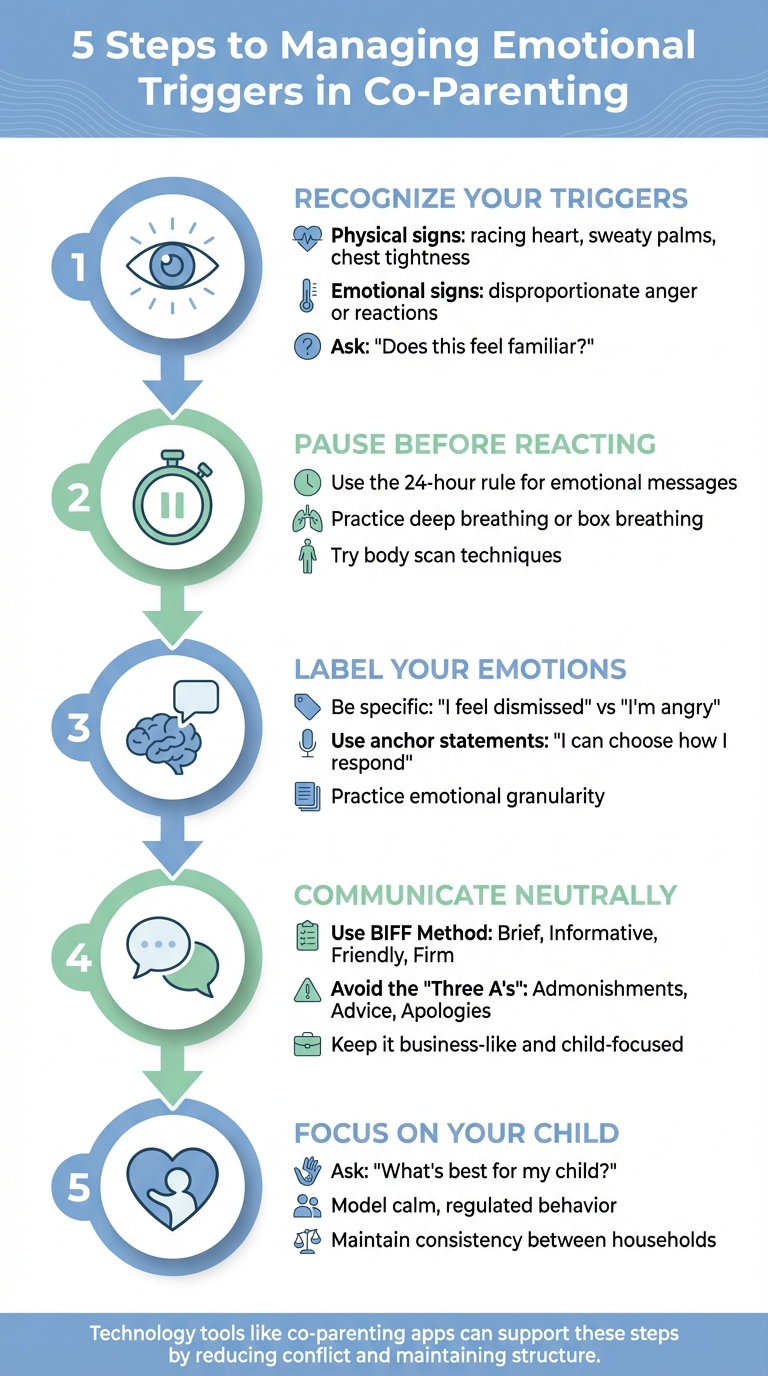
5-Step Process for Managing Emotional Triggers in Co-Parenting
Common Emotional Triggers in Co-Parenting
Figuring out what pushes your buttons is the first step to managing your emotions. While every co-parenting situation has its own challenges, many triggers stem from unresolved past conflicts. Spotting these patterns can help you handle difficult moments with more clarity. Here are some of the most frequent triggers in co-parenting.
Disagreements Over Parenting Decisions
Clashing over parenting decisions happens a lot. Scheduling conflicts are one of the biggest sources of tension. If your co-parent consistently shows up late for pickups or makes sudden changes to the schedule, it can feel like they're disregarding your time and effort. Over time, these delays can leave you feeling undervalued.
Money matters are another sore spot. Arguments over child support, splitting expenses, or the financial strain of running two households can quickly spiral into bigger issues. These disputes can make it harder to focus on making decisions that truly benefit your child.
The most personal trigger, though, is being accused of bad parenting. When your co-parent calls you "selfish" or questions your ability as a parent, it cuts deeply and can shake your confidence.
Boundary Violations
Boundaries exist to keep things fair and respectful, but when they're ignored, emotions can flare. Interrupting scheduled parenting time - whether by refusing visits or making last-minute changes without agreement - can feel like a direct challenge to your role as a parent.
Another boundary issue is bringing up old relationship grievances during discussions about your child. When conversations about co-parenting turn into rehashing past romantic issues, it blurs the lines between your roles as ex-partners and co-parents. This makes it nearly impossible to focus on your child’s needs in the present.
The most harmful boundary violation involves dragging the child into adult conflicts. Whether it's using your child to pass messages or speaking negatively about your ex in their presence, it creates unnecessary stress for everyone involved. Kids can feel stuck in the middle or even take on guilt for the tension between their parents. Clear boundaries help protect your child’s sense of stability.
Communication Breakdowns
How you communicate can be just as triggering as what’s being communicated. Digital interactions can be a major source of anxiety. Even seeing your co-parent’s name pop up on your phone can send your mind spiraling into worst-case scenarios before you’ve even opened the message. This shows how deeply ingrained these reactions can be.
When you do communicate, old, unhealthy habits from your past relationship often resurface. Conversations can quickly fall into patterns like criticism ("You’re so selfish"), defensiveness ("That’s not true - you’re the one who..."), contempt (sarcasm, eye-rolling), and stonewalling (ignoring the other parent entirely). These behaviors, often called the "Four Horsemen" of conflict, can create a toxic cycle that’s tough to escape.
Even the tone of voice can set things off. A sharp or condescending tone can feel like an attack, even if the message itself is neutral. Something as simple as a routine request can escalate when it’s delivered in the wrong way. Taking a neutral, business-like approach can help keep emotions in check during exchanges.
sbb-itb-a09457a
How to Recognize and Manage Your Own Emotional Triggers
Once you’re familiar with common emotional triggers, the next step is learning to spot them in yourself. Triggers tend to hit quickly - your body often reacts before your mind catches up. Recognizing these early warning signs gives you a chance to pause and respond thoughtfully, rather than reacting on autopilot.
Self-Awareness Practices
Your body is your first alarm system when you’re triggered. Pay attention to physical signs like a racing heart, sweaty palms, chest tightness, or tension in your shoulders. These are often the first clues that your fight-or-flight response has kicked in.
Another clear indicator is the intensity of your emotions. If your reaction feels out of proportion to the situation - like feeling furious over a minor scheduling request - you’ve likely been triggered. Psychologist Susan Albers explains:
Emotional triggers cause you to experience thoughts and feelings that are often disproportional to the actual event that's taking place.
When triggered, logical thinking often takes a backseat, and worst-case scenarios can spiral in your mind.
Journaling can be a powerful tool to uncover patterns. Try a technique called "New Cycle Journaling." Spend 10–15 minutes writing about the negative emotions you experienced, then follow it up by noting two things you're grateful for and two personal strengths. Over time, this practice can reveal patterns - maybe you notice that you’re more easily triggered during transitional periods, late at night, or when you’re already stressed.
When you feel triggered, ask yourself, “Does this feel familiar?” Often, triggers are tied to past experiences. For example, relationship experts Sue DeCaro and Erin Taylor shared a story about a parent who became enraged when their child whined about making a sandwich. Upon reflection, the parent realized their reaction stemmed from a childhood memory of being shamed and yelled at for struggling to tie their shoes. Recognizing these connections can help you understand the root cause of your emotional response.
Once you’ve identified a trigger, mindfulness techniques can help you regain control.
Mindfulness Techniques
After recognizing a trigger, calming your body is the next step. One effective method is labeling your emotions. Instead of saying, “I’m angry,” try to be more specific: “I feel dismissed,” “I feel overwhelmed,” or “I feel shamed.” This practice, known as emotional granularity, helps regulate your brain’s limbic system. As Susan Albers explains:
Naming our emotions can help to regulate our feelings and help us to calm down. It adds validity to what we are feeling, instead of trying to push it away or ignore it.
A body scan is another helpful tool. Pause and check in with your physical sensations. Are you holding tension in your chest? Clenching your jaw? Breathing heavily? Acknowledging these sensations can ground you in the present moment.
Anchor statements can also help when emotions are running high. Create phrases like, “What they’re saying isn’t about me” or “I can choose how I respond.” These reminders reinforce that you’re in control of your reactions.
For a different perspective, try emotional distancing. Imagine yourself as a neutral observer watching the situation unfold, or picture it as a scene in a movie. This mental shift can help reduce the emotional charge and allow you to view the situation more objectively. Another approach is the "5-Year Rule" - ask yourself if the issue will still matter in five years. This can help you focus on what’s truly important, like maintaining a healthy co-parenting relationship.
Getting Professional Support
Sometimes, emotional triggers run deeper than self-help strategies can address. If recurring patterns are disrupting your co-parenting, therapy or counseling can provide valuable support. A therapist can help you identify the root causes of your triggers, work through unresolved trauma, and develop personalized strategies for managing your emotions.
Co-parenting coach Jay Skibbens emphasizes:
A trigger means that you are experiencing past pain in the present moment.
Therapy offers a safe space to heal those old wounds so they don’t continue to affect your current relationships. It also provides an opportunity to practice new communication skills and build emotional resilience. By addressing the underlying issues, you not only strengthen your co-parenting dynamic but also model healthy emotional regulation for your child. If self-guided methods fall short, professional help can make a lasting difference.
Practical Ways to Defuse Emotional Triggers
Once you’ve pinpointed your triggers, these strategies can help you maintain composure, communicate effectively, and keep your child’s needs at the forefront.
Use Neutral and Respectful Communication
The way you phrase your messages can either calm a situation or add fuel to the fire. One effective approach is the BIFF Method - which stands for Brief, Informative, Friendly, and Firm. This method encourages neutral phrasing (e.g., using "What" instead of "Why") to avoid provoking defensiveness. Keep your messages short, focus on facts, include a polite greeting and closing, and end with a clear yes-or-no question.
For instance, instead of saying, "Why didn’t you pay the bill?" you could reframe it as, "What other bills need to be addressed before this one?" Similarly, rather than asking, "Will you actually be able to pick up Suzy?" - which can sound accusatory - try, "When will you need to leave work to pick up Suzy?".
Before sending a message, take a moment to review it. Remove any emotional undertones and steer clear of the "Three A's": Admonishments (criticism), Advice (telling the other parent what to do), and Apologies (which might unintentionally shift blame). If a conversation starts to escalate, calmly suggest taking a break and commit to revisiting the discussion within 24 hours.
Set Clear and Shared Boundaries
Boundaries are essential for reducing conflict and creating a sense of predictability in your co-parenting dynamic. Start by designating a specific communication channel - such as a dedicated email address or a co-parenting app - for all non-emergency, child-related communication. This separation helps keep your personal and parenting lives distinct.
Physical boundaries can also help. For example, arranging curbside pickups - where your child transitions from one parent’s vehicle to the other’s home - can reduce the need for face-to-face interaction. This simple adjustment minimizes opportunities for tension or conflict during transitions. As Jennifer Weaver-Breitenbecher, a licensed psychotherapist, notes:
Boundaries allow both parents to feel as safe as possible interacting for the sake of the child.
Putting agreements in writing can further minimize misunderstandings. Written communication not only creates a clear record but also gives you time to craft thoughtful responses instead of reacting impulsively. Consistency - such as using specific channels for specific topics - adds structure, which can ease anxiety and prevent spiraling into worst-case scenarios. These practices set the stage for using technology to manage conflicts more effectively.
Use Tools to Reduce Conflict
Technology can be a powerful ally in managing the emotional challenges of co-parenting. By combining digital tools with neutral communication practices, you can simplify decision-making and reduce friction. One example is Coflo (https://blog.coflo.app), an AI-powered co-parenting app designed to help parents make child-focused custody decisions. Instead of endless back-and-forth debates about schedules, parents can adjust priority sliders - such as stability, equal time, school consistency, and flexibility - and receive tailored custody schedule recommendations.
These recommendations include age-specific developmental insights, detailed pros and cons, and a step-by-step guide for implementation. This approach transforms custody planning into a collaborative, informed process grounded in research rather than emotion. Coflo keeps parents focused on their child’s needs while eliminating decision paralysis. Plus, it’s far more affordable than legal or mediation fees, making professional-level insights accessible to more families.
Other co-parenting apps also offer features like unalterable messaging records, which can serve as court-admissible evidence if needed. Some even use AI to flag inflammatory language and suggest neutral alternatives before you send a message, helping you maintain composure even during tense moments.
Long-Term Solutions for Healthy Co-Parenting
Managing triggers in the heat of the moment is essential, but creating a stable, healthy co-parenting dynamic requires more than quick fixes. Building habits and systems that support both you and your child over the years is key. The aim is to move beyond reacting to crises and instead foster a proactive approach that emphasizes resilience and collaboration.
Build Emotional Resilience
Emotional resilience is your ability to recover and respond thoughtfully when challenges arise. Start with simple techniques like deep breathing or grounding exercises to help you stay present during stressful moments. Often, triggers are tied to unresolved emotions from the past. Recognizing this connection can help you respond with awareness rather than letting old wounds dictate your reactions.
To strengthen your emotional intelligence, practice identifying your emotions early and use mental tools to remain calm. For example, remind yourself, "Their emotions are theirs to manage, not mine." Adopting a mindset that sees setbacks as opportunities to grow, rather than failures, can also make a big difference. A practical tip? Use the 24-hour rule - wait a day before replying to a message that triggers you. This pause can provide the clarity needed to respond instead of react.
Journaling is another powerful tool for building self-awareness. By tracking patterns in your emotions and interactions, you can identify areas for growth over time. Research backs this up: a 2021 study involving 251 Dutch teenagers found that cooperative co-parenting led to better mental health outcomes, including higher self-esteem and lower aggression levels. Strengthening your inner resilience allows you to focus on what’s most important: maintaining routines and prioritizing your child’s needs.
Keep the Focus on Your Child's Well-Being
When making co-parenting decisions, one guiding question should always come first: What’s best for my child? As HelpGuide explains:
Co-parenting is not about your feelings, or those of your ex-spouse, but rather about your child's happiness, stability, and future well-being.
It’s crucial to separate any lingering emotions from your past relationship and focus instead on your shared responsibility as co-parents. Treat your interactions with your ex like a professional relationship, keeping conversations centered on the "business" of raising your child. Consistency between households is also vital - shared rules for bedtime, homework, and discipline provide the stability kids need. Simple strategies, like keeping a photo of your child nearby during tough conversations, can help you stay focused on what truly matters.
How you handle stress also sets an example for your child. By modeling calm and regulated behavior - a concept called co-regulation - you teach them how to manage their own emotions. Bryan Post, a child behavior expert, highlights this:
The greatest gift we can give our children is a well-regulated parent.
Instead of isolating your child with a time-out when emotions run high, try a "time-in" approach. Sit with them, offer a calm presence, and help them work through their feelings. It’s also essential to avoid parentification - don’t use your child as a sounding board or a go-between for communication with your ex. Studies show that kids exposed to high-conflict co-parenting are more likely to face challenges like depression, anxiety, or ADHD. To strengthen these strategies, consider using digital tools to maintain consistency and reduce emotional friction.
Use Technology to Support Co-Parenting
Technology can make co-parenting smoother and less emotionally charged by reducing the need for direct contact. Digital tools create a structured framework that promotes cooperation while minimizing conflict.
Platforms like Coflo (https://blog.coflo.app) are designed to help co-parents stay aligned with AI-generated custody schedules through evidence-based guidance. Digital documentation encourages respectful communication and keeps interactions professional. Shared custody calendars and consistent records provide children with the predictability they need to feel secure, especially when moving between households. For kids with special needs or neurodiverse conditions, maintaining a stable schedule through these tools can be particularly impactful.
Additionally, features like private journaling offer a safe space to process emotions without letting frustration spill over into your interactions with your co-parent or child. By using technology thoughtfully, you can create a more stable and supportive environment for everyone involved.
Conclusion
Key Takeaways
Instead of trying to suppress triggers, acknowledge them. Triggers often arise from past experiences rather than the present moment, which means you can choose to respond thoughtfully rather than react impulsively.
Successful co-parents often approach their dynamic like a business partnership, keeping conversations centered on the "business" of raising their child. Simple yet effective strategies - such as waiting 24 hours before responding to emotional messages, using anchor statements to stay focused, and practicing grounding techniques like box breathing - can help significantly reduce conflict.
Additionally, technology can be a game-changer in minimizing friction. Tools like shared calendars, private journaling apps, and evidence-based custody platforms create a more stable co-parenting experience. These resources not only encourage professional communication but also provide children with the consistency they need.
Next Steps for Co-Parents
Now that you've explored these strategies, it's time to put them into action. Start by consistently practicing one or two techniques from this guide, such as journaling, using anchor statements, or adopting the 24-hour rule. Building self-awareness takes time, but each small effort strengthens the emotional resilience required for long-term co-parenting success.
If you're facing challenges with custody arrangements or scheduling that prioritizes your child’s needs, consider tools like Coflo (https://blog.coflo.app). This platform offers research-based custody recommendations, helping you focus on what matters most: your child’s well-being. By combining self-regulation techniques with child-centered tools, you can shift co-parenting from a source of tension to a collaborative effort that benefits your entire family.