How Divorce Stress Affects Kids by Age Group
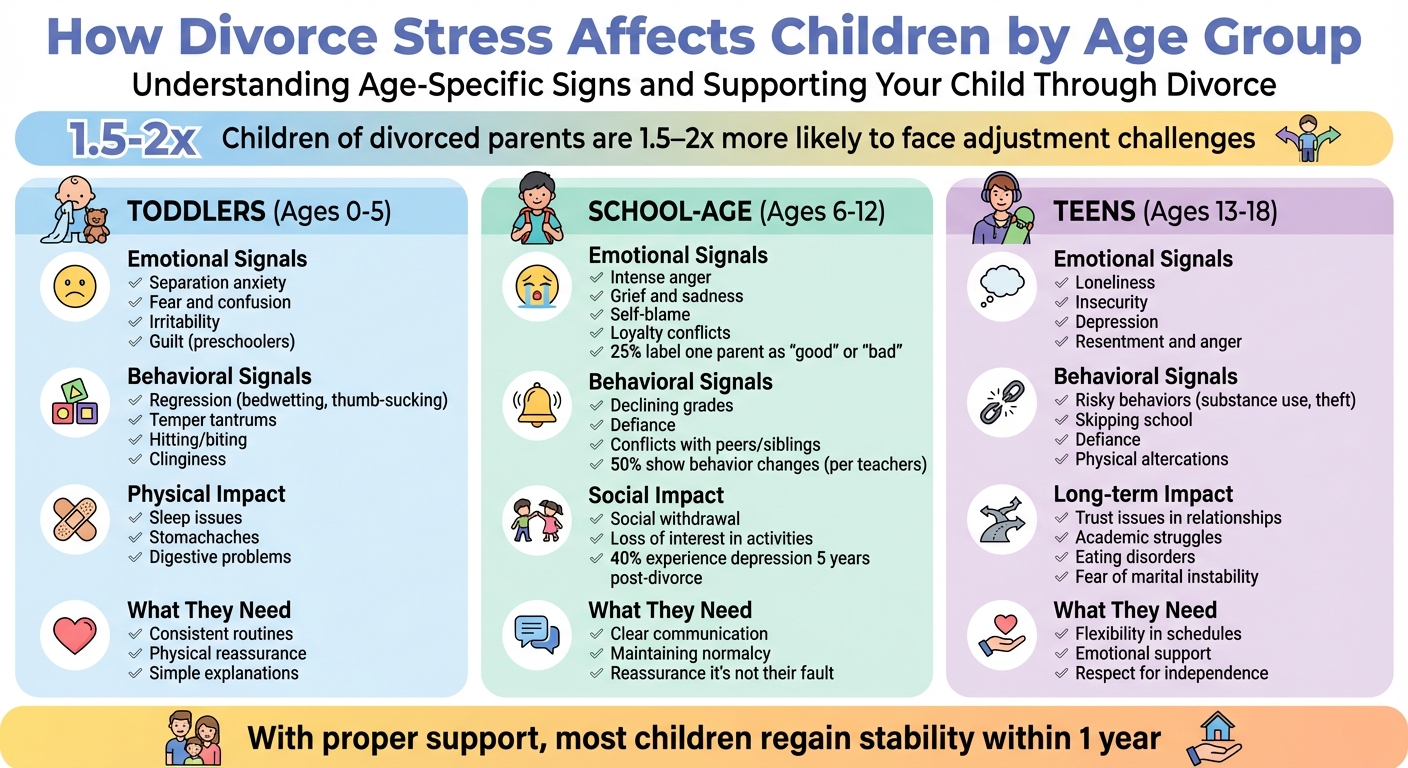
Divorce impacts children differently depending on their age, with emotional and behavioral reactions evolving as they grow. Here's a quick breakdown:
- Toddlers (0-5 years): Fear, confusion, and need for reassurance. Signs include irritability, tantrums, regression (e.g., bedwetting), and clinginess. Consistent routines and physical comfort are crucial for stability.
- School-Age Children (6-12 years): Struggle with loyalty conflicts, self-blame, and grief. They may exhibit academic setbacks, defiance, and social withdrawal. Clear communication and maintaining normalcy help reduce stress.
- Teens (13-18 years): Emotional detachment, anger, and risky behaviors like substance use or defiance. Teens often seek independence but need emotional support and flexibility in schedules.
Children of divorced parents are 1.5–2 times more likely to face adjustment challenges, and the way parents manage the separation significantly influences long-term outcomes. By addressing age-specific needs, parents can help reduce the stress of divorce and support their child’s well-being.
How Divorce Stress Affects Children by Age Group: Signs and Symptoms
How Toddlers (Ages 0-5) Experience Divorce Stress
Toddlers under the age of five are incredibly sensitive to their environment. Even infants as young as three months can pick up on parental tension. Without the ability to fully understand major changes, they often experience divorce with feelings of fear, confusion, and an overwhelming need for reassurance and stability.
Signs of Stress in Toddlers
Infants (Birth to 12 Months): Babies in this age group often show signs of stress through irritability, excessive crying, hyperactivity, and disturbances in sleep or digestion . They are highly responsive to the emotional state of their parents, making heightened tension particularly impactful.
Toddlers (12 to 24 Months): As children grow, their stress responses evolve. During this stage, you might notice more tantrums, mood swings, clinginess, and ongoing sleep troubles. Many toddlers may regress, losing skills they recently mastered, such as toilet training or feeding themselves .
Preschoolers (Ages 3 to 5): Preschool-aged children process stress differently. With their naturally egocentric perspective, they often believe they are somehow to blame for the divorce. Reassuring them that it’s not their fault is crucial. These children might experience guilt, sadness, and a fear of being abandoned . "Magical thinking" is also common - they might fantasize about their parents reuniting or believe a parent will visit unexpectedly.
Across all these ages, physical symptoms like stomachaches, headaches, bedwetting, or toileting accidents are common . Stress can also show up as withdrawal or increased aggression, such as hitting or biting . Recognizing these behaviors helps parents provide the right kind of support during this challenging time.
What Toddlers Need During Parental Separation
Understanding the signs of stress is just the first step - knowing how to respond effectively is just as important. Toddlers thrive on consistency and physical reassurance, which can help them feel secure even amidst change.
Consistency Is Key: A predictable daily routine can be a powerful tool for reducing stress. Child psychologist Stephanie Samar, PsyD, emphasizes this point:
Think about how chaotic it feels for the adults in the situation, who have at least some control. That adjustment period has to happen, so honor it.
Keeping meal times, nap schedules, and bedtime rituals consistent across both households helps create a sense of stability .
Physical Reassurance: For younger children, frequent cuddles, holding, and eye contact are essential to helping them feel safe . For toddlers 18 months and older, simple and clear language like, "Mommy and Daddy will live in different houses, but we both love you and will take care of you", can help them process what’s happening. Letting children bring a comfort object, like a favorite blanket or stuffed animal, between homes can also make transitions smoother .
Tools for Preschoolers: As children begin to understand time, a visual aid like a color-coded calendar showing where they’ll spend each day can help reduce anxiety .
Finally, it’s essential to keep exchanges between parents calm and civil. This helps maintain a toddler’s sense of security and avoids adding unnecessary stress.
How School-Age Children (Ages 6-12) Experience Divorce Stress
School-age children have a clearer understanding of divorce compared to toddlers, but they often struggle deeply with the emotional toll it brings. At this stage, kids can describe family conflicts in detail, which means they grasp the reality of divorce but often lack the tools to handle its impact.
As children grow within this age group, their reactions to divorce evolve. Kids aged 6–8 are developing independence but still see their parents as the center of their world. They experience significant grief and may even view the separation as a form of personal rejection. On the other hand, children aged 9–12 have a more advanced understanding of relationships and fairness. This often leads to feelings of moral outrage and anger, especially toward the parent they perceive as responsible for the divorce. These emotions create inner conflict, influencing their behavior and performance in school.
Emotional Reactions in School-Age Children
Divorce introduces a whirlwind of emotions for children in this age group, including loyalty conflicts, self-blame, and a profound sense of helplessness. During high-conflict divorces, nearly 25% of children aged 9–12 will label one parent as "good" and the other as "bad". This black-and-white thinking might help them make sense of the situation but often leaves them feeling stuck between their parents.
For younger school-age children (5–8), the emotional impact can be even more personal. Many blame themselves for the divorce, thinking their actions or behavior caused it. This self-blame often stems from their desire to maintain a sense of fairness, even if it means internalizing guilt. Christopher Lie Ken Jie of The Schulich School of Medicine & Dentistry highlights:
How children learn to separate themselves from feeling responsible for their parents' divorce and conflict is key to coping with their cognitive dissonance as part of the divorce process.
Older children (9–12) may take on a "parentified" role, where they begin to view situations through their parents’ eyes. They might try to care for a struggling parent or even take on responsibilities for younger siblings, often at the expense of their own needs. Alongside this, they experience fears about the future, abandonment, and whether their parents still love them. These feelings are often accompanied by a sense of loss, loneliness, and a longing for their parents to reconcile.
Effects on Behavior and School Performance
The emotional struggles tied to divorce often show up in children’s behavior and academic lives. School performance can take a hit, with grades dropping and focus slipping. In fact, 50% of teachers report seeing noticeable behavior changes in children aged 5–8 after a parental separation.
Behaviorally, children may exhibit temper tantrums, frequent crying, or outright defiance. Physical symptoms like headaches and stomach aches are also common. Ann Marie Termini, Ed.S., M.S., LPC, notes:
Preteens feel more anger than their younger counterparts, especially toward the parent who initiated the divorce.
This anger often materializes as aggression and defiance, including fights with siblings or peers, lying, or verbally lashing out at parents.
Another major concern is social withdrawal. Many children feel embarrassed or "different" due to their family situation, which can lead to isolation from friends. Some lose interest in hobbies or avoid social activities altogether, often as a result of depression. Research shows that 40% of children still experience depression five years after their parents’ divorce. However, studies also suggest that many children find ways to adapt as they grow older.
How Teens (Ages 13-18) Experience Divorce Stress
Teenagers often respond to divorce by pulling away emotionally and striving for independence. Psychologist and author Dr. Carl Pickhardt sheds light on this dynamic:
"Divorce tends to encourage dependence in the child, and to accelerate independence in the adolescent".
This drive for independence can lead teens to challenge boundaries, retreat emotionally, and seek control in an effort to manage feelings of helplessness. Divorce is often considered the second most traumatic event in a child's life, surpassed only by the death of a parent.
Studies reveal that parental divorce increases the likelihood of adjustment problems in teens by 1.5 to 2 times. Interestingly, research also shows that teens in high-conflict intact families may experience more distress than those in low-conflict divorced families. These immediate reactions to divorce often lay the groundwork for deeper, long-term effects on mental health and relationships.
Emotional and Behavioral Reactions in Teens
For teens, divorce can trigger a mix of emotions - hurt, anger, and even relief if it ends ongoing parental conflict. Unlike younger children, who may not fully grasp the situation, teens understand it on a deeper level, which can lead to lingering resentment.
Common emotional challenges include depression and anxiety, often accompanied by physical symptoms like headaches or stomach aches. These feelings may also manifest as irritability or verbal outbursts. Loyalty conflicts are another major issue; about 25% of teens view their parents in stark black-and-white terms, which can intensify these struggles and sometimes result in the rejection of one parent.
Risky behaviors also become more common during this time. With reduced parental oversight amid the chaos of divorce, teens may turn to substance use, delinquency, or unsafe sexual activities. Some even resort to physical altercations as an outlet for their anger.
Another concerning trend is parentification, where teens take on adult responsibilities like managing household chores, worrying about finances, or becoming an emotional support system for a parent. While this may seem like maturity, it often robs them of a normal adolescence and hinders healthy identity development.
Impact on Mental Health and Future Relationships
The stress of divorce doesn't just fade away - it can leave lasting marks on teens' mental health and shape their future relationships.
Academically, many teens struggle, with grades slipping and dropout risks increasing. Socially, they may feel embarrassed about their family situation or find it hard to trust others. These challenges often extend into their romantic relationships, where uncertainty about love and commitment becomes a recurring theme. Teens from divorced families frequently report lower self-esteem and a heightened fear of marital instability in their own futures. This highlights the importance of custody arrangements that address teens' emotional needs.
Researchers Brian D'Onofrio and Robert Emery, who have studied the long-term effects of divorce, explain:
"Even resilient young people from divorced families often report painful feelings or encounters, such as worrying about events like graduations or weddings when both parents will be present".
Additionally, children of divorce are more likely to delay marriage and face a higher risk of marital instability as adults. This "divorce cycle" suggests that the stress of parental separation can shape teens' views on relationships and commitment for years to come. That said, while about one-third of teens struggle significantly with adjusting to divorce, many do find ways to adapt - especially when parents maintain a cooperative, low-conflict co-parenting style.
sbb-itb-a09457a
Stress Signals by Age Group: A Comparison
As children grow, their reactions to divorce evolve, reflecting their developmental stage. While the emotional toll of divorce affects all children, the way they express stress changes with age. Younger kids often show their distress through physical symptoms or developmental setbacks, while older kids may act out with rebellious behavior or risky choices.
This shift from dependence in younger children to a growing sense of independence in teens plays a major role in how they cope. Dr. Carl Pickhardt explains it this way:
Divorce tends to encourage dependence in the child, and to accelerate independence in the adolescent.
For instance, toddlers and young children may cling to their parents, driven by a fear of abandonment. In contrast, teens often distance themselves emotionally, attempting to regain a sense of control through detachment.
Another notable difference lies in how children assign blame. Preschoolers, with their limited understanding, may wrongly believe they caused the divorce through "magical thinking." School-age children often internalize guilt, while teens may channel their anger outward, sometimes favoring one parent and rejecting the other.
Stress Signals Comparison Table
| Age Group | Emotional Signals | Behavioral Signals | Academic/Social Impact |
|---|---|---|---|
| Toddlers (0-5) | Separation anxiety, fear, irritability, guilt (preschoolers) | Regression (bedwetting, thumb-sucking), temper tantrums, hitting/biting | Sleep issues, stomachaches, bowel changes |
| School-Age (6-12) | Intense anger, grief, irrational fears (phobias), feeling "cheated" | Declining grades, noncompliance, conflicts with peers/siblings | Social withdrawal, loss of interest in school activities |
| Teens (13-18) | Loneliness, insecurity, depressed mood, resentment | Risky behaviors (substance use, theft, skipping school), defiance | Eating disorders, struggles with trust in romantic relationships |
With the right support, most children regain their sense of security within a year after divorce - especially when parents minimize conflict and address their child's specific developmental needs. Understanding these age-specific stress signals is crucial for crafting custody arrangements that truly prioritize a child's well-being. This breakdown highlights the importance of tailoring strategies to each age group to help reduce the stress of divorce.
How Coflo Helps Reduce Divorce Stress for Children
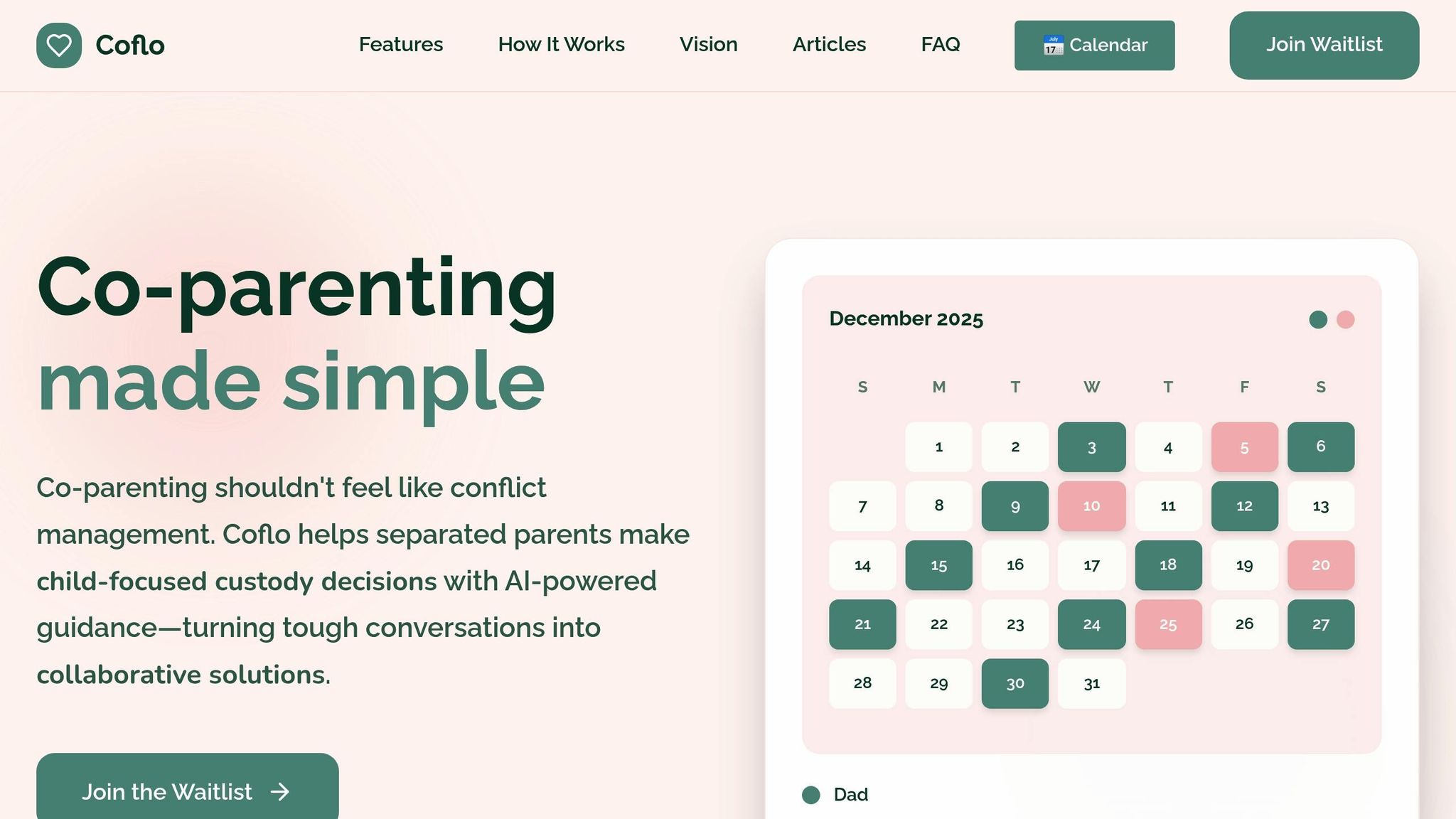
Designing a custody plan that truly meets your child's needs shouldn't feel overwhelming or require endless spending on consultations. Coflo steps in with AI-driven tools to help parents create schedules tailored to their child's developmental stage, making the process less stressful for everyone involved.
Custody Plans Designed for Every Age Group
Coflo understands that children’s needs change as they grow, so it offers custody plans specifically tailored to different age groups. For children aged 0-5, the focus is on stability and routine. At this stage, shorter separations and consistent caregivers are key to maintaining trust and emotional security. For instance, infants often do best with separations that last only one to four hours.
As kids grow older, their needs evolve. School-age children (6-12) benefit from schedules that prioritize their education and social lives. Teens (13-18), on the other hand, require flexibility and autonomy to balance friendships, school, and extracurricular activities. Coflo’s age-specific recommendations ensure that custody plans adapt to these changing needs, supporting children at every stage of their development.
Making Decisions with Priority Sliders
Coflo introduces priority sliders to help parents focus on what truly matters for their child. These sliders allow you to weigh factors like stability, school consistency, and equal time, tailoring decisions to your family’s unique situation. This approach shifts the focus away from disagreements and toward your child’s well-being. Research shows that reducing parental conflict is crucial, as it often impacts children more than the divorce itself.
For example, if you have a 7-year-old who thrives on routine, you might prioritize school consistency. Meanwhile, a 15-year-old involved in sports may need more flexibility for practices and competitions. As you adjust the sliders, Coflo recalculates recommendations instantly, providing research-backed options without the guesswork.
Practical Strategies for Implementation
Coflo doesn’t stop at recommendations - it also provides detailed, age-specific implementation guides to help parents put their plans into action. Each guide includes practical steps tailored to the child’s developmental needs. For toddlers, this might involve creating "goodbye routines" to ease transitions between homes. For school-age kids, a shared digital log can help track sleep patterns and moods across both households.
For younger children, peaceful handovers are especially important, as the transition itself can often be more stressful than the destination. By following these strategies, parents can make transitions smoother and create a sense of predictability, helping their children adjust more comfortably.
Conclusion
Divorce impacts children differently depending on their age. Toddlers might show signs of developmental setbacks and become more attached to their caregivers. School-age children often wrestle with feelings of loyalty and may face academic struggles. Teenagers, on the other hand, tend to pull away from family life, take on adult-like concerns, or even engage in risky behaviors. Understanding these varied reactions is essential for designing custody arrangements that cater to each child's emotional and developmental needs.
Studies suggest that with the right support, most children can regain a sense of stability within about a year. For toddlers, frequent but short visits help maintain attachment, while teenagers benefit from more flexible schedules that respect their growing independence.
This evidence underscores the importance of thoughtful, research-backed custody decisions.
"The quality of the parent-child relationship is more important than any ratio of time spent with parents." - Catherine M Lee, PhD, University of Ottawa
Focusing on child-centered custody arrangements can significantly reduce the harmful effects of parental conflict - often more damaging than the divorce itself. By aligning custody plans with children's developmental needs, parents can provide the stability and support necessary for a smoother transition and healthier long-term outcomes.