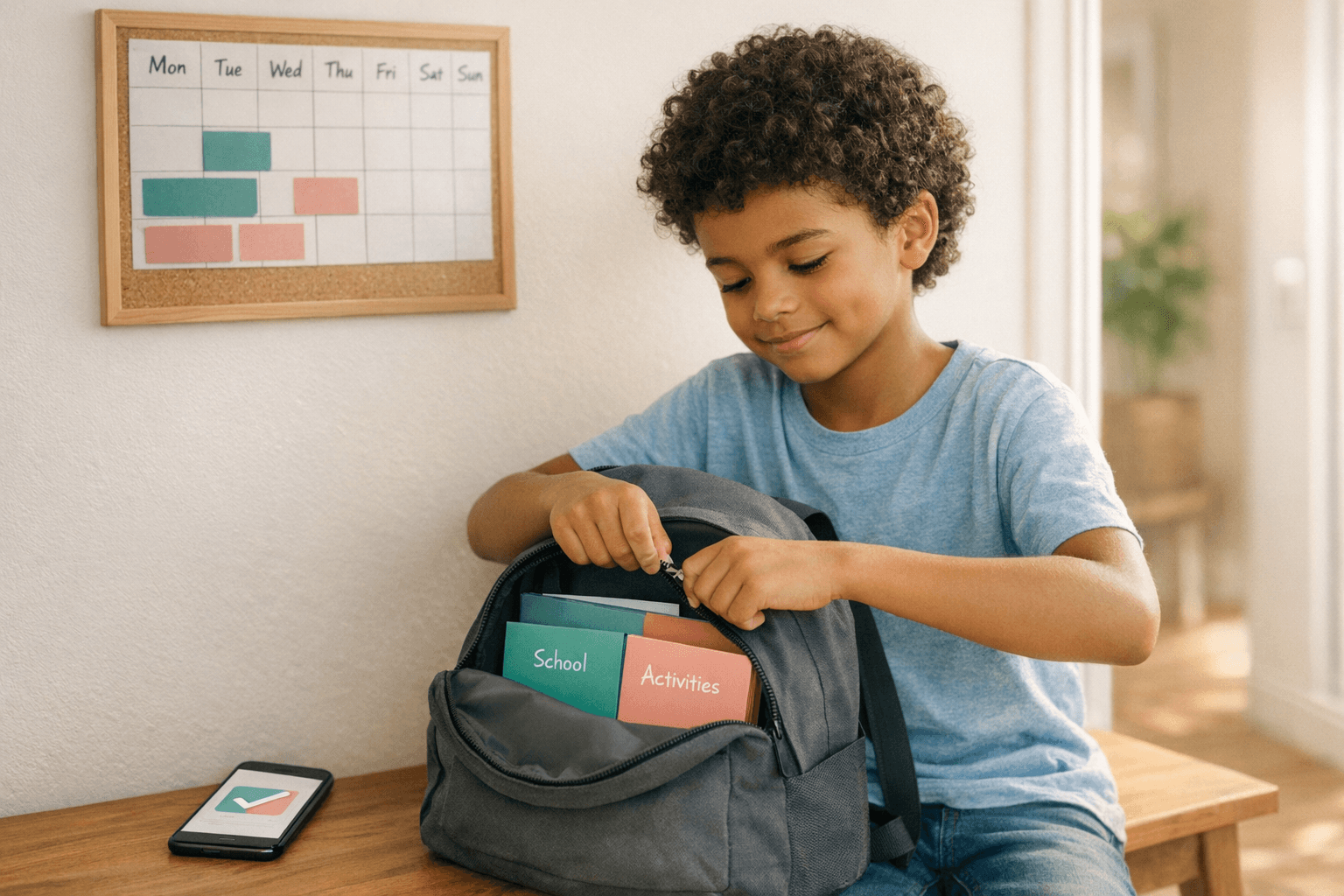
How to Build Trust in Co-Parenting After Divorce
Building trust after divorce is tough but essential for your child's well-being. The key? Treat co-parenting like a business partnership focused on your kids. Here's how:
- Communicate Respectfully: Keep conversations professional and child-centered. Use clear language and avoid emotional traps like blame or absolutes.
- Be Reliable: Follow through on commitments, stick to schedules, and align major rules across homes.
- Set Boundaries: Keep personal feelings out of parenting. Use tools like co-parenting apps to manage communication and decisions effectively.
- Stay Flexible: Life happens - accommodate changes when possible and own mistakes with a simple apology.
- Use Planning Tools: Digital platforms can simplify custody schedules and reduce misunderstandings.
Each small step - like clearer communication or consistent routines - can help reduce tension and create a healthier co-parenting relationship. Prioritize your child's needs, and trust can grow over time.
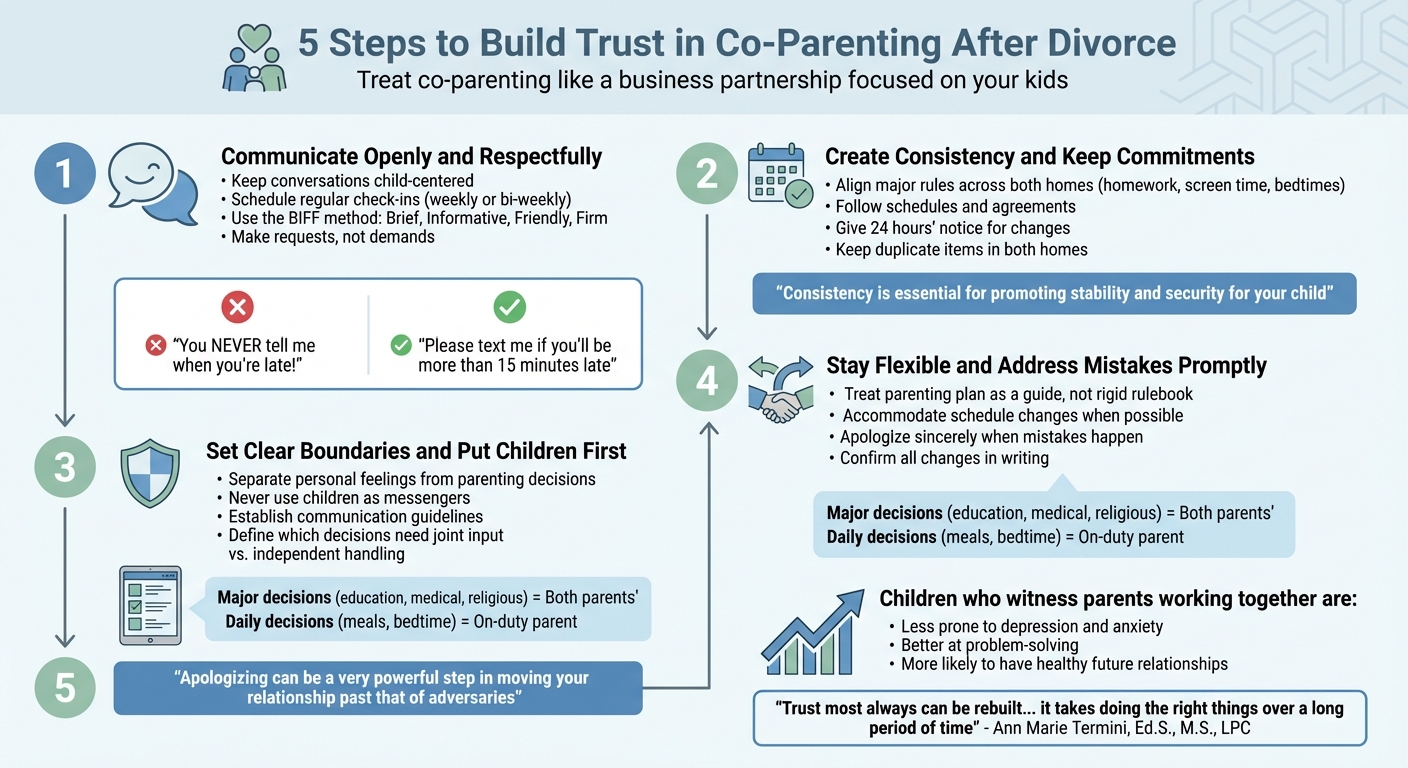
5 Steps to Build Trust in Co-Parenting After Divorce
Step 1: Communicate Openly and Respectfully
Building trust starts with clear and respectful communication. Studies highlight that the level of parental conflict children witness is the strongest indicator of their long-term well-being post-divorce.
"Approach the relationship with your ex as a business partnership where your 'business' is your children's well-being." – HelpGuide
This perspective shift is essential. While you may no longer be spouses, you are now lifelong co-parenting partners. Treating every interaction as a professional exchange - courteous, factual, and free from past grievances - helps maintain focus on your child's best interests. This approach sets the stage for the child-focused communication strategies outlined below.
Keep Conversations Child-Centered
Ensure every discussion prioritizes your child's needs. If unrelated topics come up, acknowledge the parenting-related question and gently redirect the conversation. For instance, if your co-parent mentions something personal, you could respond, "Let's focus on what's best for Emma's tutoring schedule".
Placing a photo of your child nearby during discussions can help you stay focused on what truly matters. Also, avoid using absolutes like "always" or "never", as these words can provoke defensiveness and derail productive communication.
Here’s a comparison of emotional versus professional language to illustrate the difference:
| Communication Trap | Professional Alternative |
|---|---|
| "You NEVER tell me when you're late!" | "Please text me if you'll be more than 15 minutes late so I can adjust the schedule." |
| "This is your fault for being irresponsible." | "The permission slip wasn't signed. Can we both check backpacks on transition days?" |
| "The kids told me you let them stay up late." | "I've noticed the kids are tired on Mondays. Can we align on a consistent bedtime routine?" |
Schedule Regular Check-Ins
Establishing a routine time each week or every two weeks to discuss child-related matters can create predictability and reduce unnecessary tension. These check-ins ensure both parents stay informed about school events, medical appointments, and extracurricular activities without constant back-and-forth messaging. This practice reinforces the respectful, child-centered communication you aim to maintain.
"Consistent behavior is a hallmark of great parenting and builds faith in the co-parenting relationship." – Ann Marie Termini, Ed.S., M.S., LPC, The Cooperative Parenting Institute
During these check-ins, be proactive. Share updates about upcoming events or changes in your child's routine before your co-parent has to ask. This openness helps rebuild trust over time. Using the BIFF method - keeping communication Brief (2–5 sentences), Informative (focused on facts), Friendly (neutral tone), and Firm (clear boundaries) - can also help maintain calm, effective exchanges.
Make Requests, Not Demands
Respectful dialogue thrives when needs are framed as requests rather than demands. The way you phrase your needs can significantly influence the tone of the conversation. Use phrases like "Would you be willing to…?" or "Can we try…?" instead of issuing orders.
For example, instead of saying, "I'm switching weekends", you could say, "Would switching weekends work? My sister is visiting, and I'd like the kids to see her". Including a brief, child-focused reason makes it more likely your co-parent will agree. If emotions start to rise, take a step back. Wait an hour or more before responding to triggering messages. Draft your reply, remove any emotional language, and revise it into a calm, professional tone before sending.
sbb-itb-a09457a
Step 2: Create Consistency and Keep Commitments
Strong communication only works when paired with dependable actions. Trust isn't built on promises - it's built on follow-through. When both parents consistently honor their commitments, it reassures not only each other but also your children that they can rely on you.
"Rebuilding this trust in the co-parenting relationship requires the following Three C's: Confidence, Commitment and Consistency." – Ann Marie Termini, Ed.S., M.S., LPC, The Cooperative Parenting Institute
Align Rules and Routines Across Homes
While kids don’t need identical environments in both homes, major rules should align. Big differences in expectations - like those around homework, screen time, curfews, or bedtimes - can leave children feeling uncertain and may even encourage them to pit one parent against the other.
Family therapist Brian O'Sullivan puts it this way:
"Consistency is essential for promoting stability and security for your child. Collaborate with your ex-spouse to establish consistent rules and boundaries across both households."
A helpful way to approach this is to ask yourself, "What if we were still parenting under one roof?" This perspective can help avoid unnecessary disputes over rules.
Small details also make a big difference. Keeping duplicate items like pajamas, toothbrushes, and hairbrushes in both homes can ease transitions and make your child feel comfortable no matter where they are.
Once rules are consistent, sticking to a predictable schedule further strengthens trust.
Follow Schedules and Agreements
Reliability extends to schedules. Being on time and sticking to agreed plans reinforces confidence between co-parents. If you need to make a change, aim to give at least 24 hours' notice and confirm adjustments in writing to avoid confusion.
When it’s time for transitions, keep exchanges calm by using drop-offs rather than pick-ups. Let your child know in advance about the upcoming transition so they have time to adjust mentally, which can help prevent emotional pushback.
Step 3: Set Clear Boundaries and Put Children First
Consistency is key to building trust, but personal emotions can easily derail even the best intentions. Setting clear boundaries helps protect both your children and the co-parenting relationship.
Keep Personal Feelings Separate from Parenting
It’s crucial to keep personal issues out of your parenting dynamic.
"The key to successful co-parenting is to separate the personal relationship with your ex from the co-parenting relationship." – Jocelyn Block, M.A. and Melinda Smith, M.A., HelpGuide.org
Think of your co-parent like a professional colleague - your shared "project" is your child's well-being. If you feel frustrated or upset, lean on a therapist, a trusted friend, or a support group instead of your child. Studies show that when children are exposed to constant parental conflict, they are at a much higher risk of developing depression, anxiety, or behavioral challenges.
Establish Communication and Decision-Making Guidelines
Once personal feelings are set aside, the next step is to create clear communication rules. Without structure, even small disagreements can spiral out of control.
A proven method for managing communication is the BIFF method - developed by Bill Eddy, LCSW, Esq., of the High Conflict Institute. It stands for Brief, Informative, Friendly, and Firm. Before you send a message, ask yourself if it checks all four boxes. This approach keeps interactions focused and reduces unnecessary tension.
Structure is also crucial when it comes to how and when you communicate. Decide on specific channels, like email or co-parenting apps, for routine updates. Reserve phone calls for true emergencies, and set a predictable schedule for check-ins. This consistency not only respects everyone's time but also gives your child a sense of stability.
When it comes to decision-making, clarify which decisions require joint input and which can be handled independently. Major issues - like education, medical care, or religious upbringing - should involve both parents. Meanwhile, day-to-day decisions, such as meals or bedtime, can usually be left to the parent who is with the child at the time. As child and family therapist Michael Vallejo explains:
"By knowing what to expect from each other, you can avoid misunderstandings and power struggles."
Lastly, never use your child as a go-between. Communicate directly with your co-parent, even if it feels uncomfortable. Asking your child to relay messages adds unnecessary stress and shifts the focus away from their well-being. Keeping communication child-centered reinforces the trust and boundaries you’re working to maintain.
Step 4: Stay Flexible and Address Mistakes Promptly
Being flexible is crucial in co-parenting - it shows that you're willing to adapt when life throws curveballs and that your child's well-being comes first. At the same time, taking responsibility for mistakes helps maintain trust and stability. Together, these actions strengthen the co-parenting relationship.
Accommodate Schedule Changes When Needed
Life happens, and plans don't always go as expected. That's why it's essential to treat your parenting plan as a guide, not a rigid rulebook. If your co-parent asks for a schedule adjustment - say, for a special event - try to accommodate when possible. Confirm any changes in writing to avoid confusion later. As HelpGuide explains, "When you show flexibility, your ex is more likely to be flexible with you".
However, flexibility works best when paired with structure. For example, if a change requires advance notice, use clear written communication - whether through text, email, or co-parenting apps. This helps create a reliable record and prevents misunderstandings. Instead of focusing on blame, aim for practical solutions that keep things stable for your child. If you're the one requesting a change, be proactive by offering specific make-up dates to show respect for the other parent's time.
Balancing flexibility with accountability ensures that both parents can navigate changes without disrupting the child's sense of stability.
Apologize and Make Repairs After Conflicts
Mistakes are bound to happen. Maybe you miss a pickup, forget a school event, or lose your cool during a heated moment. What truly matters is how you handle those situations. A heartfelt apology can go a long way in shifting the co-parenting dynamic for the better.
"Apologizing can be a very powerful step in moving your relationship past that of adversaries." – Jocelyn Block, M.A. and Melinda Smith, M.A., HelpGuide
When you make a mistake, own it right away with a straightforward apology, like saying, "I'm sorry I was late - I should have planned better." Avoid making excuses. This kind of accountability shows your co-parent that you're prioritizing your child's stability over your pride. Even if your co-parent doesn't immediately match your efforts, keep modeling the behavior you'd like to see. Over time, consistent apologies and follow-through can help rebuild trust and reduce tension after conflicts.
Step 5: Use Tools for Transparent Planning
After establishing consistent communication and reliable follow-through, incorporating digital tools can make co-parenting even smoother. When emotions are running high, these tools act as neutral mediators, helping co-parents make decisions based on facts rather than feelings. Platforms designed specifically for co-parenting take the stress out of custody planning, offering research-based solutions that prioritize your child's well-being.
Make Data-Driven Decisions with Coflo

Coflo is an AI-powered platform that simplifies custody scheduling by focusing on your family's unique needs. Instead of endless debates, you can adjust sliders for priorities like stability, equal time, school consistency, or flexibility. Based on your selections, Coflo provides personalized schedule options backed by research. Each suggestion includes developmental psychology insights tailored to your child's age, explaining why certain arrangements work best for infants, school-age kids, or teenagers. This approach fosters trust by giving both parents a clear understanding of the reasoning behind each recommendation, shifting the focus from personal opinions to evidence-based solutions.
Stay Consistent with Step-by-Step Roadmaps
Consistency is key to rebuilding trust, and Coflo helps by providing detailed roadmaps for implementing custody schedules. These step-by-step guides outline responsibilities and timelines, ensuring everyone knows what to do and when to do it. This eliminates potential misunderstandings and keeps co-parents on the same page.
"Broken promises are a quick path to ensuring trust remains broken and cannot be mended, so if you make a promise to your ex or to your children, be sure to keep it." – Smith Law Offices, LLC
Conclusion
Rebuilding trust in a co-parenting relationship starts with creating a stable, supportive environment for your children. When you communicate with respect, honor your commitments, and maintain consistency between households, you provide your kids with the emotional stability they need to thrive. This kind of foundation helps them face challenges with confidence and develop a stronger sense of self-esteem.
But the benefits go beyond just day-to-day harmony. Children who witness their parents working together are more likely to develop strong problem-solving skills and are less prone to issues like depression, anxiety, or ADHD compared to those exposed to ongoing conflict. As Ann Marie Termini, Ed.S., M.S., LPC, puts it:
"Trust most always can be rebuilt... it takes doing the right things over a long period of time. But in most cases, and with effort, it can be done and the results are unmeasurable".
The strategies in this guide - from focusing on child-centered communication to using clear and open planning tools - can reshape your co-parenting dynamic. Predictability grows when consistency is prioritized, transparency reduces doubts, and flexibility fosters mutual respect. These small, actionable steps create a foundation for cooperation and trust over time.
Your co-parenting relationship has a direct impact on your child's mental and emotional health. By treating your ex like a partner in the shared goal of your child’s happiness, you shield your kids from unnecessary stress and demonstrate effective conflict resolution. The effort you put in now can lead to positive outcomes, including better academic performance, healthier behaviors, and stronger future relationships for your children. Respectful communication, honoring commitments, and using transparent tools are key to building lasting trust.
Start small. Maybe it’s adjusting your tone in conversations or agreeing on a consistent bedtime routine. These small adjustments can reduce tension and create a co-parenting relationship that benefits everyone involved. Each step forward brings you closer to a more functional and supportive partnership.